Archaeologists’ dig of Pompeii fast-food court reveals tastes of ancient Romans
- Plant and animal specialists are still analysing remains from the site, with its counter frescoed with a figure of an undersea nymph astride a horse
- A countertop held deep vessels for hot foods, not unlike soup containers nestled into modern-day salad bars

A fast-food eatery at Pompeii has been excavated, helping to reveal dishes that were popular for the citizens of the ancient Roman city who were partial to eating out.
Pompeii Archaeological Park’s long-time chief, Massimo Osanna said Saturday that while some 80 such fast-foods have been found at Pompeii, it is the first time such a hot-food-drink eatery – known as a thermopolium – was completely unearthed.
A segment of the fast-food counter was partially dug up in 2019 during work to shore up Pompeii’s oft-crumbling ruins. Since then, archaeologists kept digging, revealing a multi-sided-counter, with typical wide holes inserted into its top. The countertop held deep vessels for hot foods, not unlike soup containers nestled into modern-day salad bars.
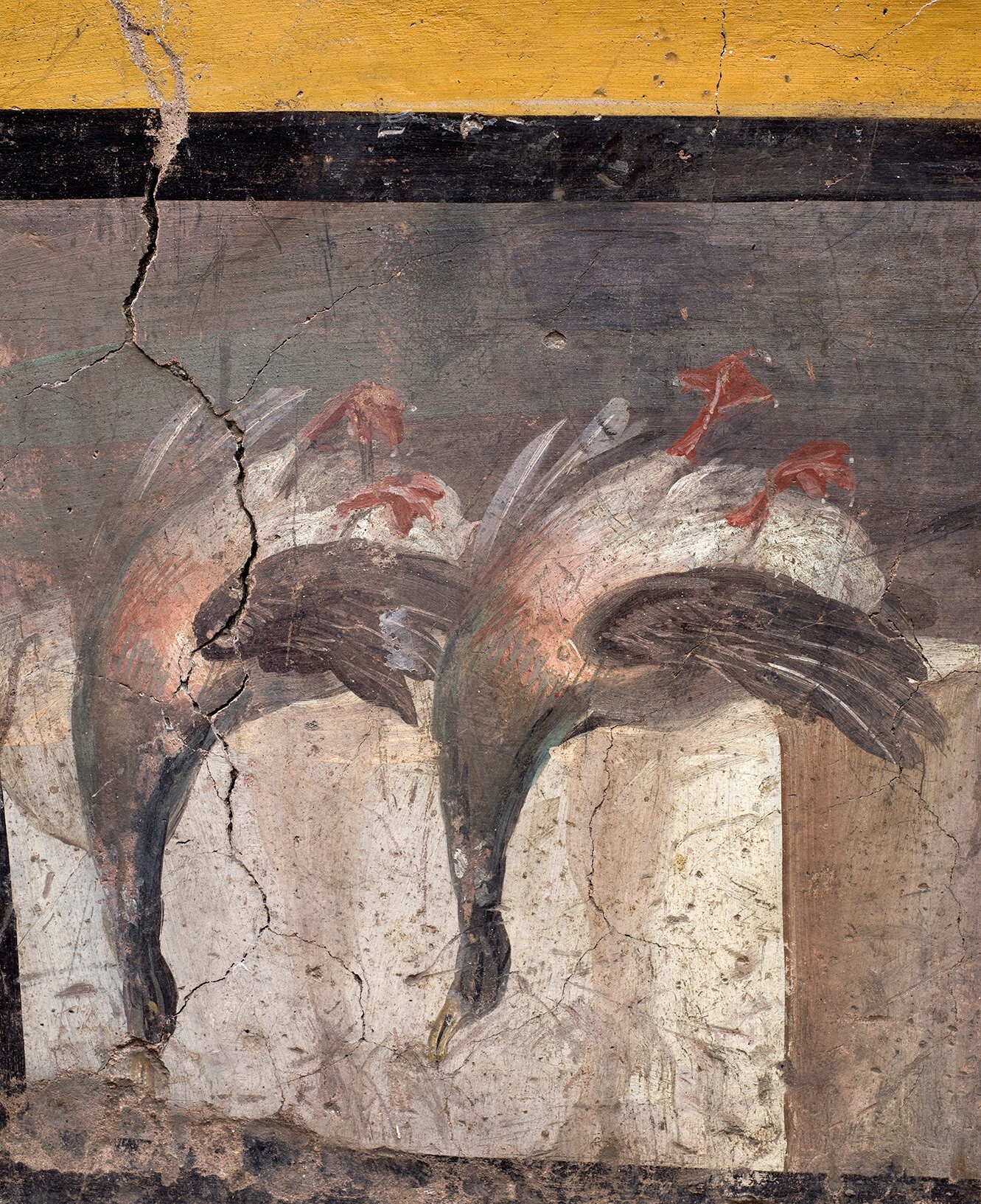
Plant and animal specialists are still analysing remains from the site, with its counter frescoed with a figure of an undersea nymph astride a horse. Images of two upside-down mallards and a rooster, whose plumage was painted with the typical vivid colour known as Pompeiian red, also brightened the eatery and likely served to advertise the menu.
Another fresco depicted a dog on a leash, perhaps not unlike modern reminders to leash pets. Vulgar graffiti were inscribed on the painting’s frame.
Valeria Amoretti, a Pompeii staff anthropologist, said “initial analyses confirm how the painted images represent, at least in part, the foods and beverages effectively sold inside.” Her statement noted that duck bone fragment was found in one of the containers, along with remains from goats, pigs, fish and snails. At the bottom of a wine container were traces of ground fava beans, which in ancient times were added to wine for flavour and to lighten its colour, Amoretti said.