Shellfish behaviour! How men hogged seafood in ancient Roman city destroyed by Vesuvius eruption
- Archaeologists studying the remains discovered males, on average, got 50 per cent more of their protein from seafood compared with females
- The city of Herculaneum and nearby Pompeii were destroyed by the volcano’s eruption in 79AD

A team of archaeologists examining the remains of victims from the eruption of Mount Vesuvius in 79AD have discovered coastal people of the time ate far more fish than modern Italians, with men getting more of the high-status food than women.
The researchers, led by a team at the University of York, analysed amino acids – the building blocks of proteins – in 17 adult skeletons excavated from the city of Herculaneum, a popular seaside resort that remained buried under volcanic ash until the 18th century.
By studying the ratio of carbon and nitrogen isotopes of the amino acids and applying a statistical model, they were able to differentiate between food groups with a new level of precision, the team wrote in the journal Science Advances on Wednesday.
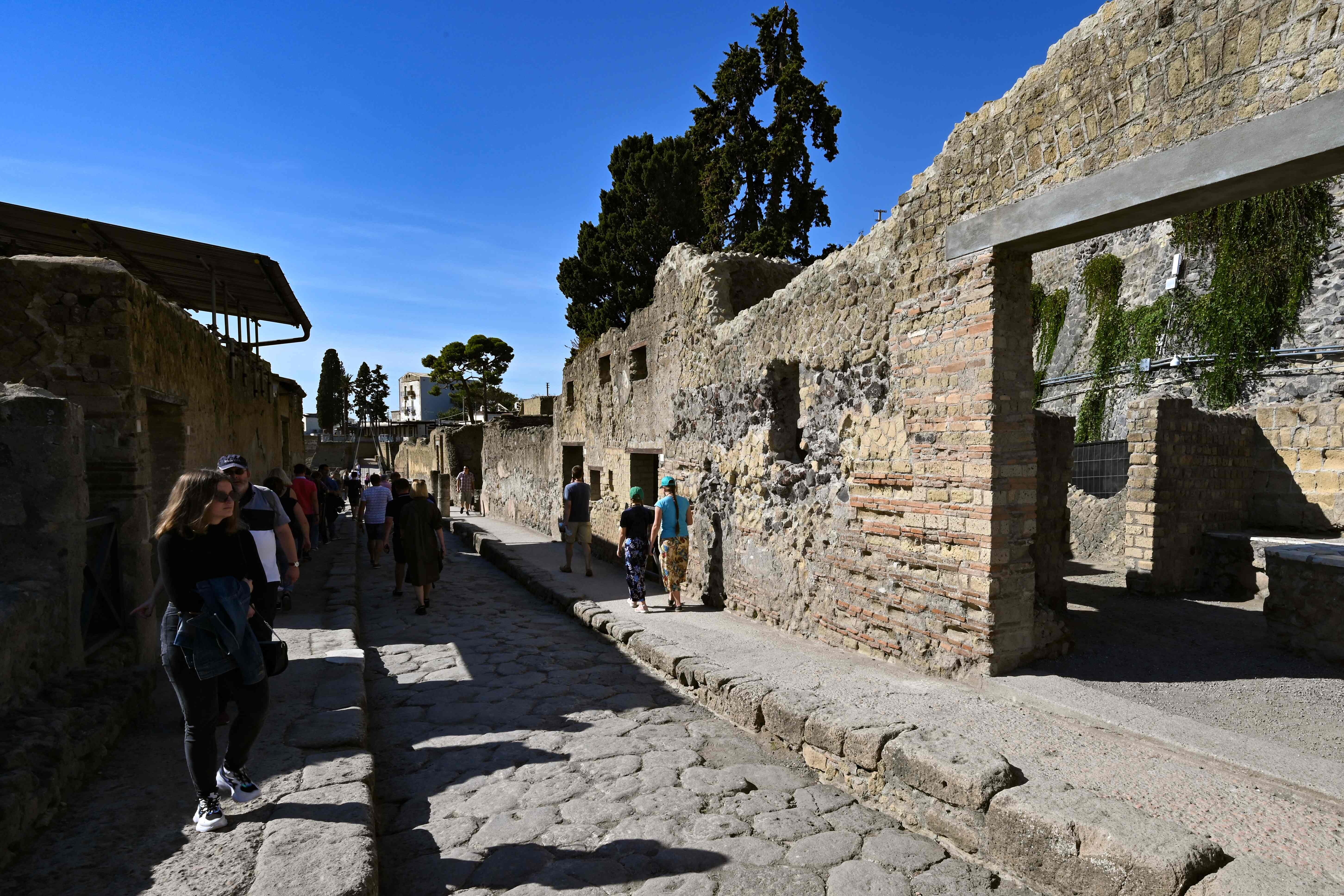
Lead author and PhD student Silvia Soncin said that Herculaneum provided an “extraordinary population” to study historic diets because the natural disaster gives archeologists a snapshot in time.
“Cemeteries are usually used over a certain period, we’re talking about hundreds of years, and the food sources may have changed because of changing climate or different trade routes,” she said.