Advertisement
For Germany’s likely new leader Olaf Scholz, Hamburg is at the centre of a growing dilemma over China
- Hamburg’s economic ties with China are stirring concerns it could be exposed to the vagaries of great power politics as US-China tensions spill into global supply chains
- How to handle that delicate balance of interests will confront Germany’s incoming government, likely led by Olaf Scholz, from the get go
6-MIN READ6-MIN
6

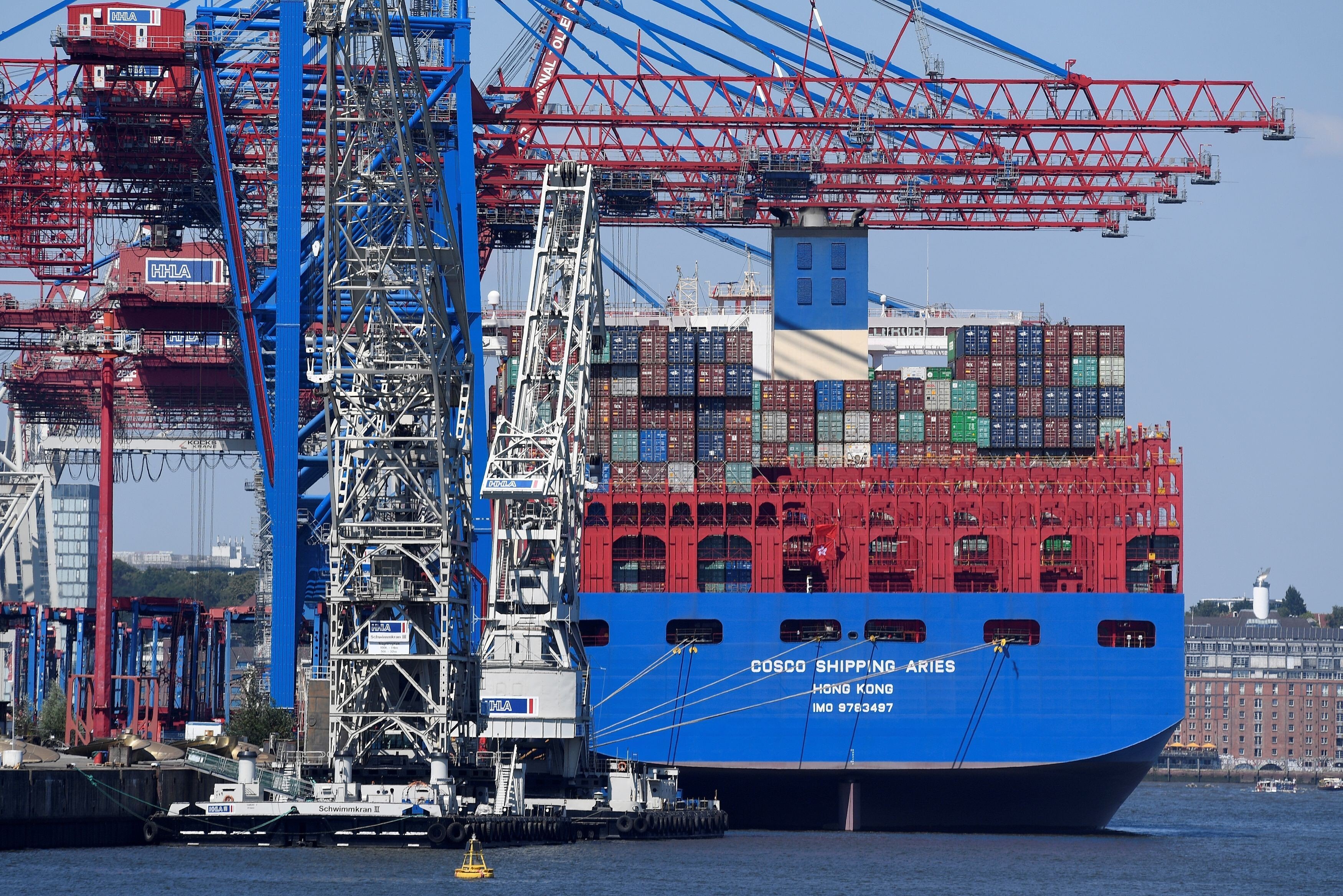
COSCO Shipping occupies a prime waterfront location in Germany’s Hamburg. The Chinese marine transportation giant’s European headquarters sit between a historic red-brick warehouse complex and the glass and steel of the redeveloped harbour area. The company is about to expand its presence after striking a deal last month to acquire a stake in a container terminal.
For a city that markets itself as China’s gateway to Europe, the agreement is a step toward becoming a go-to hub for COSCO’s vast cargo shipments. But away from the business of trade that Hamburg has thrived on for centuries, the tighter embrace of China is stirring concerns.
The dilemma is whether such economic ties now leave Hamburg exposed to the vagaries of great power politics as tensions between the US and China spill into global supply chains. Its status as Germany’s biggest port also puts it at the heart of a broader debate over the country’s role as Europe’s political heavyweight and the world’s No. 3 exporter.
Advertisement
Five years ago, many companies wanted to be part of China’s Belt and Road Initiative, despite issues over reciprocal market access. Now there’s more hesitation, said Doris Hillger, head of the foreign trade department at Hamburg Chamber of Commerce.
Advertisement
“Any deepening of interaction with China is from the start viewed more or less critically,” Hillger said in an interview at her office this month. “And that’s what makes it very difficult for businesses, but also for business locations such as a port city like Hamburg.”
How to handle that delicate balance of interests will confront Germany’s incoming government from the get go. The likely next chancellor, Olaf Scholz, is a Hamburg native and was the city state’s mayor from 2011 until 2018, when he took up the post of finance minister in Angela Merkel’s federal government. Total Germany-China trade had burgeoned to more than US$200 billion by 2019, half of it passing through Hamburg.
Advertisement
Select Voice
Select Speed
1.00x