WikiLeaks’ Assange granted appeal in UK to fight extradition to US
- Australian-born Assange can now challenge a decision to extradite him to the United States to face 18 criminal charges, including breaking a spying law
- ‘Julian won,’ Stella Morris, his fiancee and the mother of his two young children, wrote on Twitter
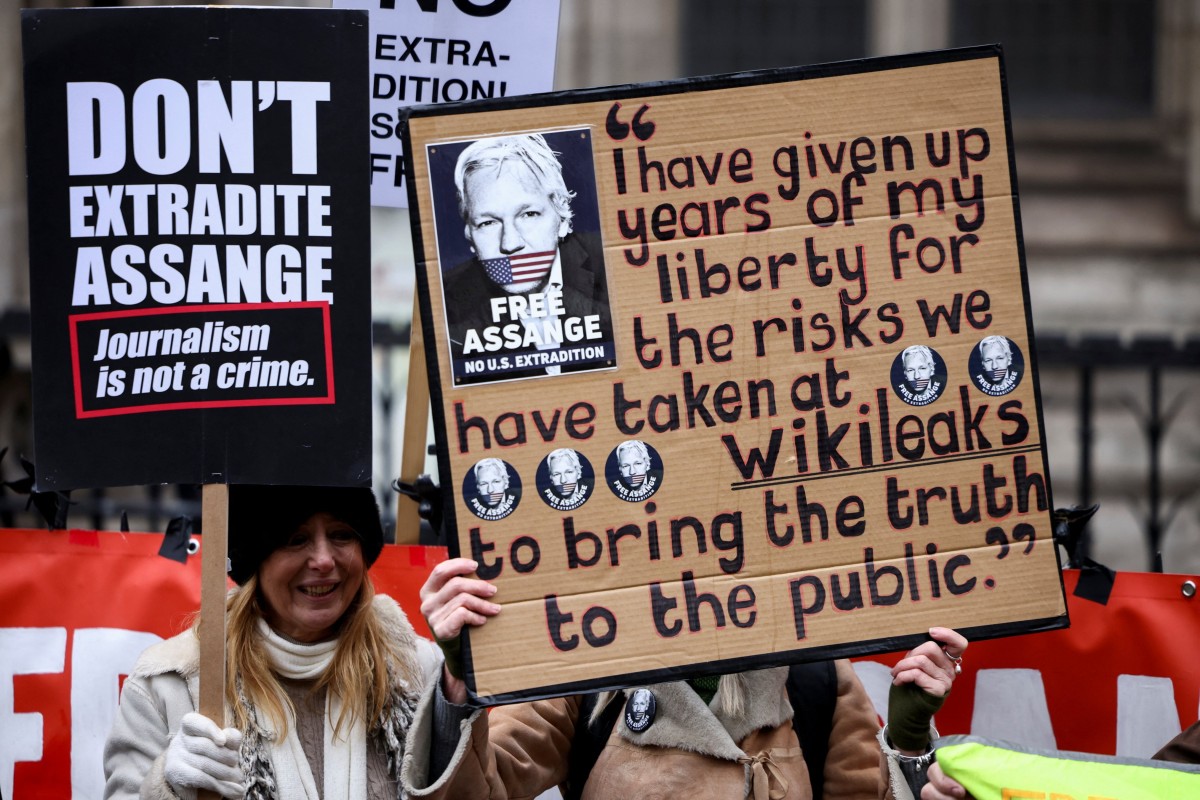
WikiLeaks founder Julian Assange was on Monday given permission to appeal against a decision to extradite him to the United States.
Washington wants to put the 50-year-old Australian on trial in connection with WikiLeaks’ publication of 500,000 secret military files relating to the wars in Iraq and Afghanistan.
The High Court in London in December overturned a lower court’s ruling not to send him to the United States on the grounds he would be a suicide risk. Lawyers for Assange then challenged the decision, arguing that the country’s highest court should rule on “points of law of general public importance”.

The 18 charges relate to the release of vast troves of confidential US military records and diplomatic cables which they said had put lives in danger.
Just over a year ago, a District Court judge in London rejected a US extradition request on the grounds that Assange was likely to kill himself if held under harsh US prison conditions.
“The respondent’s application to certify a point of law is granted,” said judges Ian Burnett and Timothy Holroyde in a written ruling.
The judges said that they themselves were not granting him a right of appeal at the Supreme Court. But Assange had the right to pursue the point of law in the highest court, which can decide whether to take the case.