Newly discovered dinosaur was a ‘huge’ 32-ft-long predator with a crocodile face, say scientists
- The dinosaur remains found on England’s Isle of Wight could be those of the largest land predator that ever roamed Europe, scientists say
- Paleontologists from the University of Southampton identified the prehistoric bones as belonging to a type of two-legged, crocodile-faced predatory dinosaur

Dinosaur remains found off the south coast of England could be those of the largest land predator that ever roamed Europe, scientists say.
Paleontologists from the University of Southampton identified the prehistoric bones as belonging to a type of two-legged, crocodile-faced predatory dinosaur known as spinosaurids.
The carnivore would have measured more than 32ft-long and lived around 125 million years ago.
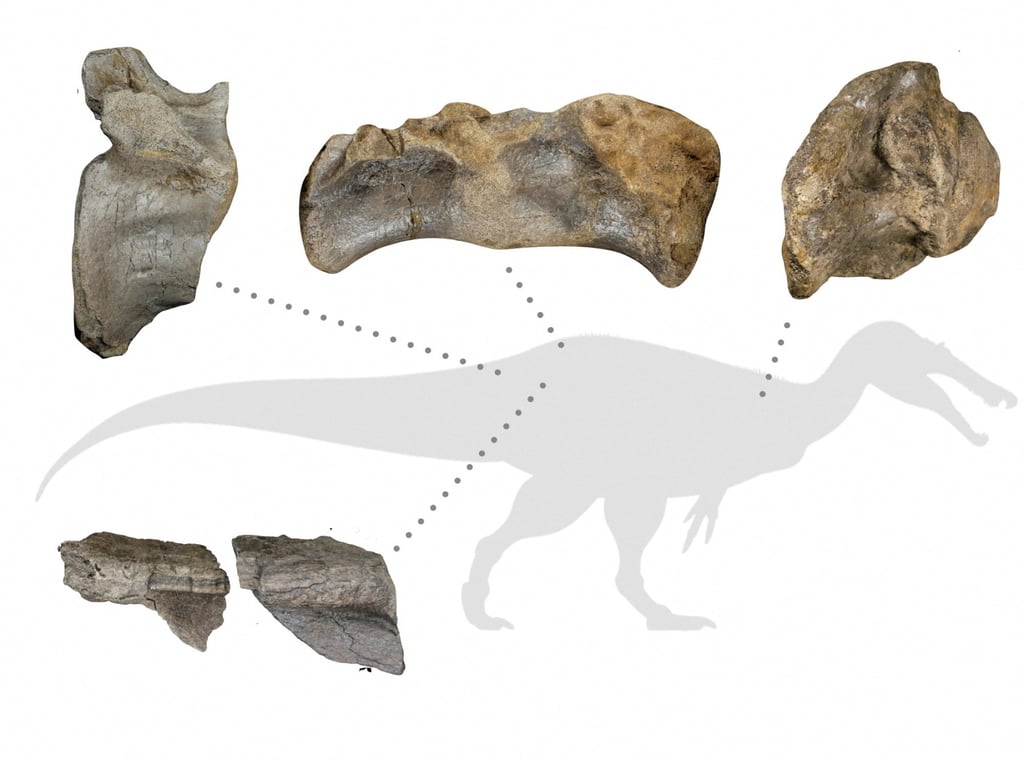
PhD student Chris Barker, who led the study, said it was a “huge animal” that probably weighed several tonnes.
“Judging from some of the dimensions, it appears to represent one of the largest predatory dinosaurs ever found in Europe – maybe even the biggest yet known,” Barker said.
“It’s a shame it’s only known from a small amount of material, but these are enough to show it was an immense creature.”
The bones, which were discovered on the Isle of Wight, include huge pelvic and tail vertebrae.
This Isle of Wight has been dubbed “dinosaur island” due to its being a rich repository of dinosaur remains. No fewer than 29 species have been recorded in its soft clays and sandstones that erode quickly, revealing the secrets of life on planet earth more than 100 million years ago.