Britain lost nearly 4 million days to strikes over the past year – most since the 1980s: study
- Many strikes have been fuelled by real-terms falls in pay of more than 9 per cent in the highly unionised public sector. But it’s not all about pay
- Working conditions, exhaustion and stress are also front of mind for the doctors, teachers, postal workers and others on the picket lines

Many of the strikes have been fuelled by real-terms falls in pay of more than 9 per cent in the highly unionised public sector, said the Resolution Foundation.
Sectors including health, education, the postal services and railways have been responsible for 96 per cent of all days lost to strike action since 2021, said the think tank.
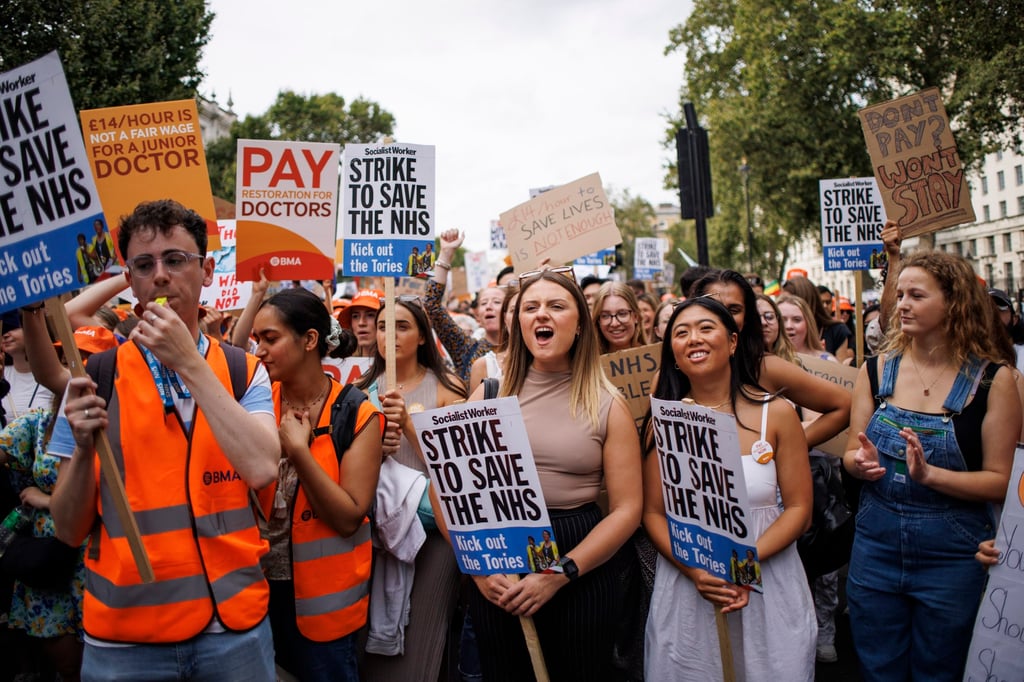
But real-terms pay for public sector workers fell by 9.2 per cent over the same period and for those in health and social care it fell by 9.8 per cent, the study indicated.
The foundation said the strikes were not just about pay, warning that working conditions, exhaustion and stress also played an important part.
The public-sector pay squeeze also appears to have contributed to an increase in vacancies, with those in health, education and public administration 33 per cent higher in March than in December 2019, compared with 23 per cent higher across the rest of the economy, the report said.