‘Stolen’ totem pole begins journey from Scotland to Nisga’a nation in Canada
- The pole is being restored by the National Museum of Scotland in Edinburgh to the Nisga’a Nation in northern British Columbia
- The museum agreed last year to return the pole, which has been on display since 1930. Nisga’a Nation researchers say it was stolen in 1929

Members of a Canadian First Nation held a spiritual ceremony on Monday at a Scottish museum to begin the homeward journey of a totem pole stolen almost a century ago.
The 11-metre (36-ft) pole is being restored by the National Museum of Scotland to the Nisga’a Nation in northern British Columbia – one of the first times a British museum has returned artefacts to any of North America’s Indigenous peoples.
The museum agreed last year to return the pole, which has been on display in the Edinburgh building since 1930. Nisga’a researchers say it was taken without consent in 1929 by an anthropologist who sold it to the museum.
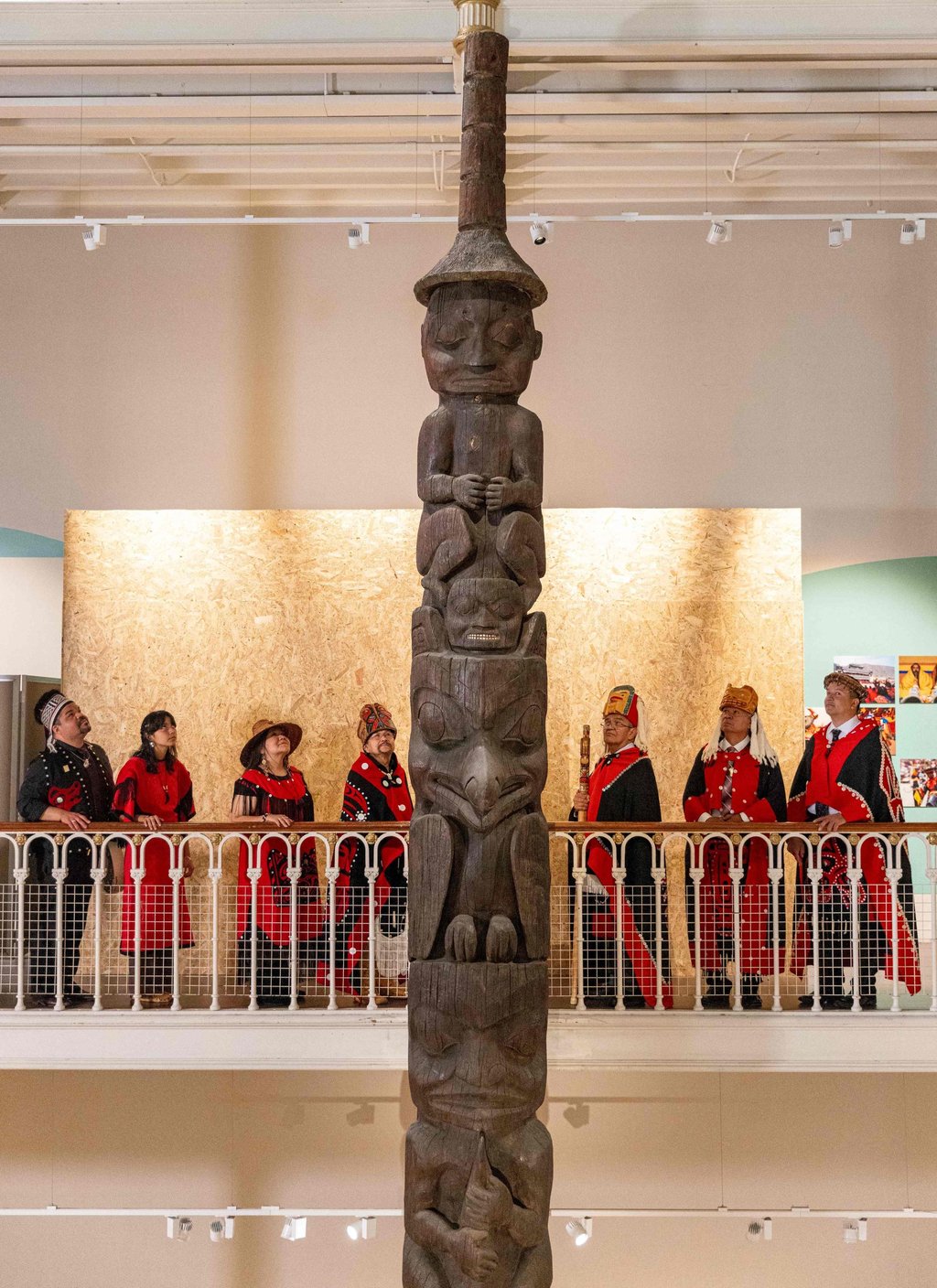
Chief Earl Stephens, who has the Nisga’a cultural name Sim’oogit Ni’isjoohl, said that “in Nisga’a culture, we believe that this pole is alive with the spirit of our ancestors.”
“After nearly 100 years, we are finally able to bring our dear relative home to rest on Nisga’a lands,” he said.
Carved from red cedar in the 1860s, the pole includes family crests and animal and human figures. It commemorates the Nisga’a warrior Ts’aawit and stood outside his relatives’ home for 70 years before being removed while villagers were away for the annual hunting season.
After Monday’s ceremony attended by delegates from the Nisga’a, the museum and the Scottish and Canadian governments, workers will erect scaffolding around the pole, which will be carefully removed, packed and flown next month on a Canadian air force plane to British Columbia. It is scheduled to go on display in the Nisga’a Museum in the Nass Valley alongside scores of other artefacts recovered from museums.