Nimrud stood as a treasure of civilisation for 3,300 years. Islamic State vandals have smashed it to bits

Nearly a month into the fight to retake Mosul, government forces pushed Islamic State militants out of nearby Nimrud, home to some of Iraq’s richest archaeological treasures. And when soldiers finally surveyed the extremists’ destruction of the ancient sites, one said that those who carried it out “don’t have a place in humanity.”
Intricate reliefs that once stood at the gates to the magnificent Assyrian palace lay in pieces: stone carvings of a face, half of a claw, part of a wing, fragments of script.
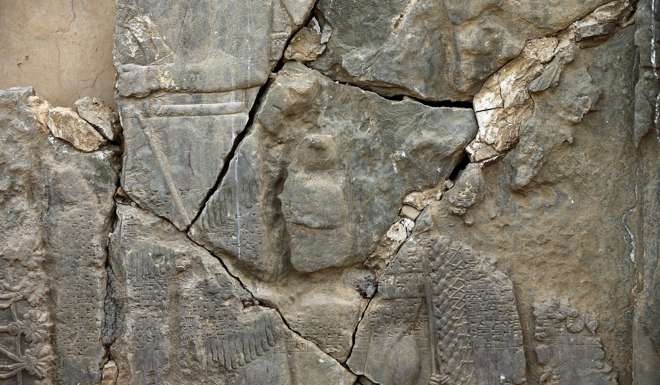
Iraqi officers accompanied journalists to the site Wednesday, wandering through the piles of rubble and snapping photos of the damage that UN officials had once called “a war crime.”
This was done by people who don’t have a place in humanity
The Assyrian Ziggurat, nearly 3,000 years old and once one of the tallest surviving buildings of the ancient world, has been leveled. On palace walls, only small fragments of stone carvings remained. Two Assyrian winged-bull statues that once marked the palace entrance have been completely destroyed. In a palace doorway, four deep cracks defaced a large carving of an Assyrian guardian spirit.