Analysis Why the US Navy’s Tomahawk missiles were the weapon of choice in strikes on Syria

When the US Navy launched dozens of Tomahawk missiles at Syria on Friday, it was relying on a weapon that is a mainstay when the Pentagon wants to attack from a safe distance.
The missile has been a critical part of US warfare since the Persian Gulf War in 1991 and commonly carries a 450kg warhead. It was last used by the Pentagon in October, when the military launched Tomahawks from the Red Sea at three coastal radar sites in Yemen after Houthi rebels there fired missiles at several US ships over several days.
Before that, the United States used them in September 2014 as the country expanded its air war against militants from Iraq into Syria.
Friday’s strike were launched from two Navy ships in the Mediterranean Sea, the USS Porter and the USS Ross.
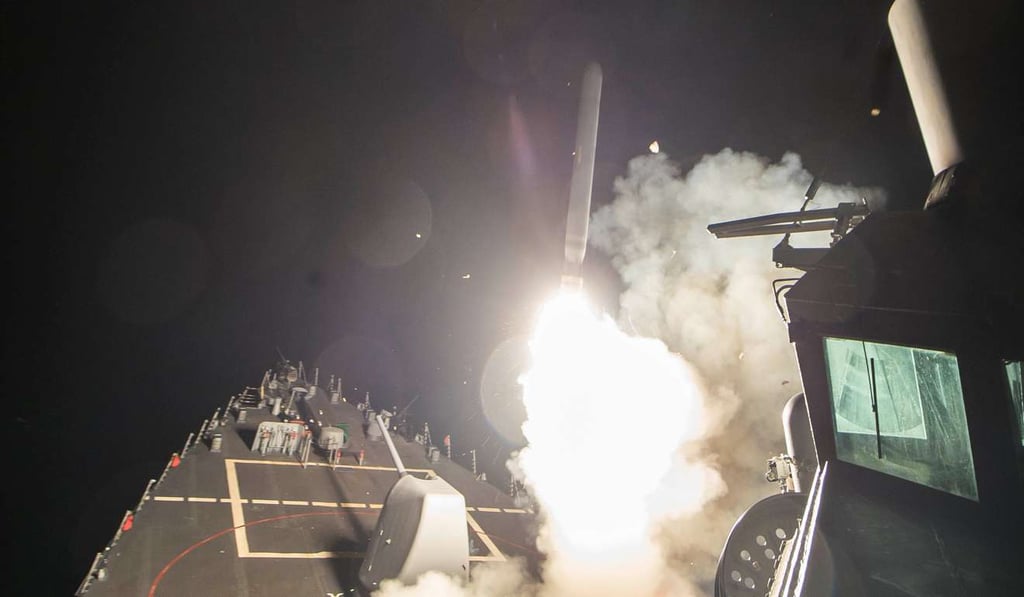
One of the largest advantages to using the Tomahawk is that it does not require a pilot to be anywhere near a potential target. They can be launched from Navy destroyers up to 1,600km away, a tactical consideration when facing enemy air defences. Assad’s military operates modest S-200 surface-to-air missile systems but is backed by Russian forces, which have more advanced S-300 and S-400 missiles. Those systems have better radar and fly faster than older surface-to-air missiles.