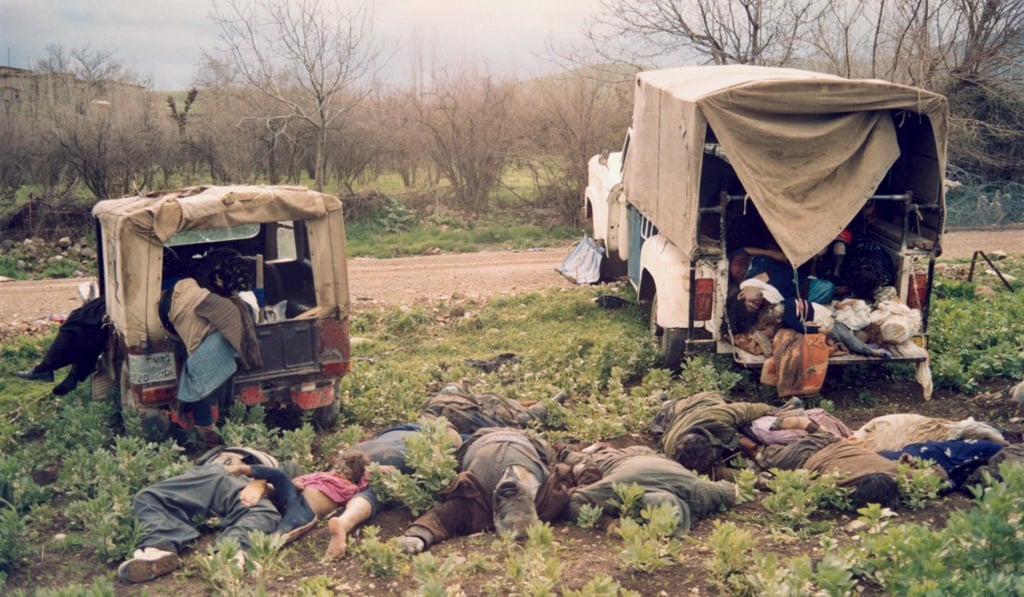
Saddam’s toxic legacy still poisons tragic town of Halabja, 30 years after gas atrocity

As a teenager Kamal Jalal saw two of his sisters killed when Iraqi dictator Saddam Hussein’s forces launched a gas attack on the Kurdish town of Halabja.
Now three decades later at the age of 47 this Iraqi Kurd remains reliant on an oxygen machine to help him breathe – and is still waiting for compensation over a massacre that became a byword for brutality.
“The doctors told me that I lost 75 per cent of my lungs,” he said as he sat in his small home just metres from a memorial to the atrocity that overlooks the town.
The monument with a Kurdish flag on top commemorates some 5,000 Iraqi Kurds, mostly women and children, killed on March 16, 1988 when deadly gas was released on Halabja in the mountains of northeastern Iraq.
WARNING: Distressing images are contained in this 1988 BBC report from Halabja