Advertisement
UN experts find British-made bomb parts in Yemen, in breach of international law
- Britain has licensed at least US$5 billion worth of exports to Saudi Arabia since its war in Yemen began, with accusations of indiscriminate bombing commonplace
- Such arms sales were held to be unlawful in June by the Court of Appeal in London, which found ministers had failed to conduct a proper impact assessment
2-MIN READ2-MIN

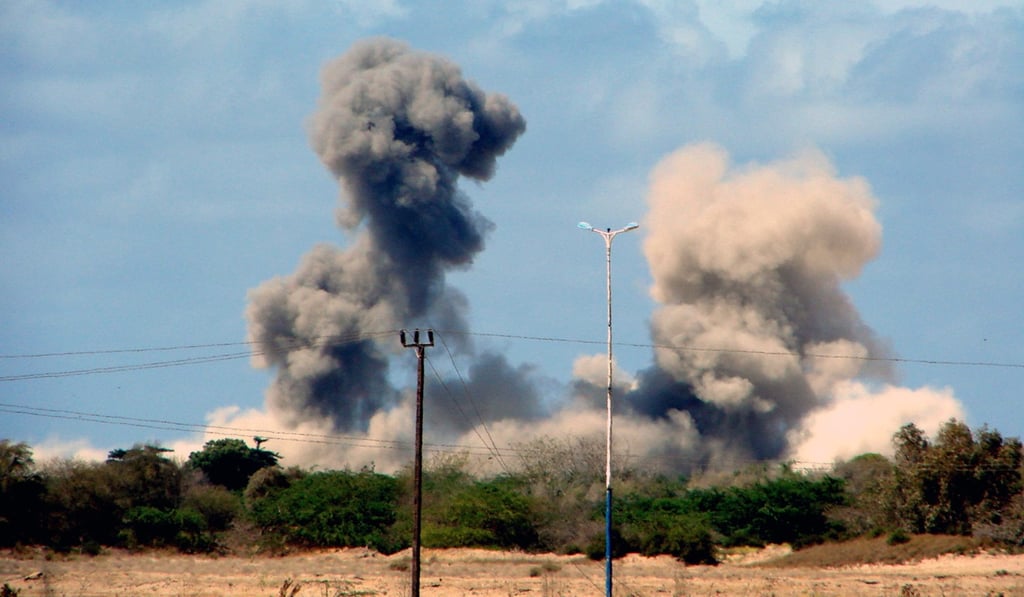
A United Nations panel of experts has uncovered fragments of British-made laser guidance missile systems at an air raid site in Yemen, in a strike that it concluded breached international humanitarian law.
The attacks took place in September 2016, a month after the then-foreign secretary Boris Johnson said he was content to allow the export of weapons systems to Saudi Arabia in the expectation they would be used in Yemen.

Advertisement
A guidance unit for a “high explosive” bomb – stamped with the name of Brighton-based company EDO MBM Technology – was found at the site in the Yemeni capital of Sana’a after four bombs were dropped in the early morning of September 13.
Missile parts from the same British factory – ultimately owned by the US arms supplier L3 Harris – were also found by the UN experts at the Alsonidar complex following a second air strike nine days later, where a water pump factory and a former tube maker were located.
Advertisement
Britain has licensed at least 4.7 billion pounds (US$5.7 billion) worth of exports to Saudi Arabia since the country became embroiled in the war in Yemen, and the UN documentation shows that British technology has been deployed in a conflict where the Saudi-led coalition has been repeatedly accused of indiscriminate bombing.
Advertisement
Select Voice
Select Speed
1.00x