Do these ancient footprints show how humans left Africa?
- Discovery of footprints in Saudi Arabia desert shed light on routes ancestors took out of Africa
- Evidence of animal prints suggests the humans hunted them along the way
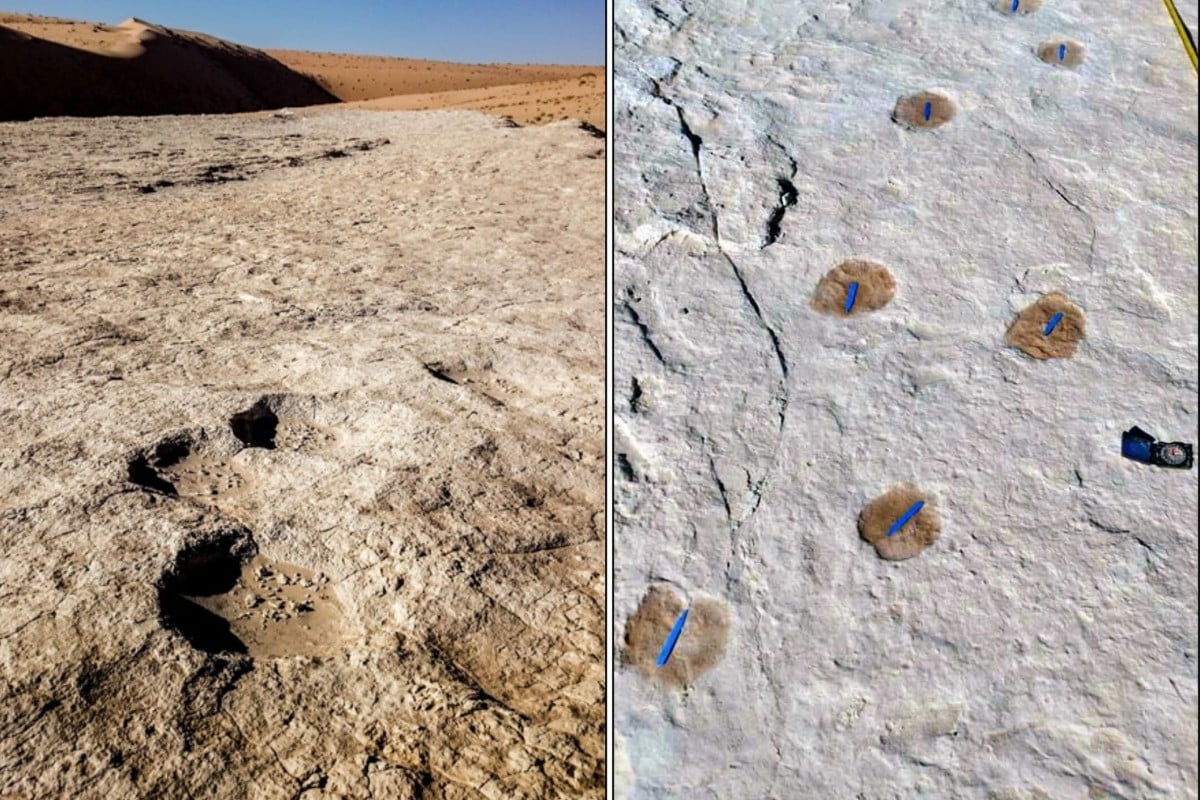
Around 120,000 years ago in what is now northern Saudi Arabia, a small band of Homo sapiens stopped to drink and forage at a shallow lake that was also frequented by camels, buffalo and elephants bigger than any species seen today.
The humans may have hunted the big mammals but they did not stay long, using the watering hole as a waypoint on a longer journey.
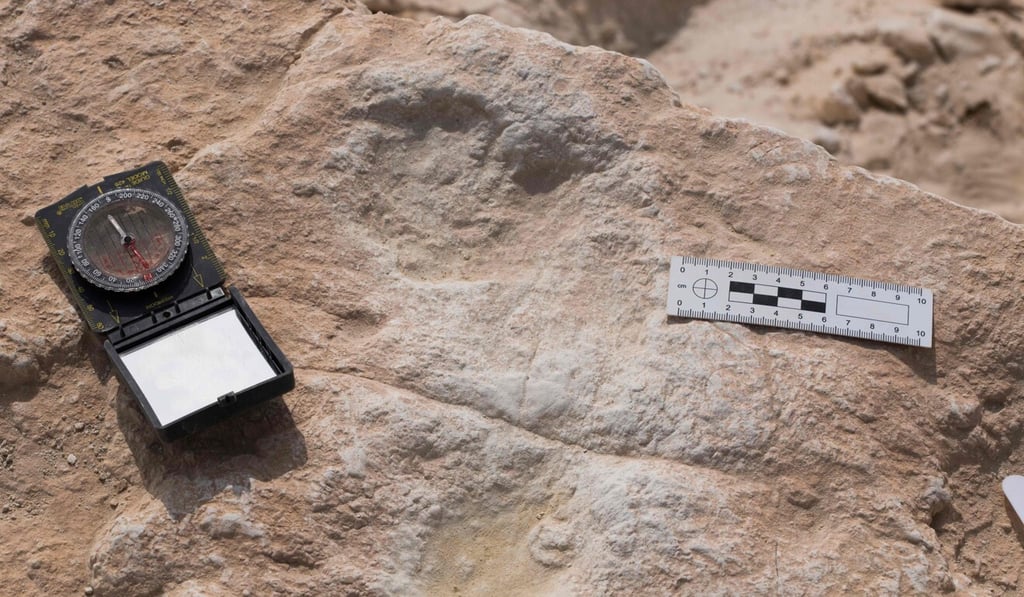
This detailed scene was reconstructed by researchers in a new study published in Science Advances on Wednesday, following the discovery of ancient human and animal footprints in the Nefud Desert that shed new light on the routes our ancient ancestors took as they spread out of Africa.
Today, the Arabian Peninsula is characterised by vast, arid deserts that would have been inhospitable to early people and the animals they hunted down.
But research over the last decade has shown this wasn’t always the case – due to natural climate variation it experienced much greener and more humid conditions in a period known as the last interglacial.