Lebanon holds first election since economic crisis but few expect major changes
- A new generation of independent candidates hopes to kindle the kind of change that a 2019 protest movement failed to deliver
- Turnout in the election was low, with about 32 per cent of registered voters casting their ballots with two hours of voting to go before polls closed

Lebanon held its first election on Sunday since a painful economic crisis dragged it to the brink of becoming a failed state, a major test for new opposition groups bent on removing the ruling elite.
But few observers expected a seismic shift, with all levers of political power firmly in the hands of traditional sectarian parties and an electoral system seen as rigged in their favour.
Lebanon shares power among its religious communities, and politics is often treated as a family business. By convention, the president is a Maronite Christian, the premier a Sunni Muslim, and the parliament speaker a Shiite.
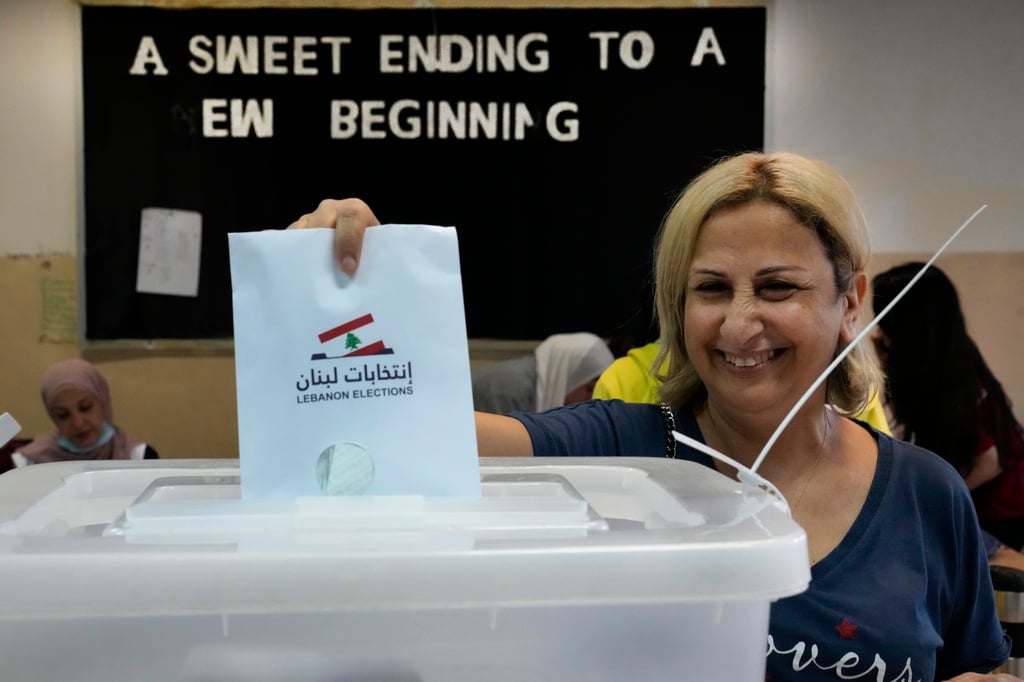
“I voted for change, of course,” said Nabil Bazerji, 64. “Because we can’t continue like this, Lebanon was never in the position that it is in now.”
A new generation of independent candidates hopes to kindle the kind of change that a 2019 protest movement failed to deliver, and looked likely to do better than the single assembly seat they clinched last time.
But most of parliament’s 128 seats are expected to remain in the grip of the entrenched groups blamed for the country’s woes – chiefly the economic downturn that is the worst crisis since the 1975-1990 civil war.
Turnout in the election was low, with about 32 per cent of registered voters casting their ballots with two hours of voting to go before polls closed at 7pm local time, according to the interior ministry.