Women drive fast train to Mecca as Saudi workforce evolves
- Rules introduced in recent years barring workplace gender discrimination and easing dress code restrictions have created new opportunities for women
- Proportion of Saudi women in the workforce has more than doubled since 2016, a sign of expanding women’s rights in the country

Saudi women only gained the right to drive in 2018, and until recently 25-year-old Ali’s transport experience was limited to cruising around her native Jeddah in the family sedan.
But last year she joined some 28,000 applicants vying for just 32 slots for women drivers on the Haramain High Speed Railway, which plies the 450km (280-mile) route between the holy cities of Mecca and Medina at speeds of up to 300kph.
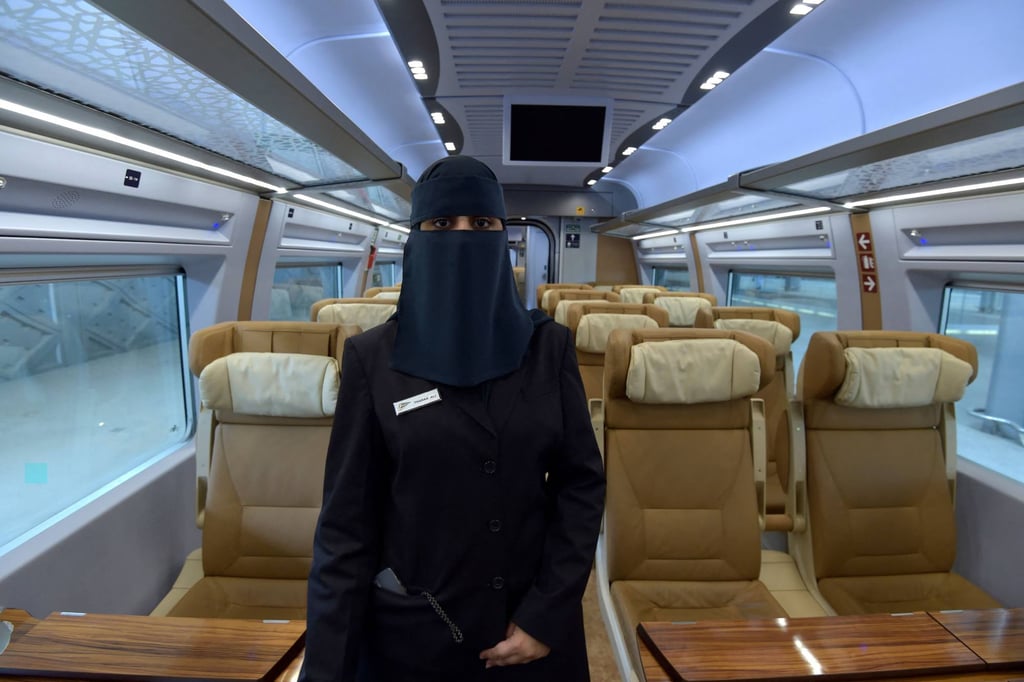
To her astonishment, the former English teacher was among the lucky few selected, and she completed her first trip last month.
“The first day working here was like a dream for me – entering the train, entering the cabin,” she said. “When you are in the cabin, you see things heading towards you at a very high speed. A feeling of fear and dread came over me, but thank God, with time and intensive training, I became confident in myself.”
The proportion of Saudi women in the workforce has more than doubled since 2016, from 17 per cent to 37 per cent.
The statistic feeds a narrative of expanding women’s rights under Crown Prince Mohammed bin Salman, even amid ramped-up repression of activists, making it a reliable applause line at events like the World Economic Forum in Davos.