ExplainerWhy US troops remain in Iraq 20 years after ‘shock and awe’
- American-led invasion was launched on March 20, 2003, with Iraqi capital Baghdad falling three weeks later
- The much-stated reason for the continued US presence today is to help Iraq battle remnants of Isis. But a key reason is Iran

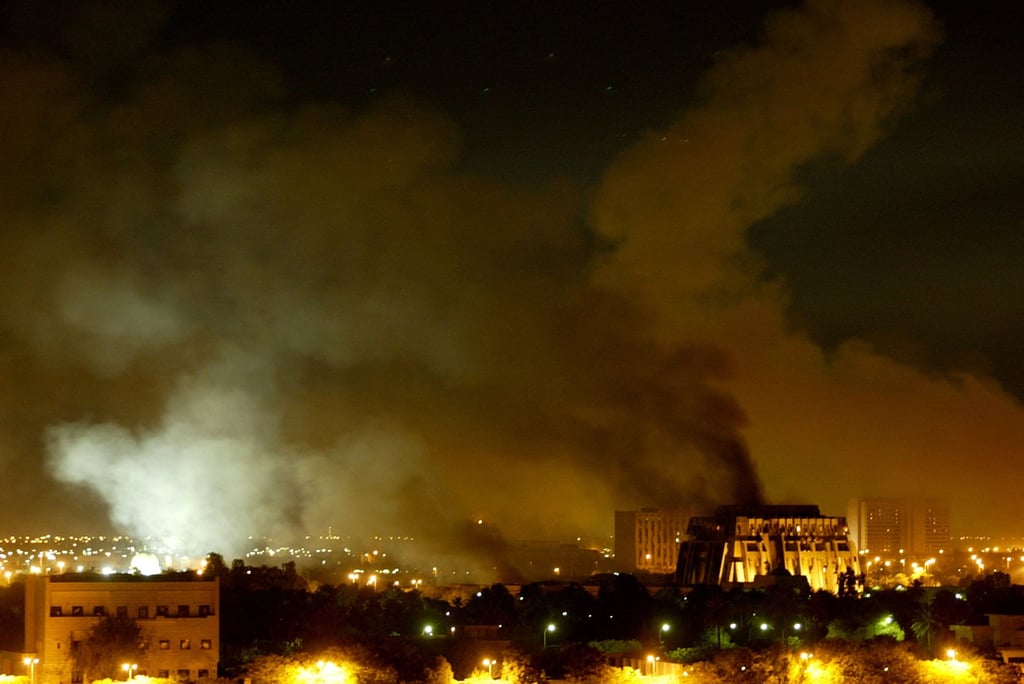
Twenty years after the US invaded Iraq – in blinding explosions of shock and awe – American forces remain in the country in what has become a small but consistent presence to ensure an ongoing relationship with a key military and diplomatic partner in the Middle East.
The roughly 2,500 US troops are scattered around the country, largely in military installations in Baghdad and in the north.
And while it is a far cry from the more than 170,000 US forces in Iraq at the peak of the war in 2007, US officials say the limited – but continued – troop level is critical as a show of commitment to the region and a hedge against Iranian influence and weapons trafficking.
A look at America’s evolving role in Iraq:
How did it start?
The US invaded Iraq in March 2003 in what it called a massive “shock and awe” bombing campaign that lit up the skies, laid waste to large sections of the country and paved the way for American ground troops to converge on Baghdad.