Midnight Hammer: inside the strike the US says Iran didn’t see coming
A strategic feint with B-2 stealth bombers and submarine-launched Tomahawk missiles enabled the unprecedented strike on key nuclear facilities

The heart of operation “Midnight Hammer” was a feint.
A group of American B-2 bombers – the only jets capable of deploying 30,000-pound (13,607kg) bunker-buster munitions with a shot at breaching the mountains shrouding Iran’s Fordow nuclear facility – flew west across the Pacific Ocean. When those planes were spotted on flight-tracker data, they were seen as being deployed as a way to strong-arm the Islamic Republic into negotiations.
But in reality, they were decoys meant to maintain tactical surprise, according to US Defence Secretary Pete Hegseth. While those planes got all the attention, another group of B-2s flew east – literally under the radar.
Those moves were part of a 37-hour operation that resulted in strikes at the Fordow, Isfahan and Natanz nuclear sites this weekend, plunging the US directly into a conflict between Iran and Israel in the Middle East and raising fears over deeper violence to come in the region and beyond. The concerns are extending to markets as well, with traders predicting stocks will drop, oil prices will spike and the dollar will strengthen.
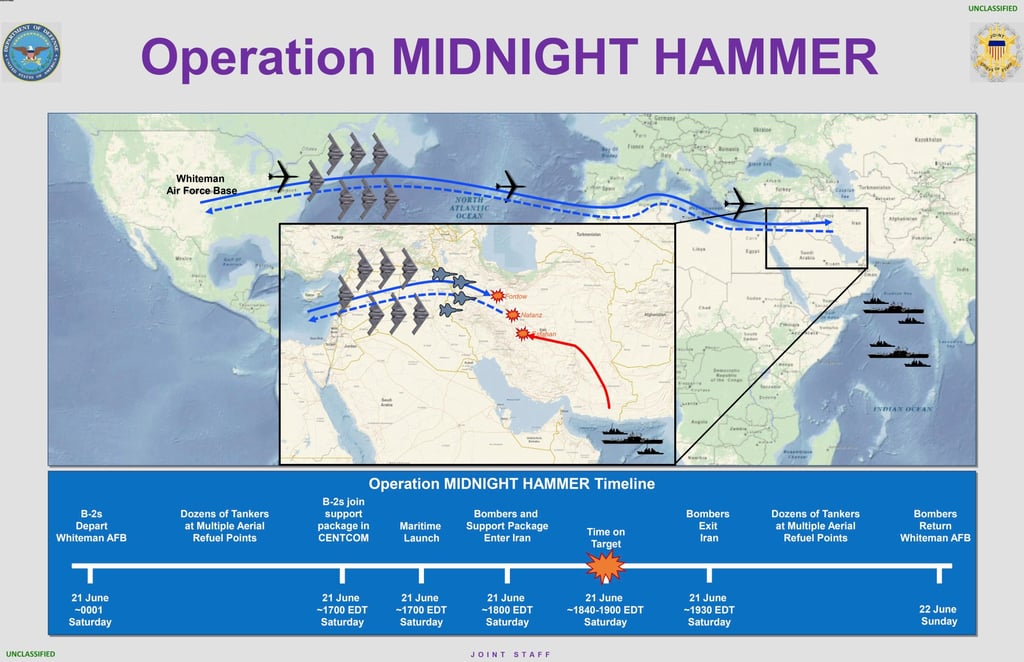
In the end, the Saturday night operation, which the US said was necessary to prevent Iran from acquiring a nuclear bomb, was deemed a success by the Pentagon.