Soyuz launch failure due to ‘deformation’ during assembly, Russian official says
- The launch to the International Space Station was aborted minutes after blast-off on October 11, with the two crew surviving after ejecting in a capsule

A Russian rocket carrying two people to space last month failed because of a problem created during the craft’s assembly at the cosmodrome, a Russian space official said on Thursday.
“The cause of a non-standard separation [of the rocket’s second stage]” was a “deformation” of a part during assembly at the Baikonur cosmodrome, said Oleg Skorobogatov who heads the Russian commission investigating the incident.
He said this caused a booster rocket from the first stage to malfunction and hit a fuel tank which “led to the loss of stabilisation” and triggered an emergency landing.
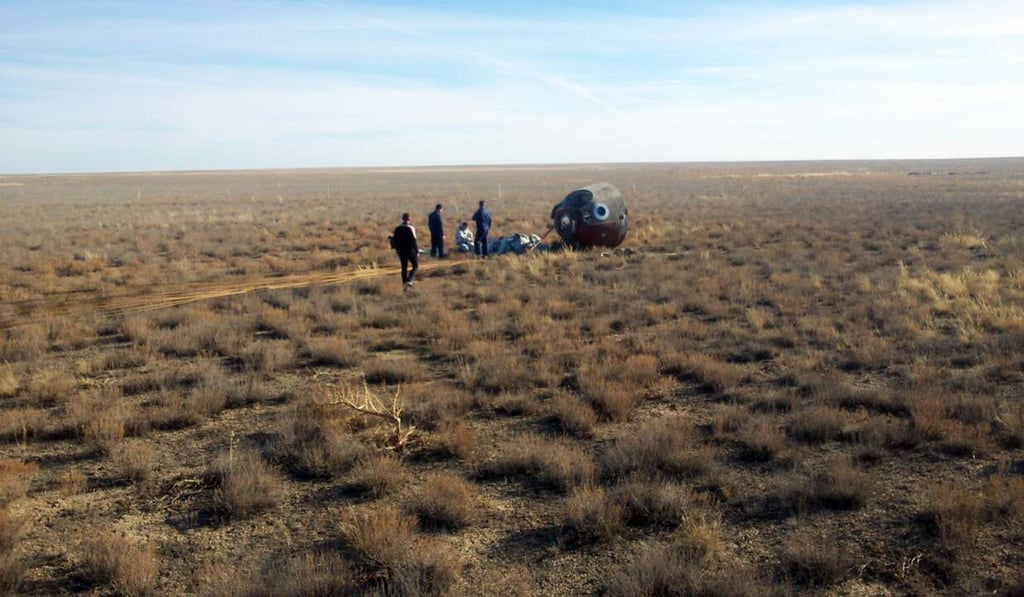
The Russian and American crew had to withstand a ballistic descent back to Kazakhstan on October 11, but both emerged from the landing craft safe and sound.
Executive director of Russia’s Roscosmos space agency Sergei Krikalyov said on Wednesday the root of the problem was a sensor that indicated the separation of the first two stages of the Soyuz rocket.