Chinese demand for prehistoric tusks fuels ‘mammoth rush’ in Siberia
- Russian authorities estimate 500,000 tonnes of ‘ice ivory’ are buried in Siberian permafrost, attracting buyers from China

Crouching near a wooden shed in his snowy backyard, Prokopy Nogovitsyn lifts up a grey tarpaulin and takes out a vertebra the size of a saucer – part of a mammoth skeleton.
“Some friends found this in the north and wanted to sell it,” says Nogovitsyn, who lives in a village in the northern Siberian region of Yakutia. “But it lacks tusks, so nobody wanted it.”
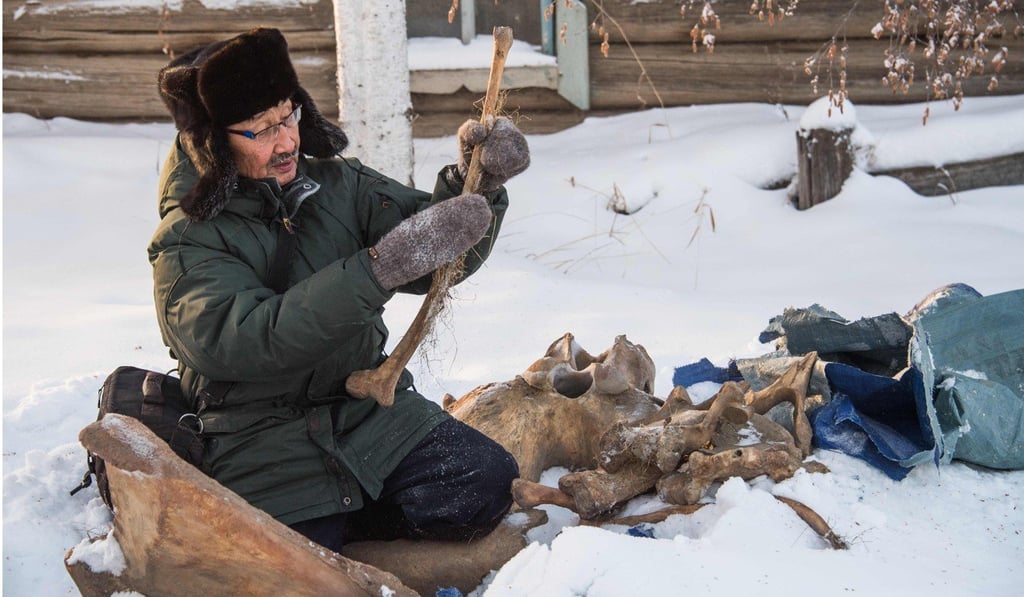
Mammoth bones are widespread in Yakutia, an enormous region bordering the Arctic Ocean covered by permafrost, which acts as a giant freezer for prehistoric fauna.
But over the last few years this part of the world has experienced something of a mammoth rush: after China banned the import and sale of elephant ivory, its traditional carvers turned to the tusks of the elephants’ long-extinct ancestors.
Russian exports amounted to 72 tonnes in 2017, with over 80 per cent going to China.