Researchers sniff out five new truffle species in forests of New England

They aren’t the type you’d shave over pasta. But University of New Hampshire researchers have found five new truffle species.
While other types of so-called deer truffles have been found across Europe and the western United States, the particular species doctoral student Ryan Stephens found in the White Mountain National Forest have never been formally identified and named.
More specifically, the truffles were found in Bartlett Experimental Forest, one of the most well-studied forests in New England, he said. They could contain important information about the health of the region’s forests, scientists say. Two of the five have only been found in New Hampshire.
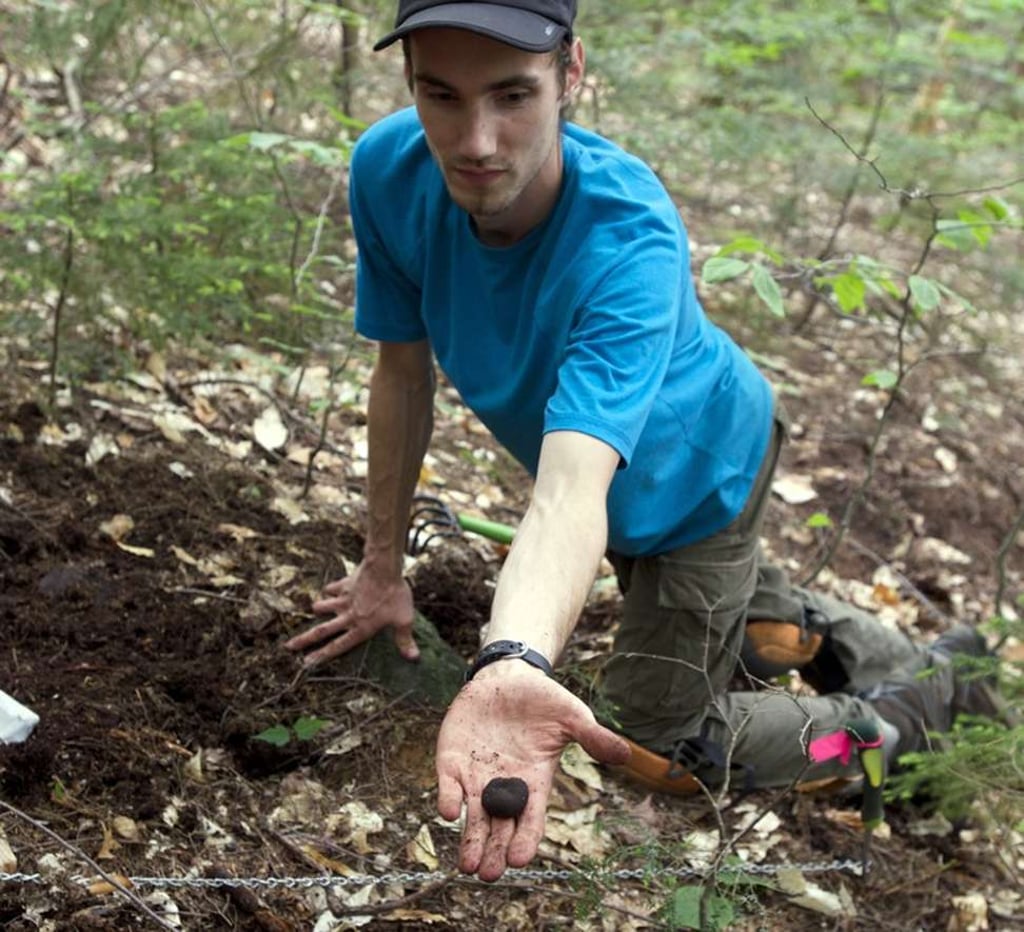
Truffles are the fruit of underground fungi, which many trees depend upon for growth. But unlike mushrooms, which can spread to new locations via spores dispersed in the wind, truffles require animals to dig them up, eat them and disperse their spores via scat. That makes them harder to study, but their symbiotic relationship with tree roots make them a key component to forest health, said Michael Castellano of the US Forest Service, who has studied truffles around the world. For example, efforts to restore a forest after a fire or clearcutting would benefit from knowledge about what was there before, he said.
“They’re not important for the culinary aspect, unless you happen to be a rodent or mammal that hangs out in the forest, but they’re very important to the ecosystem,” he said. “Trees couldn’t survive without mycorrhizal fungi in their root systems. So they’re very important for forest health.”