John Anderson, liberal Republican who challenged Reagan but may have helped him win, dies at 95
Anderson broke with the Republican Party in 1968 to support an anti-discrimination law, bested Reagan in a 1980 head-to-head debate, and ultimately supported Democrat Walter Mondale in the next presidential race

John Anderson, a former Republican congressman who challenged the party’s conservative drift by taking on its chief symbol, Ronald Reagan, and ran for president as an independent in 1980, died on Sunday. He was 95.
Anderson had been ill for some time, family friend Dan Johnson said in a telephone interview. Anderson’s wife, Keke, and his daughter Diane were at his side when he died in Washington, Diane Anderson said by phone.
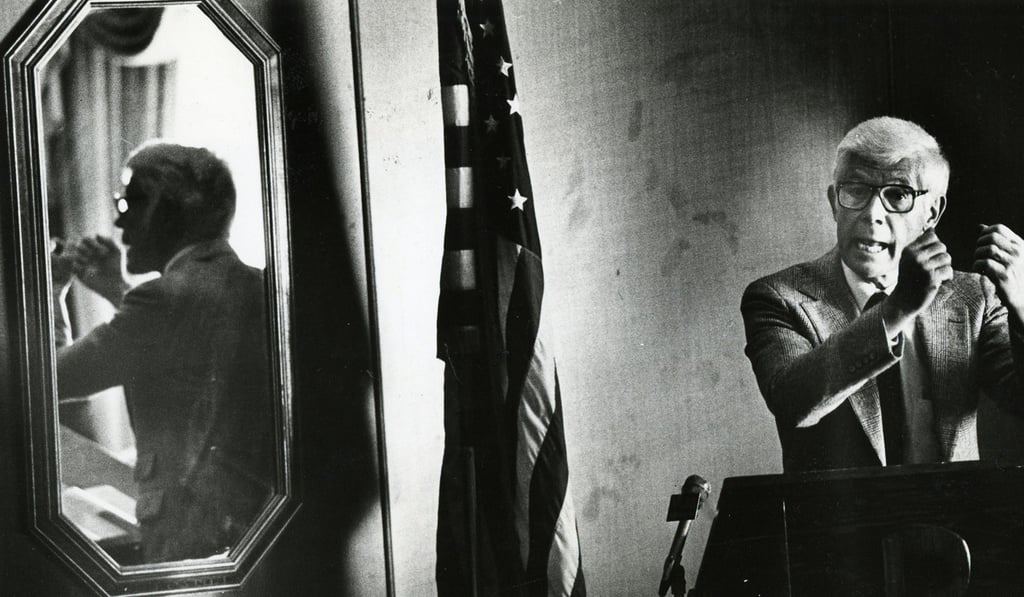
He’s the smartest guy in Congress, but he insists on voting his conscience instead of party
But Anderson did not win a single precinct and political analysts said he ultimately may have contributed to Reagan’s electoral landslide by taking votes from Carter.
Anderson’s first venture into politics came in 1956 when he was elected as a state attorney in Illinois. In 1960, he won the first of 10 terms in the US of Representatives running as a conservative.
He later moved to the left, breaking with conservatives in 1968 by voting for a bill to outlaw racial discrimination in housing.
Anderson served as chairman of the House Republican Conference for the next 10 years even as he became more critical of Republican President Richard Nixon, especially on his handling of the Vietnam War. He was one of the first Republican House members to call for Nixon’s resignation over the Watergate scandal.
“He’s the smartest guy in Congress, but he insists on voting his conscience instead of party,” Republican US Representative Gerald Ford, who later become president, said of Anderson in 1973.