Scientists battle to save elephants from poachers using DNA, piles of dung and US$4.5m in seized ivory
Scientists in the US are using advanced technology and massive databases to stop poaching of elephants in Africa - hopefully saving the beautiful creatures from extinction

Scientists are using information gleaned from both illegal ivory art and elephant dung to provide clues that could help save the lives of pachyderms that are being slaughtered for their tusks in Africa.
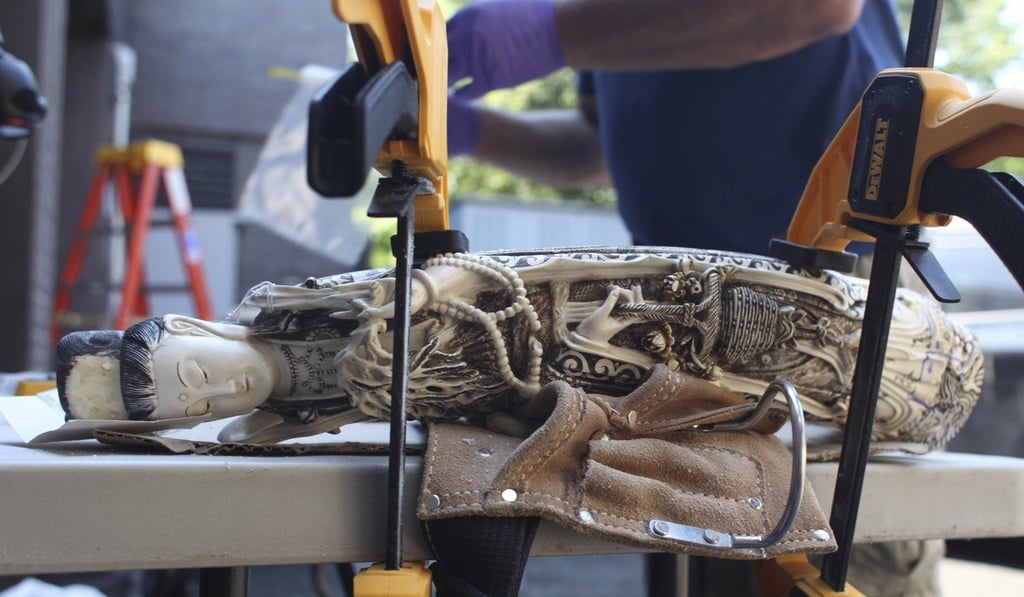
The wildlife detective work involves cutting up seized artefacts, including bangle bracelets and statues of Chinese deities, and subjecting them to carbon dating to determine when the elephants were killed.
DNA from the ivory art is then compared to a DNA database derived from elephant dung to pinpoint where they lived.
What scientists learn may not put a particular poacher in jail, but will tell the story of where and when an elephant died on an African savannah so its tusk could be carved in Asia to make a goddess statue priced at US$72,000 (HK$463,000) in New York City.
That statue was just one of numerous works of art worth $4.5 million that were taken from just a single Manhattan antiques shop.
“It’s going to be really helpful not only for scientific purposes, but also to be able to tell people about the individual lives of elephants that ended up as artwork on our streets,” said Wendy Hapgood, director of the Wild Tomorrow Fund.