Johnson & Johnson ordered to pay US$4.7 billion over claims of cancer-causing asbestos in its talcum powder
The ruling, including US$4.1 billion in punitive damages, is the sixth-largest jury verdict in a product-defect claim in US history, and caused the company’s shares to drop

Johnson & Johnson must pay US$4.14 billion in punitive damages to women who claimed asbestos in the company’s talc products caused them to develop ovarian cancer. The company’s shares dropped in after-hours trading.
The jury earlier ordered J&J to pay them US$550 million in compensatory damages, bringing the total to US$4.69 billion. The amount marks the largest jury award in the US in 2018, according to data compiled by Bloomberg, and the sixth-largest jury verdict in a product-defect claim in US history.
The jury reached a unanimous verdict Thursday to award compensatory damages for 22 plaintiffs that averaged US$25 million apiece. The jurors then deliberated over how much to award in punishment damages.
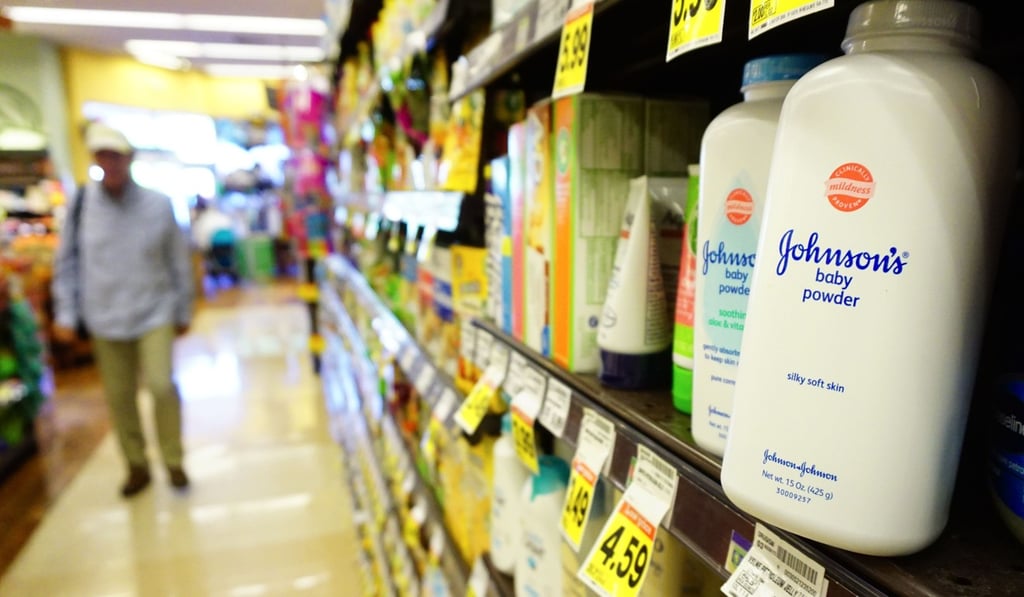
J&J dropped 1.4 per cent in late trading after closing at US$127.76 in New York.
The company will appeal, Carol Goodrich, a spokeswoman, said in an email. The verdict “was the product of a fundamentally unfair process that allowed plaintiffs to present a group of 22 women, most of whom had no connection to Missouri, in a single case all alleging that they developed ovarian cancer,” she said.
The result, “which awarded the exact same amounts to all plaintiffs irrespective of their individual facts, and differences in applicable law, reflects that the evidence in the case was simply overwhelmed by the prejudice of this type of proceeding,” Goodrich added.