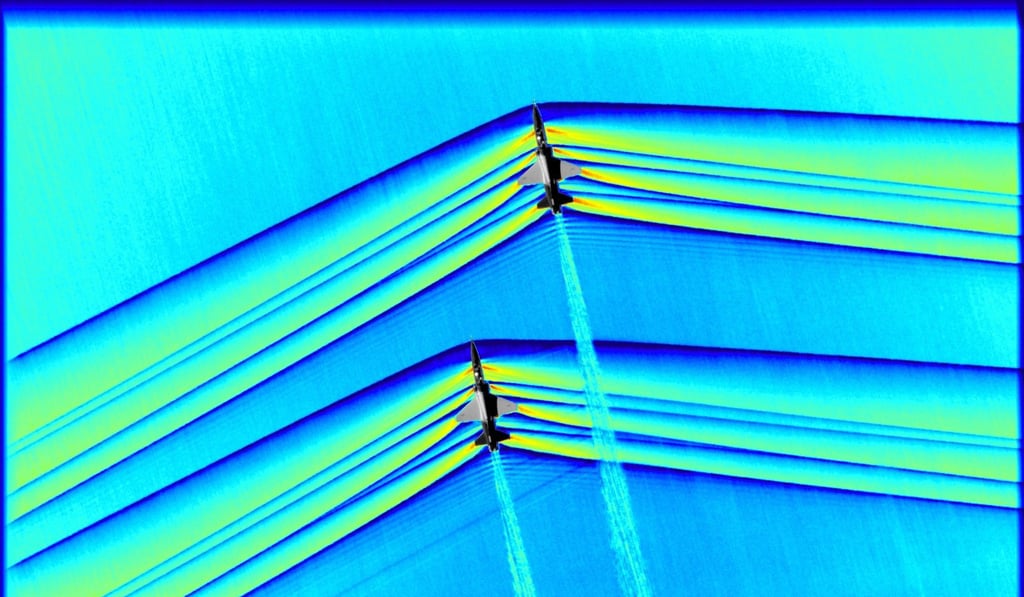
Incredible Nasa images show supersonic shock waves from two jets flying just 9 metres apart
- Images captured by another plane with an advanced, high-speed camera

Nasa has captured unprecedented photos of the interaction of shock waves from two supersonic aircraft, part of its research into developing planes that can fly faster than sound without thunderous “sonic booms”.
When an aircraft crosses that threshold – around 1,225km/h (760mph) at sea level – it produces waves from the pressure it puts on the air around it, which merge to cause the ear-splitting sound.
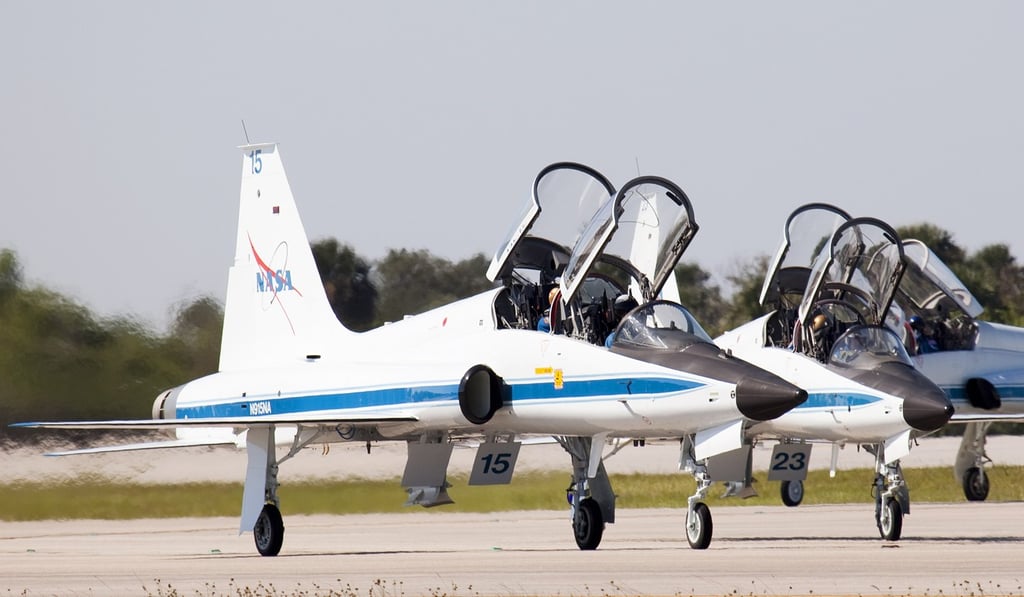
In an intricate manoeuvre by pilots at Nasa’s Armstrong Flight Research Centre in California, two supersonic T-38 jets flew just 9 metres (30 feet) apart below another plane waiting to photograph them with an advanced, high-speed camera, the agency said.
The rendezvous -at an altitude of around 30,000 feet – yielded mesmerising images of the shock waves emanating from both planes.
With one jet flying just behind the other, “the shocks are going to be shaped differently”, said Neal Smith of AerospaceComputing Inc, an engineering firm that works with Nasa, in a post on the agency’s website.