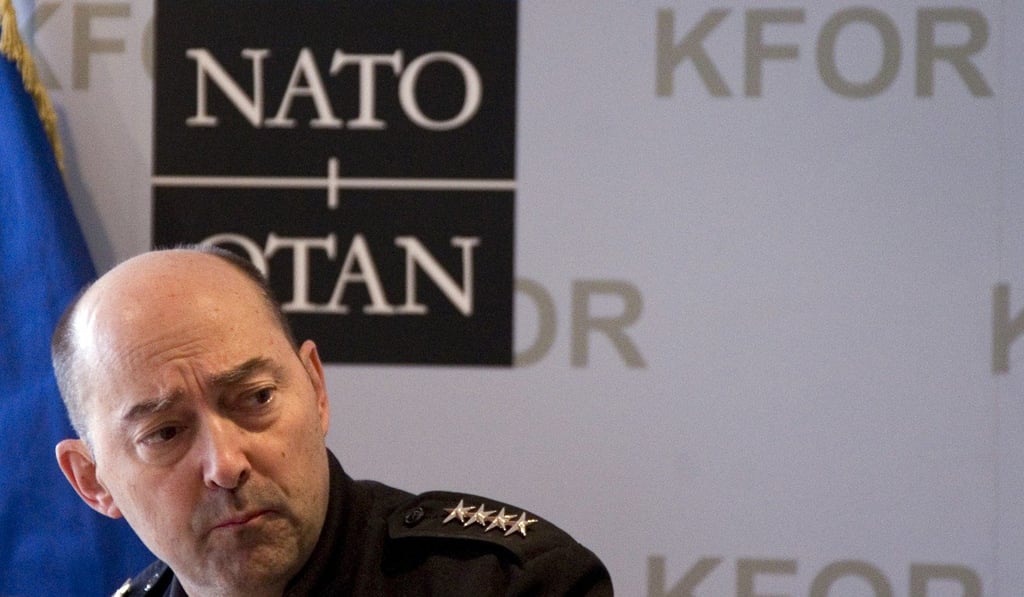
Politico | Nato at 70: what’s next?
- How should it spend its growing resources?
- What new technologies are needed to counter Russian aggression?

This story is published in a content partnership with POLITICO. It was originally reported on politico.com on April 3, 2019.
As member nations gather to celebrate Nato's 70th anniversary this week, POLITICO asked experts to forecast what the military alliance will look like 10 years from now.
Answers have been edited for length and clarity.
Envisioning Nato 4.0
Retired Admiral James Stavridis is operating executive at the Carlyle Group. He is a former supreme allied commander for Nato
If you think of Nato as a computer program, Nato 1.0 was the cold war – two massive war machines on hair-trigger alert staring each other down across the Fulda gap in Europe. Nato 2.0 was very expansive and reflected the counterterrorism operations post-9/11 into Afghanistan, Iraq and Libya. Now we are in Nato 3.0, which has refocused on Europe and the threat of Russian adventurism as exemplified by their forays into Moldova, Georgia and above all Ukraine – not Nato members to be sure, but Nato partners.
I'd say Nato 4.0 in 10 years will continue to guard its members in Europe from Russian pressure, but will also be far more engaged on the borders of the Alliance in the High North (Arctic); be vastly better at cybersecurity and offensive cyber capability as an alliance; and continue to address illegal migration and attendant movement of terror groups from the south.
While Nato might add another member or two (perhaps Georgia, Sweden or Finland) it will remain roughly the same size and composition.