New York restaurant Lucky Lee’s sparks online backlash with promise of ‘clean’ Chinese food
- Owner Arielle Haspel says restaurant is named after husband, Lee, who is not Asian
- Critics say her marketing plays to stereotypes about unhealthiness of Chinese food that ‘makes you feel bloated and icky the next day’

It wouldn’t be right to blame the disastrous opening day for Lucky Lee’s, an optimistically named Chinese-American restaurant in New York, on bad luck. What happened was not an arbitrary curse from the universe. Rather, it was a series of missteps that led the restaurant into the bull’s-eye of America’s ongoing conversation about culinary appropriation.
Chef/owner Arielle Haspel, a nutritionist, set out to open a restaurant that pays tribute to the Chinese food she and her Jewish family ate growing up in New York – except she planned to make versions of popular dishes, such as lo mein and kung pao chicken, without gluten, wheat, refined sugar, genetically modified organisms, MSG or additives.
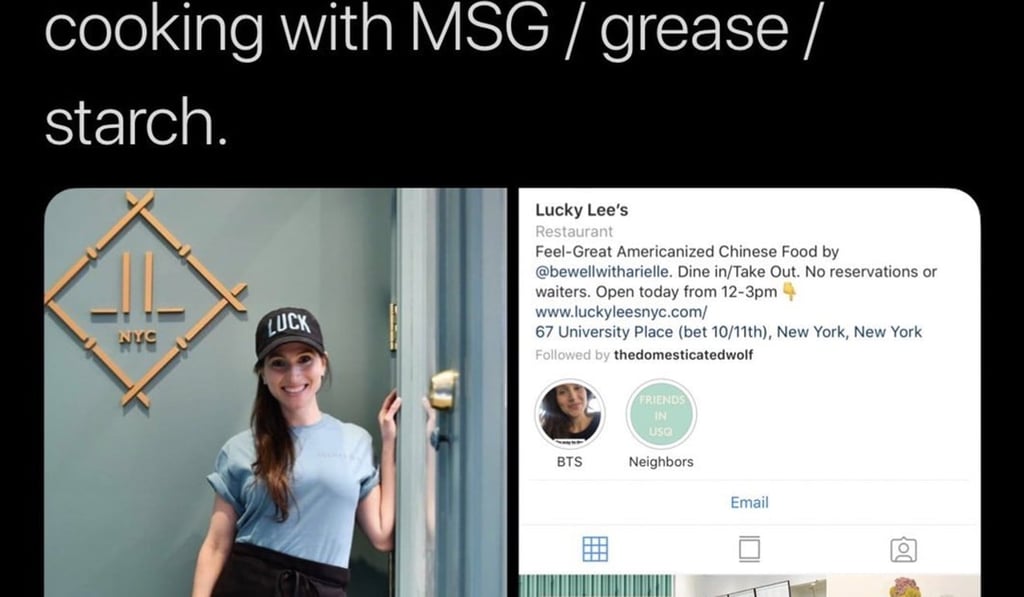
She has described the restaurant as a “clean” Chinese restaurant for “people who love to eat Chinese food and love the benefit that it will actually make them feel good”.
Haspel later clarified on social media that she meant “clean” to indicate ingredients without additives, an accepted definition of the word in the holistic community but one that conjured up an ugly stereotype that immigrant restaurants are dirty.
By positioning her restaurant as one that will “actually make [people] feel good”, she seemed to imply that other Chinese restaurants could not do the same. Other posts alluded to the perceived unhealthiness of Chinese food: one post, since deleted, called lo mein a dish that “makes you feel bloated and icky the next day”.