Saturn’s moons may have ‘sculpted’ its rings, study suggests
- The findings are based on hundreds of thousands of photos sent back from Nasa’s Cassini spacecraft
- The images also reveal how colours, chemistry and temperatures change across the rings

They are the solar system’s most iconic feature, but how and when Saturn’s rings formed have remained a mystery for centuries.
Now, a piece of the puzzle has been revealed: astronomers believe the gravitational pull of Saturn’s tiniest moons probably shaped and “sculpted” the rings, according to the new research.
The rings themselves are made of small particles of ice and rocks, and, according to Nasa, are believed to be pieces of comets, asteroids or shattered moons that broke up before they reached the planet. It is how they turned into rings that remains the mystery.
The new findings are based on data and hundreds of thousands of photos sent back from Nasa’s Cassini spacecraft as it orbited the planet in 2017, soon before it burned up in Saturn’s atmosphere.
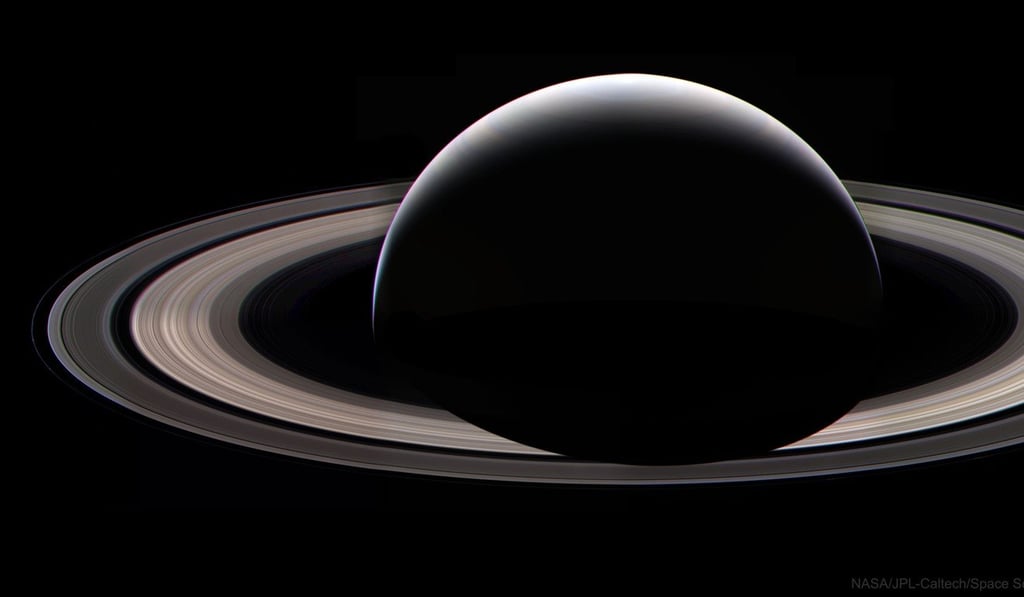
Now, nearly two years after the end of the mission, researchers are still publishing new studies trying to better understand the features based on the data the spacecraft gathered, according to Space.com.
“Getting closer to the rings, getting higher resolution images …, we’re starting to get new views, some of the best-ever views of some of the dynamics and evolution of what’s going on in Saturn’s rings,” Nasa’s Linda Spilker told Space.com.