Nasa to fly a drone to Saturn’s moon Titan in search of signs of life
- Craft will fly around the moon’s surface collecting samples before reaching the Selk impact crater, where there is evidence water once flowed

For its next mission in our solar system, Nasa plans to fly a drone copter to Saturn’s largest moon Titan in search of the building blocks of life, the space agency said on Thursday.
The Dragonfly mission, which will launch in 2026 and land in 2034, will send a rotorcraft to fly to dozens of locations across the icy moon, which has a substantial atmosphere and is viewed by scientists as an equivalent of very early Earth.
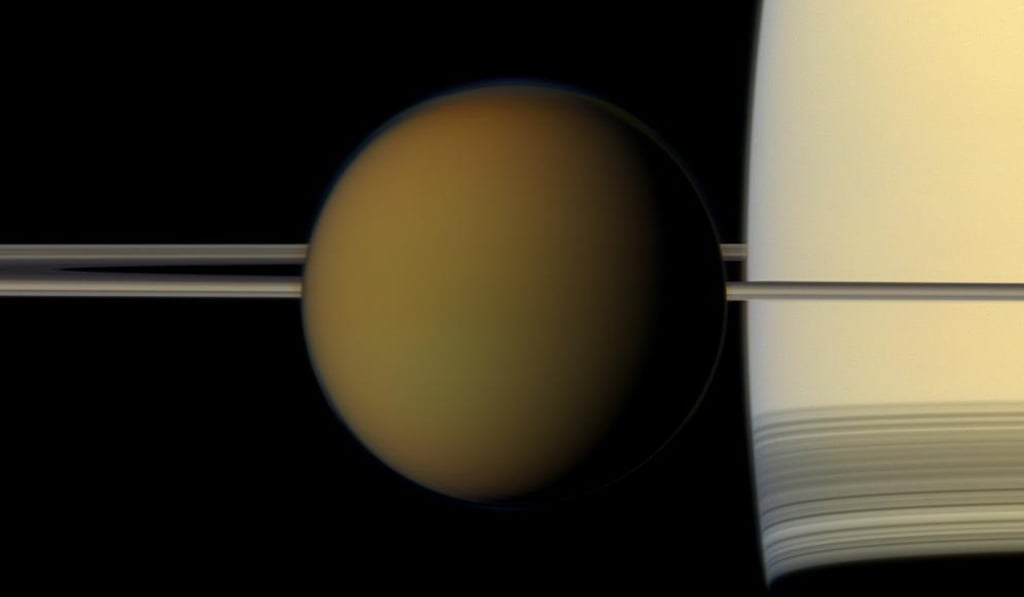
It is the only celestial body besides our planet known to have liquid rivers, lakes and seas on its surface, though these contain hydrocarbons like methane and ethane, not water.
“Visiting this mysterious ocean world could revolutionise what we know about life in the universe, ” said Nasa administrator Jim Bridenstine. “This cutting-edge mission would have been unthinkable even just a few years ago, but we’re now ready for Dragonfly’s amazing flight.”
Nasa said the vehicle would have eight rotors and fly like a large drone.