Scientists map Saturn’s exotic moon Titan in search for life beyond Earth
- Lunar landscape features vast planes and dunes of frozen organic material – critical for fostering living organisms
- Map was based on radar, infrared and other data collected by Nasa’s Cassini spacecraft

Scientists on Monday unveiled the first global geological map of Saturn’s moon Titan, including vast plains and dunes of frozen organic material and lakes of liquid methane, illuminating an exotic world considered a strong candidate in the search for life beyond Earth.
The map was based on radar, infrared and other data collected by Nasa’s Cassini spacecraft, which studied Saturn and its moons from 2004 to 2017.
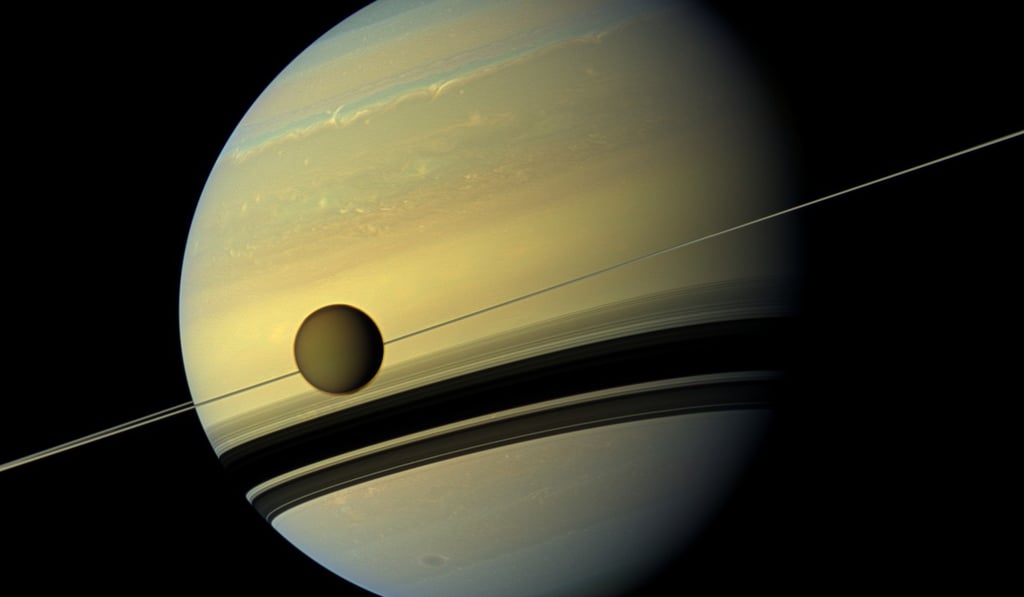
Titan, with a diameter of (5,150km) 3,200 miles, is the solar system’s second biggest moon behind Jupiter’s Ganymede. It is larger than the planet Mercury.
Organic materials – carbon-based compounds critical for fostering living organisms – play a leading role on Titan.
“Organics are very important for the possibility of life on Titan, which many of us think likely would have evolved in the liquid water ocean under Titan’s icy crust,” said planetary geologist Rosaly Lopes of Nasa’s Jet Propulsion Laboratory in California.