Doomsday Clock moves closest to midnight in 73-year history
- Symbolic countdown to global disaster ticks forward 20 seconds in view of ‘existential danger’ from nuclear war and climate change
- Group of former world leaders calls for cooperation to ‘pull humanity back from the brink’
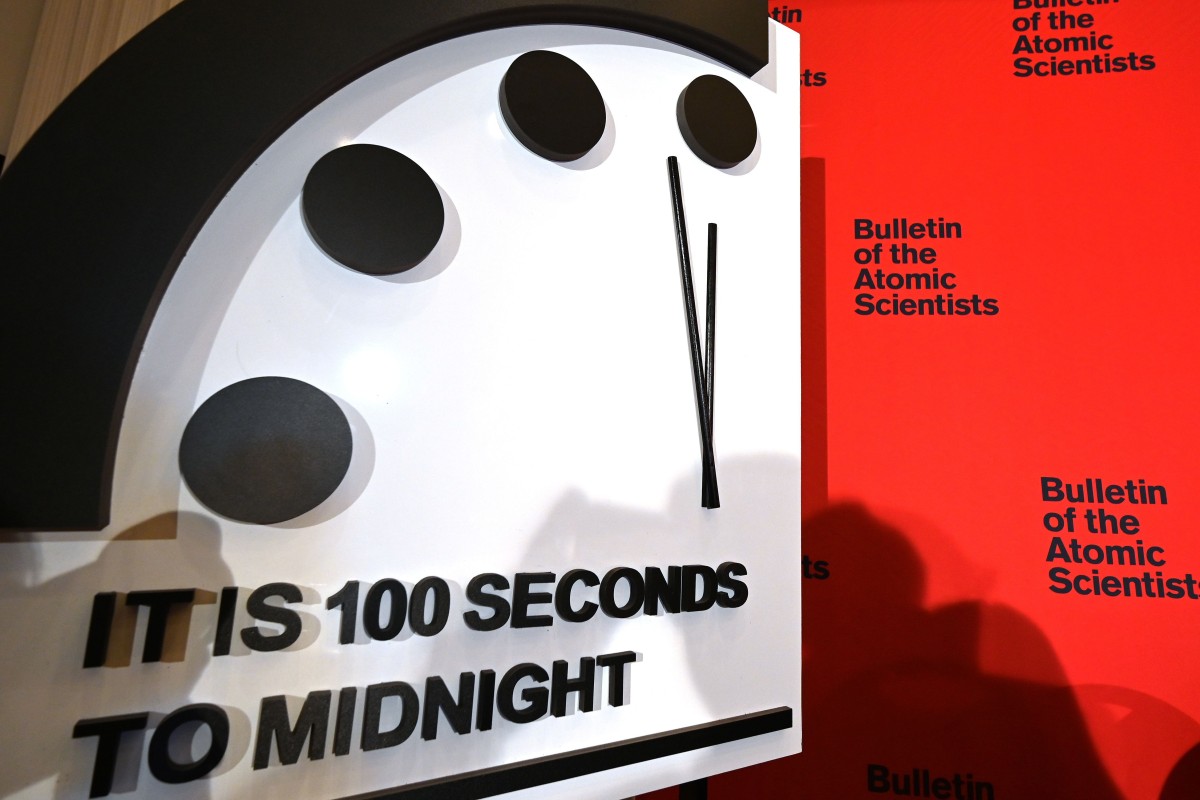
The keepers of the Doomsday Clock on Thursday moved the symbolic countdown to global disaster to the closest point to midnight in its 73-year history, citing “existential danger” from nuclear war and climate change.
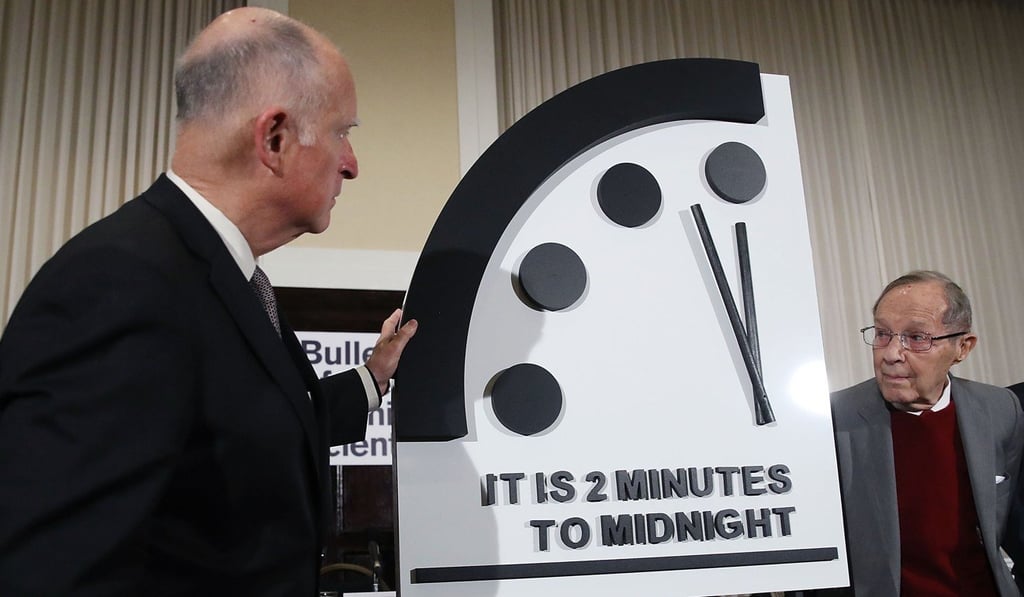
The Bulletin of the Atomic Scientists, which was founded after the creation of the atomic bomb amid World War II and focuses on the greatest threats to human survival, said it moved the clock from two minutes to midnight to 100 seconds to midnight – a 20-second advance.
The decision was made by the group’s science and security board, in consultations with its board of sponsors, which includes 13 Nobel laureates.
In a statement accompanying the clock’s advance, the organisation said the nuclear and climate dangers “are compounded by a threat multiplier, cyber-enabled information warfare that undercuts society’s ability to respond”.
“The international security situation is dire, not just because these threats exist but because world leaders have allowed the international political infrastructure for managing them to erode,” it said.
Rachel Bronson, president and CEO of the Bulletin of the Atomic Scientists, said: “We are now expressing how close the world is to catastrophe in seconds – not hours, or even minutes.”