Canada court rules US immigration detention violates asylum seekers’ human rights, invalidates ‘Safe Third Country’ pact
- Lawyers for refugees who had been turned away at the Canadian border challenged the pact, saying the US does not qualify as a ‘safe’ country
- A federal court judge ruled it was in violation of a section of Canada’s Charter of Rights and gave parliament six months to respond

Under the Safe Third Country Agreement (STCA), asylum seekers who arrive at a formal Canada-US border crossing going in either direction are turned back and told to apply for asylum in the first country they arrived in.
Federal court judge Ann Marie McDonald ruled that the agreement was in violation of a section of Canada’s Charter of Rights that says laws or state actions that interfere with life, liberty and security must conform to the principles of fundamental justice.
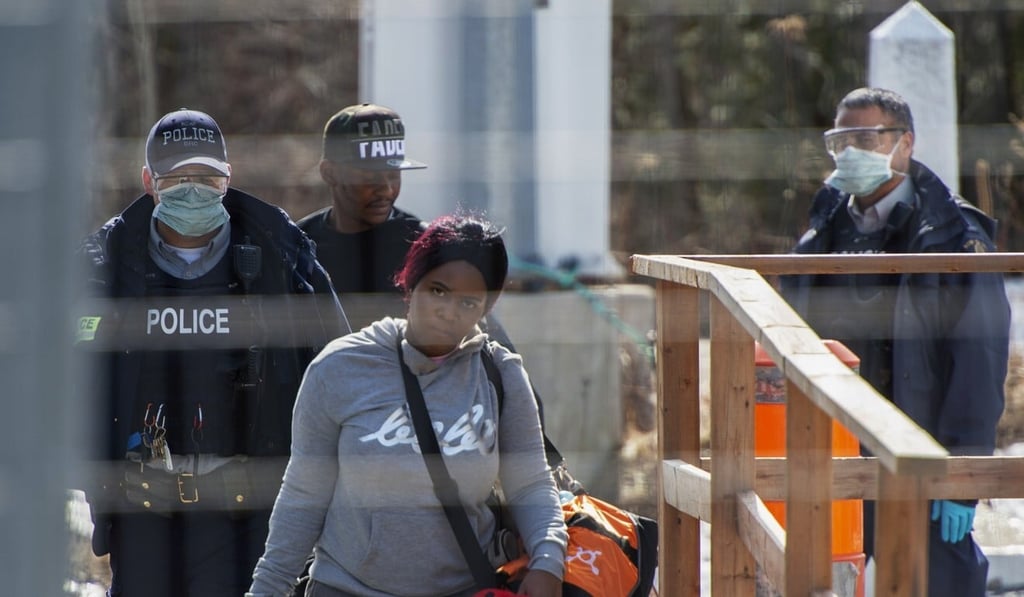
McDonald suspended her decision for six months to give parliament a chance to respond. The agreement remains in place during that time.
Nedira Jemal Mustefa, among the refugees turned back and on whose behalf a challenge was launched, described her time in solitary confinement in the US as “a terrifying, isolating and psychologically traumatic experience”, according to the court ruling.