Nasa’s Perseverance Mars blasts off in search of signs of alien life
- Mission could pave way for arrival of astronauts on Mars as early as the 2030s
- Perseverance rover is headed for unexplored Jezero Crater, riddled with treacherous cliffs, dunes and boulders, to seek ‘holy grail of Mars science’

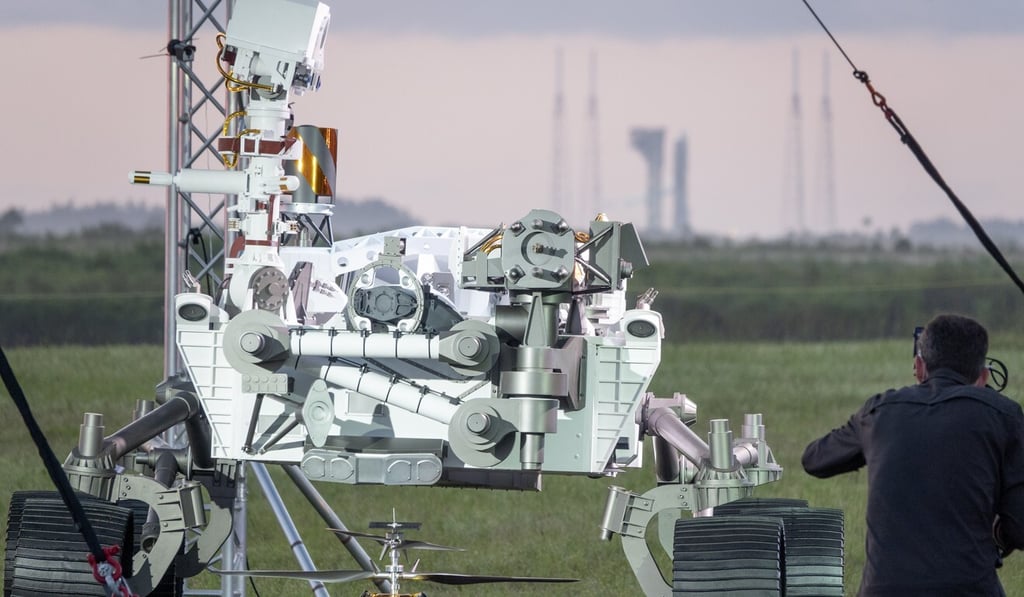
The biggest, most sophisticated Mars rover ever built – a car-size vehicle bristling with cameras, microphones, drills and lasers – was launched for the red planet on Thursday, part of an ambitious, long-range project to bring the first Martian rock samples back to Earth to be analysed for evidence of ancient life.
Nasa’s Perseverance rode a mighty Atlas V rocket into a clear morning sky in the world’s third and final Mars launch of the summer. China and the United Arab Emirates got a head start last week; all three missions should reach their destinations in February after a journey of seven months and 480 million kilometres (300 million miles).
The plutonium-powered, six-wheeled rover is to drill down and collect tiny geological specimens, to be brought home in another spacecraft in about 2031 in a sort of interplanetary relay race involving multiple spacecraft and countries. The overall cost: more than US$8 billion.
Nasa’s science mission chief, Thomas Zurbuchen, pronounced the launch the start of “humanity’s first round trip to another planet”.
“Oh, I loved it, punching a hole in the sky, right? Getting off the cosmic shore of our Earth, wading out there in the cosmic ocean,” he said. “Every time, it gets me.”