Derek Chauvin murder trial: kneeling on George Floyd’s neck ‘totally unnecessary’, says senior policeman
- The Minneapolis Police homicide division head said once the suspect was cuffed, officers had no reason to feel in danger, justifying use of ‘that kind of force’
- Once secured, suspects have to moved out of prone position ‘as soon as possible because it restricts their breathing,’ Lieutenant Zimmerman told the court

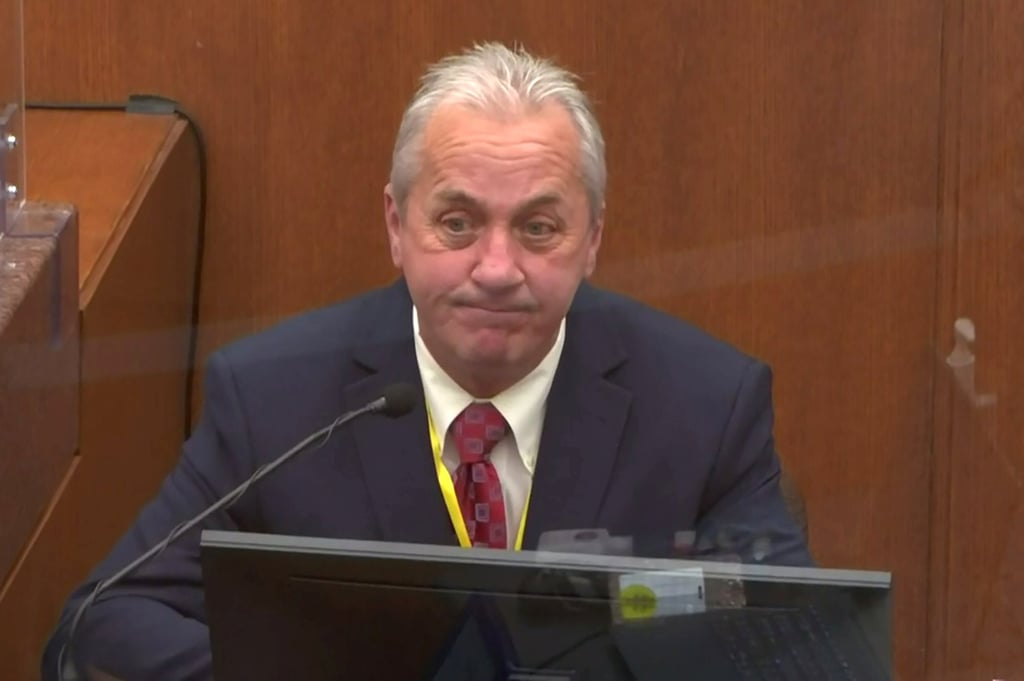
Kneeling on George Floyd’s neck while he was handcuffed and lying on his stomach was top-tier, deadly force and “totally unnecessary”, the head of the Minneapolis Police Department’s homicide division testified Friday.
“If your knee is on a person’s neck, that can kill him,” said Lieutenant Richard Zimmerman, adding that when a person is handcuffed behind their back, “your muscles are pulling back … and if you’re laying on your chest, that’s constricting your breathing even more”.
Zimmerman, who said he is the most senior person on the police force, also testified at Derek Chauvin’s murder trial that once Floyd was handcuffed, he saw “no reason for why the officers felt they were in danger – if that’s what they felt – and that’s what they would have to feel to be able to use that kind of force”.
“So in your opinion, should that restraint have stopped once he was handcuffed and thrown on the ground?” prosecutor Matthew Frank asked.
“Absolutely,” replied Zimmerman, who said he has received use-of-force training annually – as all officers do – since joining the city force in 1985.
He said he has never been trained to kneel on someone’s neck if they are handcuffed behind their back and in the prone position.
“Once you secure or handcuff a person, you need to get them out of the prone position as soon as possible because it restricts their breathing,” Zimmerman said, adding “you need to turn them on their side or have them sit up.”