US military still rife with racism despite trying to purge white supremacists, extremists for decades: investigation
- Black and Hispanic service members are disproportionately investigated and court-martialed and hate crimes go largely unrecorded due to a lack of categorisation
- There is also still no outright ban on service members joining extremist organisations such as the Ku Klux Klan, the Associated Press investigation found

In February, with the images of the violent insurrection in Washington still fresh in the minds of Americans, newly confirmed Defence Secretary Lloyd Austin took the unprecedented step of signing a memo directing commanding officers across the military to institute a one-day stand-down to address extremism within the nation’s armed forces.
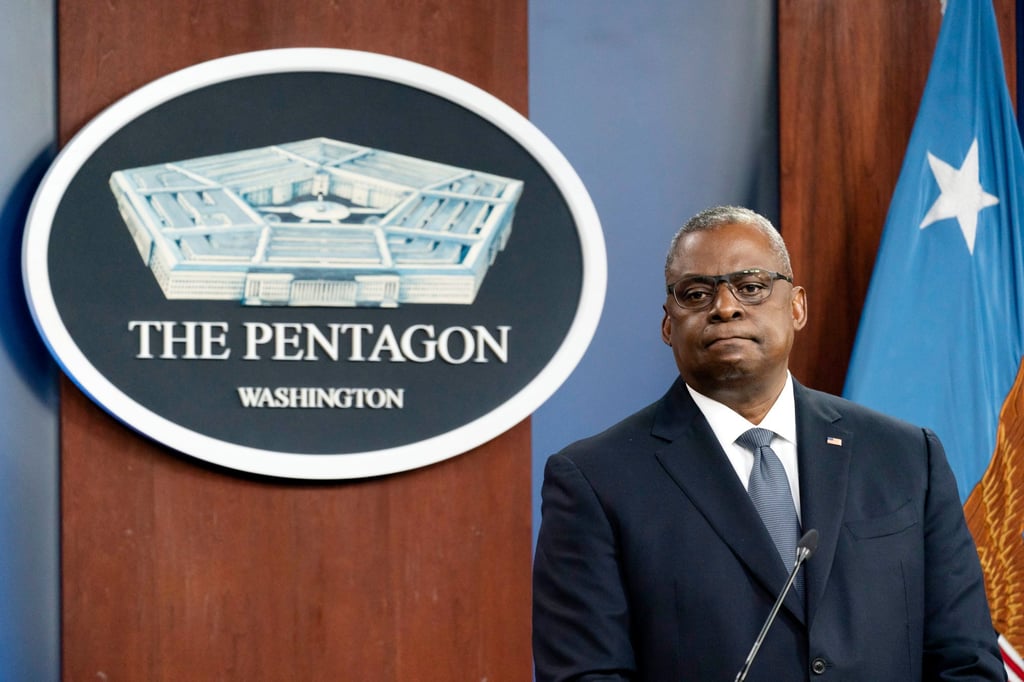
But an Associated Press investigation found that despite the new rules, racism and extremism remain an ongoing concern in the military.
The investigation shows the new guidelines do not address ongoing disparities in military justice under the Uniform Code of Military Justice, the legal code that governs the US armed forces. Numerous studies, including a report last year from the Government Accountability Office, show black and Hispanic service members were disproportionately investigated and court-martialed. A recent Naval Postgraduate School study found that black Marines were convicted and punished at courts-martial at a rate five times higher than other races across the Marine Corps.
It also shows the military’s judicial system has no explicit category for hate crimes – something the federal government, 46 states, and the District of Columbia have on the books – making it difficult to quantify crimes motivated by prejudice.
As a result, investigative agencies such as the Naval Criminal Investigative Service or Army Criminal Investigative Division also do not have a specific hate crime category, which affects how they investigate cases.