In an ancient shark showdown, Jaws may have doomed The Meg, researchers find
- Researchers at DePaul University in Chicago studied teeth from 20 living shark species and 13 fossil species, signalling their position on the food chain
- While the megalodon may have been top of the food chain for millions of years, the great white shark’s arrival added another apex predator, scientists said

An examination of the zinc content of teeth from sharks both living and extinct is providing clues about the demise of the largest-known shark, indicating the mighty megalodon may have been out-competed by the great white shark in ancient seas.
Researchers at DePaul University in Chicago, US assessed the ratio of two forms of the mineral zinc in an enamel-like material called enameloid that comprises the outer part of shark teeth. This ratio enabled them to infer the diets of the sharks and gauge their position on the marine food chain.
They found that while the megalodon may have been alone atop the food chain for millions of years, the great white shark’s arrival about 5.3 million years ago added another apex predator hunting similar prey.
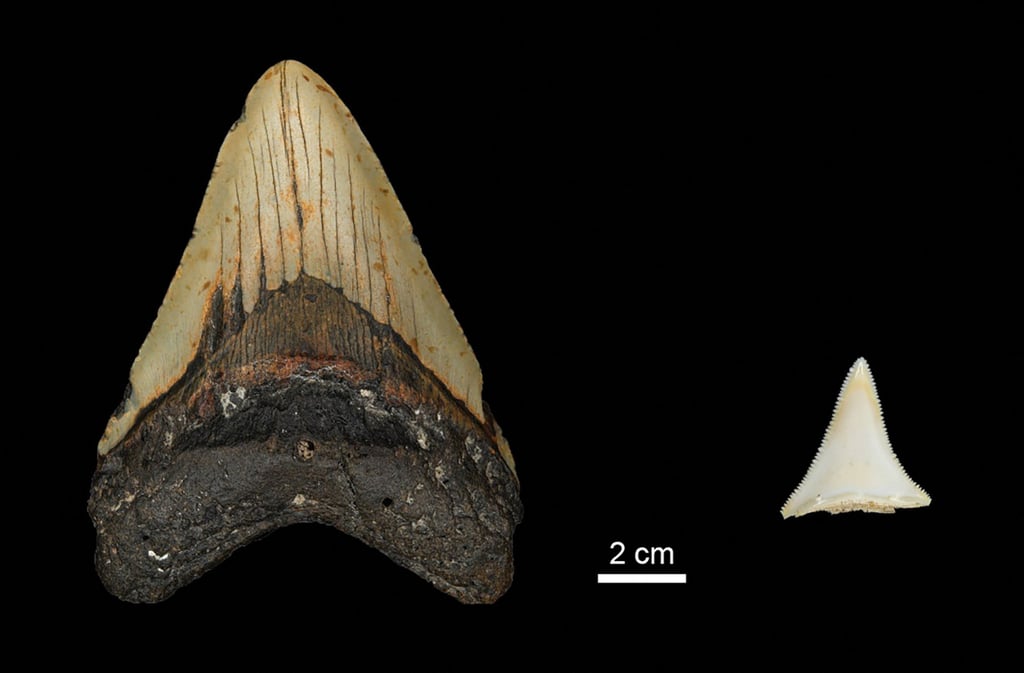
This competition for food resources featured two animals now lodged in the popular imagination – with the great white featured in the blockbuster 1975 film Jaws and its sequels and the megalodon starring in the popular 2018 film The Meg.
Megalodon, whose scientific name is Otodus megalodon, appeared about 15 million years ago and became extinct about 3.6 million years ago. It was one of the largest predators in Earth’s history, reaching at least 50ft (15 metres) and possibly 65ft (20 metres) in length while feeding on marine mammals including whales.
The great white shark, Carcharodon carcharias, reaches at least 20ft (6 metres) long, and may have been the more agile of the two.
“The megalodon coexisted with the great white shark during the time frame called the early Pliocene, and our zinc data suggests that they seem to have indeed occupied the same position in the food chain,” said paleobiologist Kenshu Shimada of DePaul University in Chicago, a co-author of the study published on Tuesday in the journal Nature Communications.
“There have been multiple hypotheses as to why megalodon went extinct. Traditional hypotheses have attributed this to climate change and the decline in food sources. However, a recently proposed hypothesis contends that megalodon lost the competition with the newly evolved great white shark. Our new study appears to support this proposition. It is also entirely possible that a combination of multiple factors may have been at play,” Shimada said.