‘Bloodsicles’ and ice baths: How US zookeepers coax animals through heatwaves
- Surviving climate change has become a central challenge at zoos around the planet, just as it is for people living in densely packed cities such as Denver
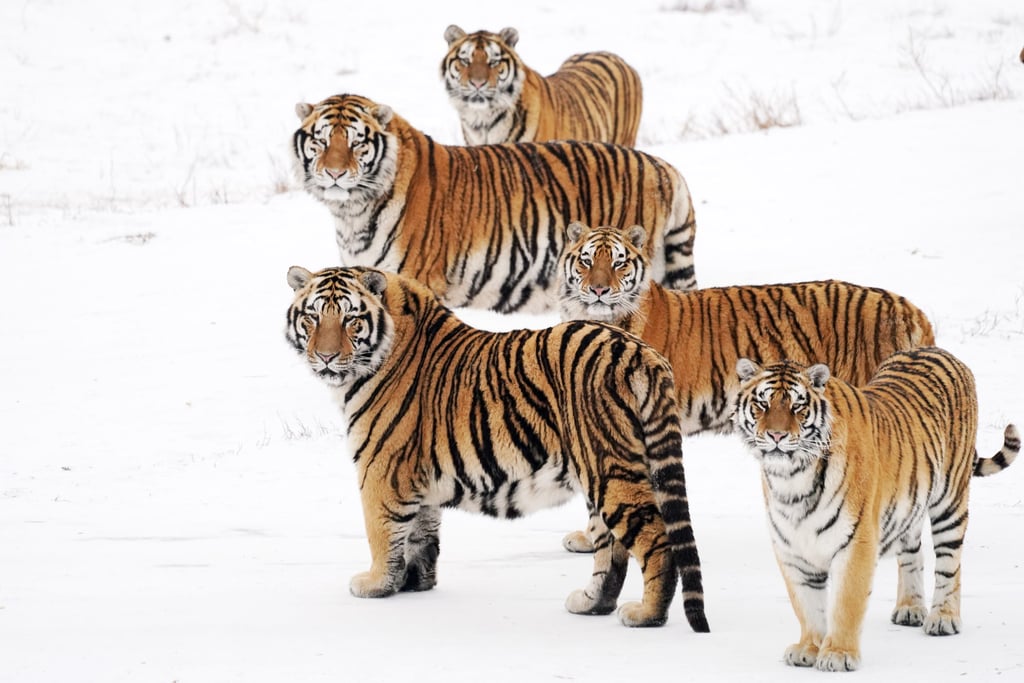
- Siberian tigers Yuri and Nikita at the Denver Zoo, who are supposed to mate, suffer most during Denver’s intensifying heatwaves

The Siberian tigers Yuri and Nikita at the Denver Zoo, who are supposed to mate, suffer most during Denver’s intensifying 95-degree heatwaves, and caretakers supply cooling ice “bloodsicles” from the zoo’s heavily frequented freezers.
Zookeepers also have set up an industrial fan behind a mist-maker, aimed at the bedraggled orange-and-black tigers. Sometimes the tigers plunge into pools and collapse in a loft where there’s airflow. Nikita flops on a mound of wet sand bags.
Penguins seek “snow” made by grinding up cubes from the zoo’s ice maker, the big kind found in motels. These are penguins from South Africa and Peru, better adapted to heat than their Antarctic kin.
Sea lions gnaw on modified versions of the tigers’ bloody bones in ice blocks – salmon-infused “fishsicles.” And many animals take refuge in water. For elephants, zookeepers toss in apples, melons and carrots as incentives to lumber into pools.
Four Mongolian wild horses – a species that evolved on steppe similar to terrain in western Colorado – have proved able to endure baking sun. Leopard tortoises simply bask.
But, overall, the rising heat in Colorado is creating challenges for zoo operators. They care for more than 3,000 animals, representing 450 species, including many that did not evolve to endure extended heat – let alone the temps topping 100 degrees that climatologists warn will be common in Colorado’s future.
Surviving climate change has become a central challenge at zoos around the planet, just as it is for people living in densely packed cities such as Denver, where concrete and asphalt amplify heat by up to 20 degrees. On one hand, zoos play key roles in conservation of species as natural habitat disappears or becomes less hospitable. On the other, the burden of ensuring suitable safe space is growing more difficult.