Silicon Valley Bank collapses in biggest US bank failure since 2008 crisis
- Regulators took possession of the lender after its customer base of tech workers and start-ups yanked their deposits, creating a run on the bank
- The bank was heavily exposed to the tech industry, and there is little chance of contagion in the sector, unlike the months leading up to the Great Recession

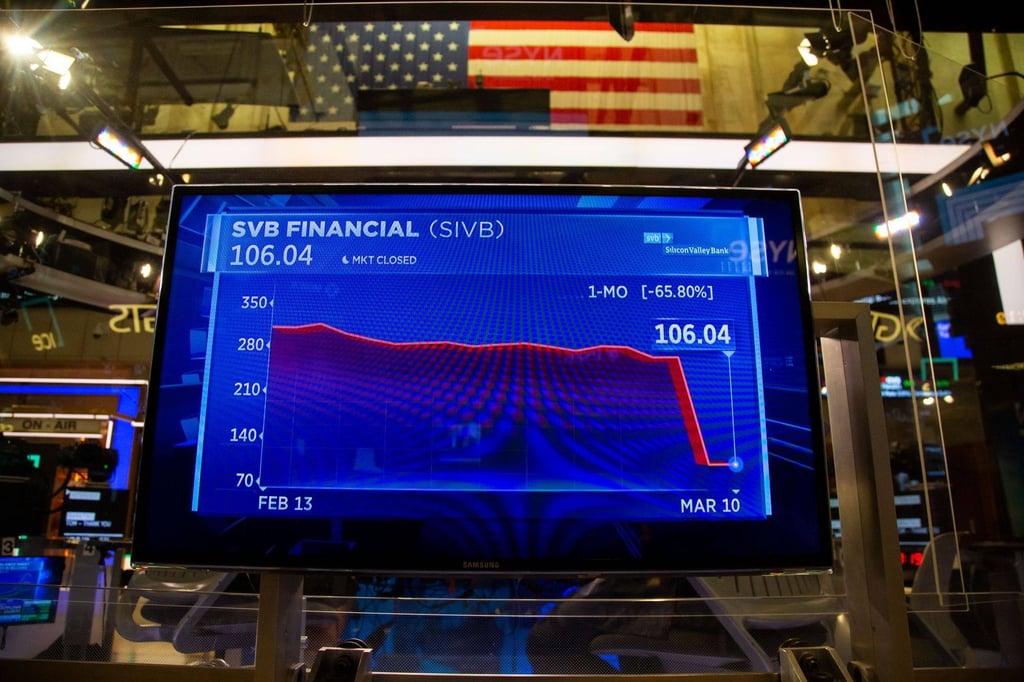
The Federal Deposit Insurance Corporation seized the assets of Silicon Valley Bank on Friday, marking the largest bank failure since Washington Mutual during the height of the 2008 financial crisis.
The bank failed after depositors – mostly technology workers and venture capital-backed companies – began withdrawing their money creating a run on the bank.
Silicon Valley was heavily exposed to tech industry and there is little chance of contagion in the banking sector as there was in the months leading up to the Great Recession more than a decade ago. Major banks have sufficient capital to avoid a similar situation.
The FDIC ordered the closure of Silicon Valley Bank and immediately took possession of all deposits at the bank on Friday. The bank had US$209 billion in assets and US$175.4 billion in deposits as the time of failure, the FDIC said in a statement.
It was unclear how many accounts exceeded the US$250,000 insurance limit.
Notably, the FDIC did not announce a buyer of Silicon Valley’s assets, which is typical when there is an orderly wind down of a bank. The FDIC also seized the bank’s assets in the middle of the business day, a sign of how dire the situation had become.