Thousands more US prisoners to get free college paid for by the government in expanding education programme
- The Pell Grant programme, which offers the neediest tuition aid, is expanding, giving an additional 30,000 students behind bars US$130 million a year
- For prisoners who get degrees it can be the difference between walking free with a life ahead and ending up back behind bars

Thousands of prisoners throughout the United States get their college degrees behind bars, most of them paid for by the federal Pell Grant programme, which offers the neediest undergraduates tuition aid that they don’t have to repay.
That programme is about to expand exponentially next month, giving about 30,000 more students behind bars some US$130 million in financial aid per year.
The new rules, which overturn a 1994 ban on Pell Grants for prisoners, begin to address decades of policy during the “tough on crime” 1970s-2000 that brought about mass incarceration and stark racial disparities in the nation’s 1.9 million prison population.
For prisoners who get their college degrees, including those at Folsom State Prison who got grants during an experimental period that started in 2016, it can be the difference between walking free with a life ahead and ending up back behind bars. Finding a job is difficult with a criminal conviction, and a college degree is an advantage former prisoners desperately need.
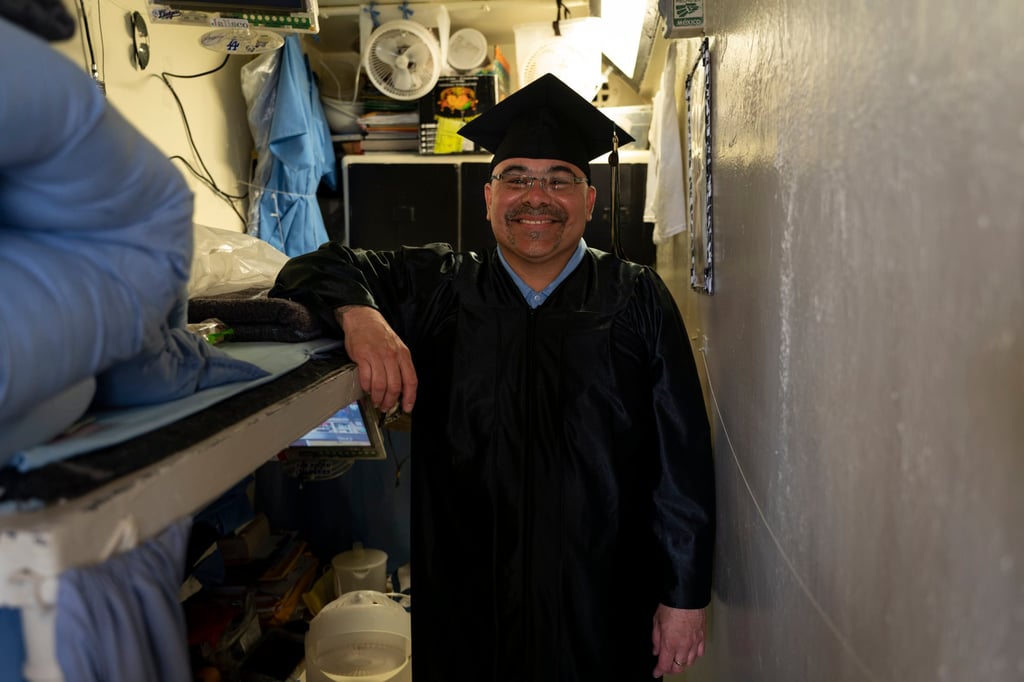
Gerald Massey, one of 11 Folsom students graduating with a degree from the California State University at Sacramento, has served nine years of a 15-to-life sentence for a drunken driving incident that killed his close friend.
“The last day I talked to him, he was telling me, I should go back to college”, Massey said. “So when I came into prison and I saw an opportunity to go to college, I took it”.