From piñata to postage stamp, US celebrates centuries-old Hispanic tradition
- The release of four new stamps featuring colourful piñatas coincides with a month-long recognition of Hispanic heritage in the United States
- Piñatas, synonymous with parties, are a key part of celebrating Las Posadas – festivities held in Mexico and other Latin American countries to mark the birth of Christ

The United States Postal Service on Friday rolled out its latest special edition postage stamps, paying homage to a tradition with global roots that has evolved over centuries to become a universal symbol of celebration.
The release of four new stamps featuring colourful piñatas coincides with a month-long recognition of Hispanic heritage in the US and the start of an annual festival in New Mexico where the handmade party favourites are cracked open hourly and children can learn the art of pasting together their own creations.
Piñatas are synonymous with parties, although their history is layered and can be traced to 16th-century trade routes between Latin America and Asia and the efforts of Spanish missionaries to convert Indigenous communities to Christianity. It was through dance, music and the arts – including the making of piñatas – that biblical stories were spread throughout the New World.
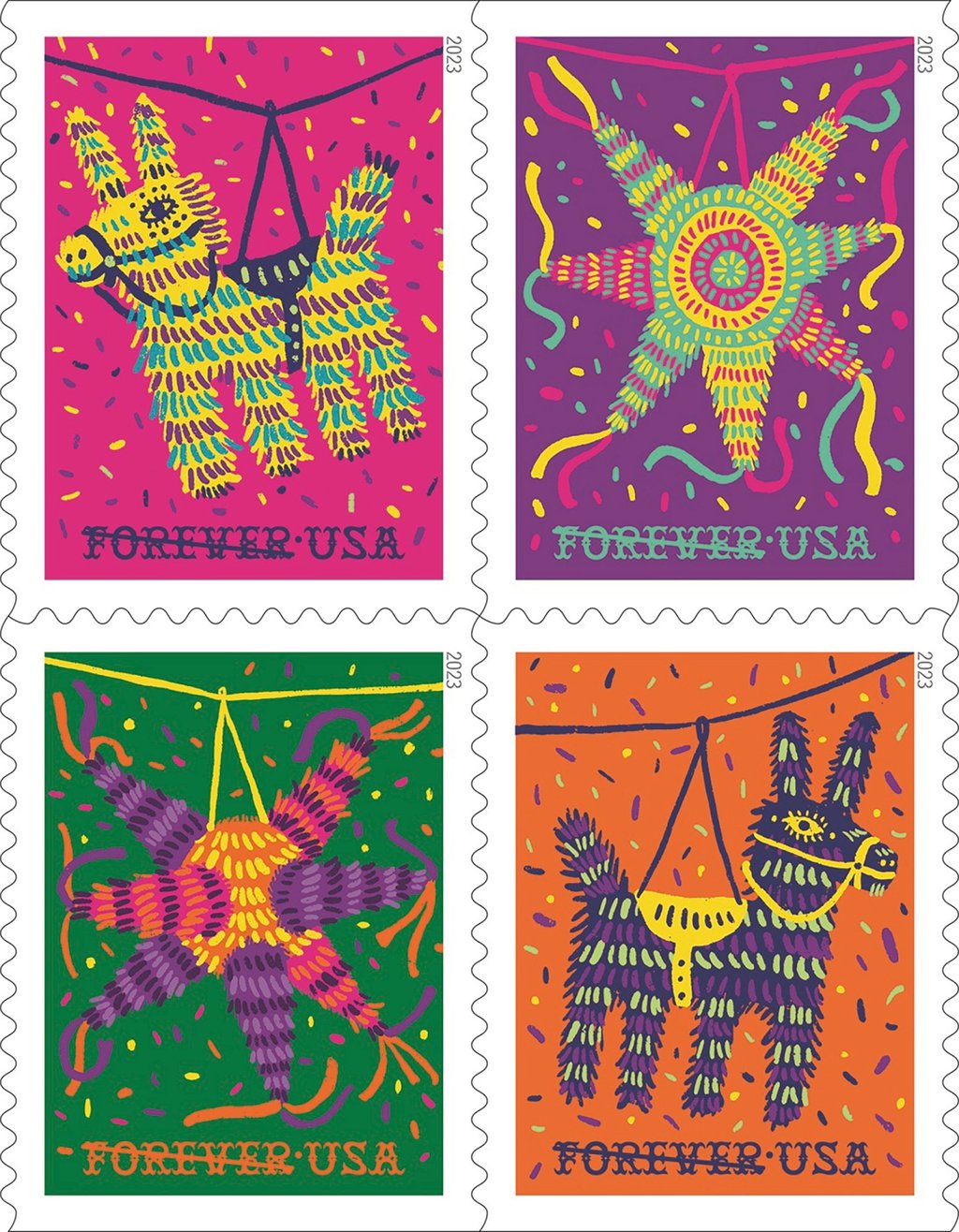
Piñatas became a key part of celebrating Las Posadas – the festivities held each December in Mexico and other Latin American countries to mark the birth of Christ. The religious origins are evident in the classic piñata designs of the seven-point star and the burro, or donkey, said Cesáreo Moreno, chief curator at the National Museum of Mexican Art in Chicago.
“Those early missionaries really were creative in the ways in which they wanted to teach the biblical stories to the Indigenous people,” Moreno said. “Nativity scenes, piñatas, posadas – all those things really worked well. They worked so well that they became a part of the popular culture of Mexico.”
And they still are part of the Mexican and larger Hispanic communities, whether it’s in Chicago, San Antonio or Los Angeles, he said.
“Culture has no borders. Wherever community gathers, they have their culture with them. They bring it with them and so the piñata is no different,” he said.