The LAPD trains foreign police. Does that enable human rights violations?
- The training of UAE police officers by the LAPD has stirred new questions about the appropriateness of its close ties with overseas security services
- While the training of foreign officers is not new, concerns about such exchanges have grown since the outbreak of the Israel-Gaza war

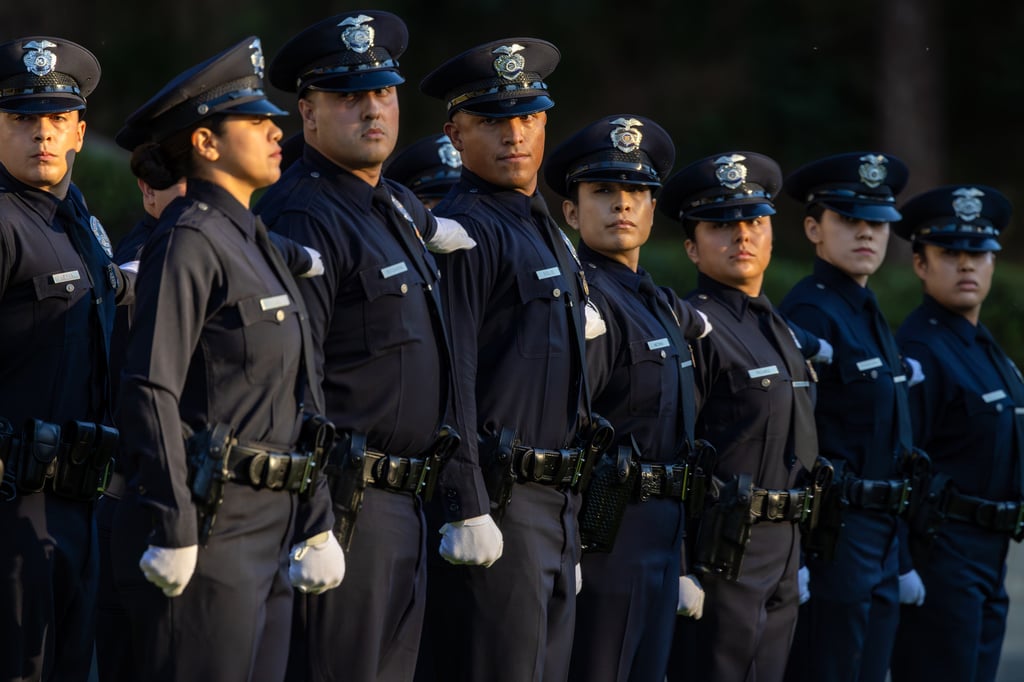
On graduation day at the Los Angeles Police Department’s (LAPD) academy last summer, they marched with the other recruits, lined up for inspection, and even walked onstage to pose for pictures with then-Chief Michel Moore, like the rest of the class.
And yet, something looked different.
While all of the other rookie officers were barefaced, the five men sported neatly trimmed beards. Their shoes were brown leather, not black. And instead of the traditional LAPD blue, they wore crisp teal dress uniforms with red epaulettes – identifying them as belonging to the United Arab Emirates’ Ministry of Interior.
Their presence at the academy’s graduation stirred new questions about the appropriateness of the LAPD’s close relationships with overseas security services, particularly those from countries accused of human rights violations.
While supporters of training Emirati officers at the academy argue that it provides a valuable cultural exchange for all involved, human rights groups have denounced the Persian Gulf nation’s government for its history of quashing dissent and denying the rights of gay and transgender people.
Over the decades, LAPD officials have met representatives from numerous countries, including Russia and Qatar, who sought out the department because they wanted to learn about how it handles large-scale protests or complex criminal investigations.