‘Demon rabbits’: why are bunnies growing ‘horns’ in Colorado?
The condition affecting a group of cottontails in Fort Collins could be behind the centuries-old jackalope myth

A group of rabbits in Colorado with grotesque, hornlike growths may seem straight out of a low-budget horror film, but scientists say there is no reason to be spooked – the furry creatures merely have a relatively common virus.
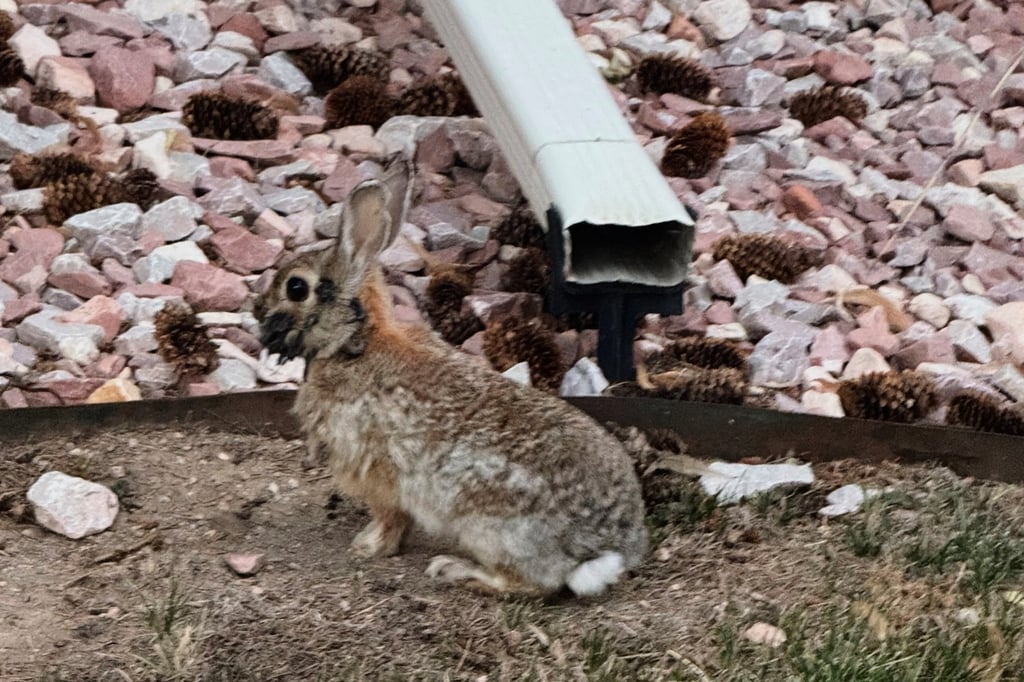
The cottontails recently spotted in Fort Collins are infected with the mostly harmless Shope papillomavirus, which causes wart-like growths that protrude from their faces like metastasising horns.
Viral photos have inspired a fluffle of unflattering nicknames, including “Frankenstein bunnies”, “demon rabbits” and “zombie rabbits”. But their affliction is nothing new, with the virus inspiring ancient folklore and fuelling scientific research nearly 100 years ago.
The virus is likely to have influenced the centuries-old jackalope myth in North America, which told of a rabbit with antlers or horns, among other animal variations.
The disease in rabbits also contributed to scientists’ knowledge about the connection between viruses and cancer, such as the human papillomavirus that causes cervical cancer.
The virus in rabbits was named after Richard E. Shope, a professor at The Rockefeller University who discovered the disease in cottontails in the 1930s.