
-
Advertisement
US-China relations
OpinionChina Opinion
Liz Jackson

Opinion | How can education help set US-China relations on a healthier course?

Educators in the US and China can help build a more positive political relationship by thinking critically about what they teach in schools

Reading Time:3 minutes
Why you can trust SCMP
1
Students of Lincoln High School and Beijing National Day School take selfies during an exchange programme held at Beijing National Day School in Beijing on May 26. Photo: Xinhua
US-China relations seem to be shifting and changing minute by minute, and usually for the worse. Strategists can debate differences in outlook between the two countries from a political view, including where they share interests and where their interests and values diverge.

However, there is a cost on both sides to the war of words taking place between the two countries today. With the rise of competitive nationalism on a global stage, ordinary people in both countries face harm from overzealous patriotism and xenophobia.

A Pew Research Centre survey from March found 77 per cent of US adults held unfavourable views of China, while a 2023 paper by Stanford researchers reported 75 per cent of respondents in China had negative views of the United States. Such negative attitudes can lead to discrimination, bias, harassment and bullying.
Advertisement

Prejudice leads to misunderstanding on both sides, creating interpersonal and social conflicts that then bolster broader xenophobic and nationalistic attitudes and policies. Can education help?

Both countries value what we might call global citizenship education. While many activities and lessons can fall under this umbrella, vital to any approach is developing an understanding of the world and other people and cultures, allowing us to work and live on a global stage. Global citizenship education can be further described in terms of developing global knowledge, competencies, consciousness and engagement.
Advertisement
Often this is not one subject in schools but spread out across social studies areas, also including international service learning trips, partnerships and exchanges. Global citizenship education aims to respond to the situation we find ourselves in today. Schools can correct misconceptions and stereotypes and prepare students to go out into the world and learn and work with diverse others regardless of culture, language or nationality.
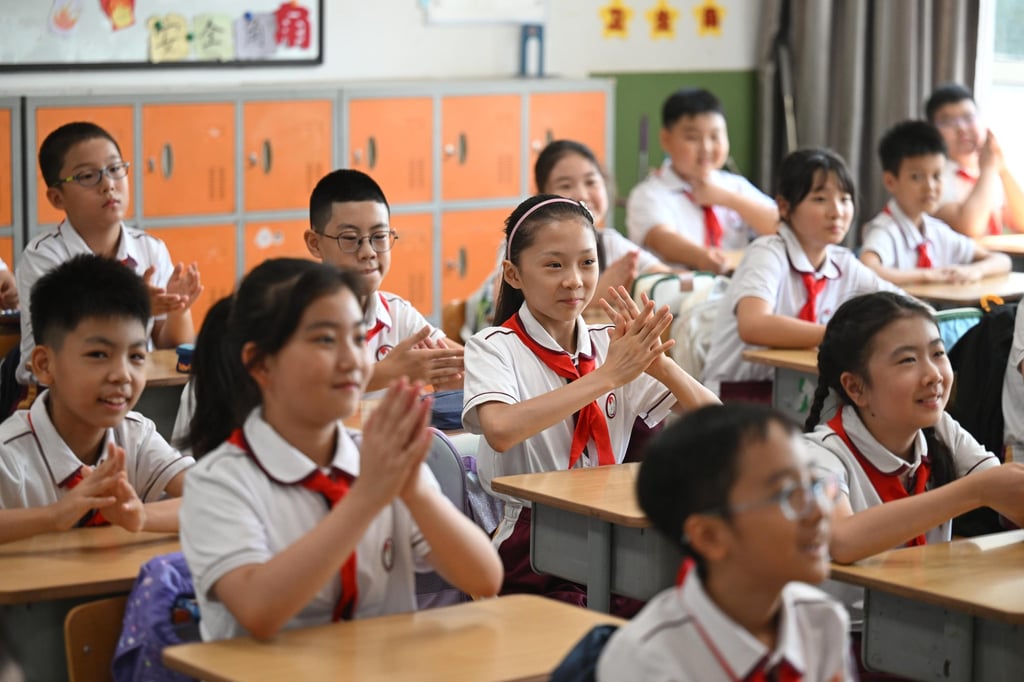
Students attend a class at a primary school in Tianjin on September 1, 2024. Photo: Xinhua
Advertisement
Select Voice
Choose your listening speed
Get through articles 2x faster
1.25x
250 WPM
Slow
Average
Fast
1.25x