
-
Advertisement
China economy
OpinionChina Opinion
Jiang Jiani

Opinion | As China grows, it is reshaping how global public goods are delivered

When China provides the hi-tech, low-cost hardware of development and multilateral banks provide regulatory oversight, the Global South wins

Reading Time:3 minutes
Why you can trust SCMP
Workers check solar panels on a lake in Tianchang, eastern China’s Anhui province, on January 12. China’s industrial scale effectively functions as a “green” subsidy for the planet. Photo: AFP
At Davos this year, a familiar but sobering warning echoed through the slopes: the global order is fracturing into closed loops. In Western capitals, “de-risking” remains the dominant keyword, framing the global economy as a series of strategic high walls. Yet, beyond these barriers, a more tangible crisis is unfolding across the Global South. The infrastructure deficit continues to widen, estimated at a staggering US$1.7 trillion annually for Asia alone.

This is a crisis of global governance. But beneath the noise of geopolitical friction, a more constructive narrative is taking shape. From the technology behind solar-powered vaccine hubs in rural Nigeria to the birth of pharmaceutical sovereignty in Egypt, China’s growth is proving to be a critical supply-side solution for a system grappling with an immense governance deficit.

This shift also represents an evolution in how global public goods are delivered – moving from “giving a man a fish” to “teaching him how to fish”.

Advertisement
For too long, the international narrative has been trapped in a zero-sum mindset – the assumption that one country’s rise must mean another’s decline. This mindset often misreads Beijing’s vision of a community with a shared future as a bid for traditional hegemony. But China’s vision reflects a historical DNA that prioritises trade-based connectivity and developmental stability over territorial expansion. In 2026, economic development is no longer elective; it is the bedrock of global systemic stability.

Evidence of this shift is undeniable. As we enter 2026, the “electron gap” has surged to the top of the global agenda. We are witnessing a historic collision between the energy-hungry artificial intelligence (AI) revolution and the urgent requirements of the green transition. For many nations, the lack of stable, affordable power is the modern face of poverty.

Advertisement

Here, China’s industrial scale – underpinned by clean energy investments that topped US$890 billion in 2023 – effectively functions as a “green” subsidy for the planet. In driving down the cost of solar and wind energy, China has lowered the entry barrier for the entire Global South. It has allowed low-income nations to reach climate and digital targets that were previously fiscal impossibilities.
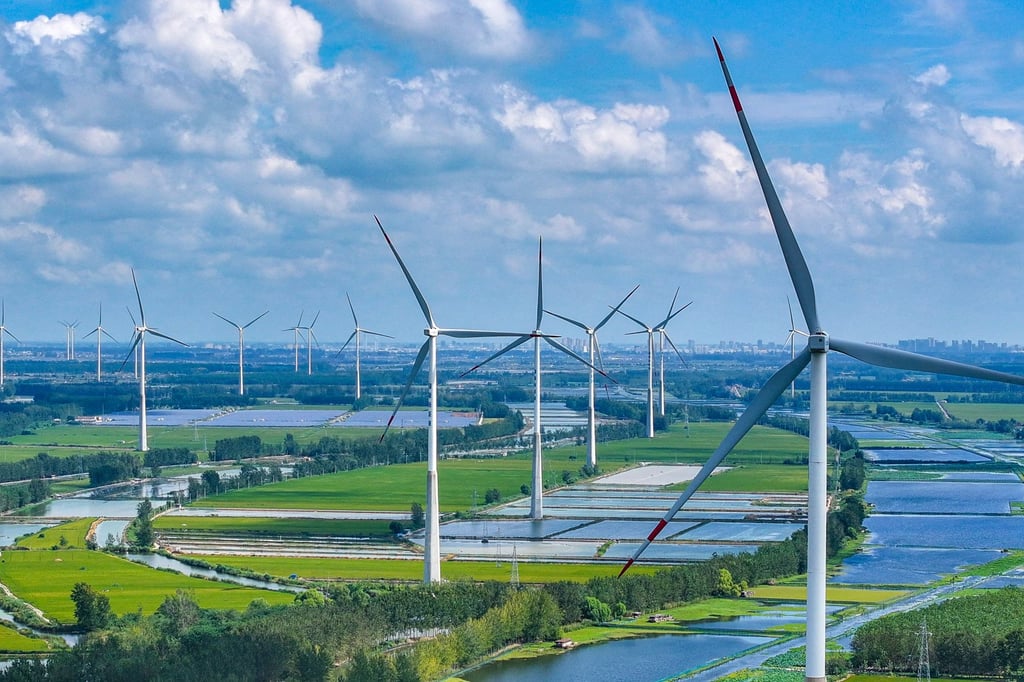
Wind turbines in Jinhu county, Huaian city, in China’s eastern Jiangsu province on September 22, 2025. Photo: AFP
Advertisement
Select Voice
Choose your listening speed
Get through articles 2x faster
1.25x
250 WPM
Slow
Average
Fast
1.25x