

-
Advertisement
Hong Kong environmental issues
OpinionHong Kong Opinion
Kitty Tam
Calvin Au
Kitty TamandCalvin Au

Opinion | To stay competitive, Hong Kong must embrace nature-based solutions

The government’s push for improved urban design is strategic and timely. Now it must turn ideas into action

3-MIN READ3-MIN
Listen
People admire blossoming lotus flowers at Long Valley Nature Park in Sheung Shui with the skyline of Shenzhen in the distance, on May 19, 2025. Photo: Eugene Lee

When people picture Hong Kong, they often imagine a relentless concrete jungle – a vertical city where glass and steel dominate the skyline. Yet a quiet revolution is beginning to reshape how our city develops.

Last week, the Civil Engineering and Development Department and Agriculture, Fisheries and Conservation Department jointly launched the Hong Kong Nature-based Solutions Design Guidelines. This landmark document signals a shift in how we think about infrastructure and urban planning. It shows Hong Kong no longer needs to choose between development and ecological conservation. Instead, we can design cities where nature and infrastructure work together – strengthening resilience, enhancing biodiversity and improving our quality of life.
The government deliberately chose Long Valley Nature Park to unveil these guidelines. Nestled within the Northern Metropolis, this freshwater wetland offers a powerful example of a nature-based solution in action. It shows how Hong Kong can expand its city while restoring and protecting the natural environment.
Advertisement

The presence of Charles Karangwa, global head of the Nature-based Solutions Centre at the International Union for Conservation of Nature (IUCN), underscored an important message: with the right ambition and collaboration, Hong Kong has the potential to become an international leader in integrating nature into urban development.

The new guidelines adapt the IUCN’s global framework to Hong Kong’s uniquely dense urban environment. They establish three core principles: enhancing biodiversity across ecological structures and scales; fostering a harmonious coexistence between people and nature; and strengthening climate and ecological resilience alongside social and economic sustainability. The guidelines also introduce an evaluation framework that measures five forms of natural capital, supported by digital monitoring tools to ensure nature-based initiatives deliver measurable and scientifically robust outcomes.
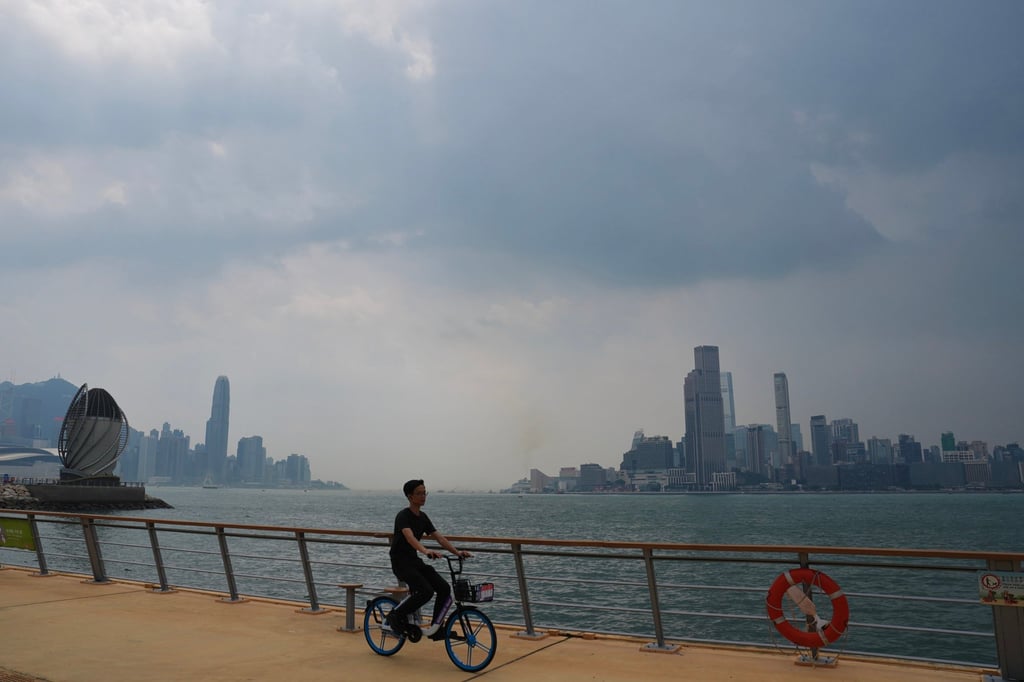
A man cycles along the promenade at East Coast Park, Fortress Hill, on a day of poor air quality on July 25, 2025. Clean air is one of the five natural capital assets identified in the Hong Kong Nature-based Solutions Design Guidelines. Photo: Elson Li

The guidelines carry strategic implications for Hong Kong’s future competitiveness. First, it offers a pragmatic way to ease the tension between urban expansion and natural habitats.

Advertisement
Select Voice
Select Speed
1.00x