Advertisement
Opinion
China’s growing North Africa presence a structural challenge for Europe
Cooperate or hedge? Growing Chinese energy, infrastructure and industrial investments require a sustained, coordinated European response
3-MIN READ3-MIN
1
Listen

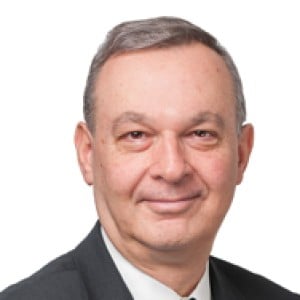
Bob Savic is head of international trade at the Global Policy Institute in London and visiting professor of international relations at the University of Nottingham.
China’s investments in North Africa have intensified in 2026, building on long-standing Belt and Road Initiative frameworks while accelerating amid the US-Israeli war with Iran.
With 40-50 per cent of China’s seaborne oil imports traditionally passing through the Strait of Hormuz, which is now blocked to most container traffic, Beijing has sought to diversify energy sources away from Gulf Arab states.
For more than a decade, Beijing has pursued deeper engagement across the Middle East and North Africa as part of its Belt and Road Initiative, seeking to secure energy supplies and build infrastructure corridors linking Asia to Europe and Africa. Africa-wide engagement in China’s infrastructure initiative hit US$61.2 billion in 2025. This year, however, the scale and urgency of China’s activities in North Africa have been shaped in part by heightened geopolitical instability in the Gulf.
China’s economic engagement in North Africa is driven by three main pillars: energy security, infrastructure development and industrial expansion. In 2026, all three have intensified. Algeria has become increasingly important as a supplier of oil and natural gas by leveraging its Opec status and stability for China’s diversification.
Accordingly, Chinese state-owned enterprises have expanded into upstream investments, participating in pipeline and liquefied natural gas (LNG) projects. For example, a 2025 agreement between Algerian oil and gas firm Sonatrach and China’s Sinopec has expanded into shale gas exploration on the 36,000 sq km Guern El Guessa II block, aligning with Beijing’s upstream energy push. Chinese firms have received an estimated US$70 billion in Algerian contracts in the past two decades.
At the same time, China is not solely focused on hydrocarbons. Renewable energy has emerged as a major area of cooperation, particularly in Morocco. For instance, several recent deals there added green aluminium, solar and wind production through large Chinese state-owned power companies.
Advertisement
Select Voice
Select Speed
1.00x