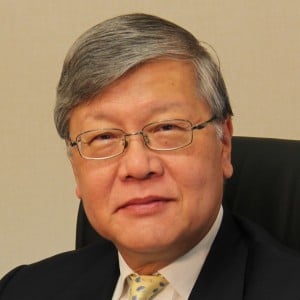
Andrew Sheng is a former central banker and financial regulator, currently distinguished fellow at the Asia Global Institute, University of Hong Kong.
The old world order is being destroyed before our eyes. With volatility players making billions from US President Donald Trump’s on-again, off-again announcements on the war in Iran, it is becoming increasingly clear that geopolitical rivalry is all about who controls energy, water, food and technology. Geography and ego determine destiny.
With China and Russia standing by to see how much damage their rivals can inflict on themselves, Trump and Israeli Prime Minister Benjamin Netanyahu have demonstrated that those who commit genocide ultimately commit moral suicide. It’s funny that Pentagon is requesting US$200 billion to wage war on Iran, while Tehran is claiming US$270 billion in war reparations. So far, no one has calculated the real losses to the Gulf states, Lebanon, Jordan and Palestine, let alone energy-starved developing countries. Wouldn’t it be cheaper for all just to settle for peace?
War aside, people who care about peaceful long-term stability have to address the difficult transition to a more just, inclusive and ecologically sustainable global order. Idealism is being shattered by the hard reality that we cannot go down on a linear trajectory of ruthless consumption faster than the planet can heal.
This is the stark message from the latest Circularity Gap Report, funded by the Circle Economy Foundation in Amsterdam to “help businesses, cities and nations thrive in the circular economy so they can stay competitive, build resilience and create lasting value”. The circular economy is theoretically sound. However, practice and implementation are the hard part. The old can find it hard to change; the young are not empowered to make change.
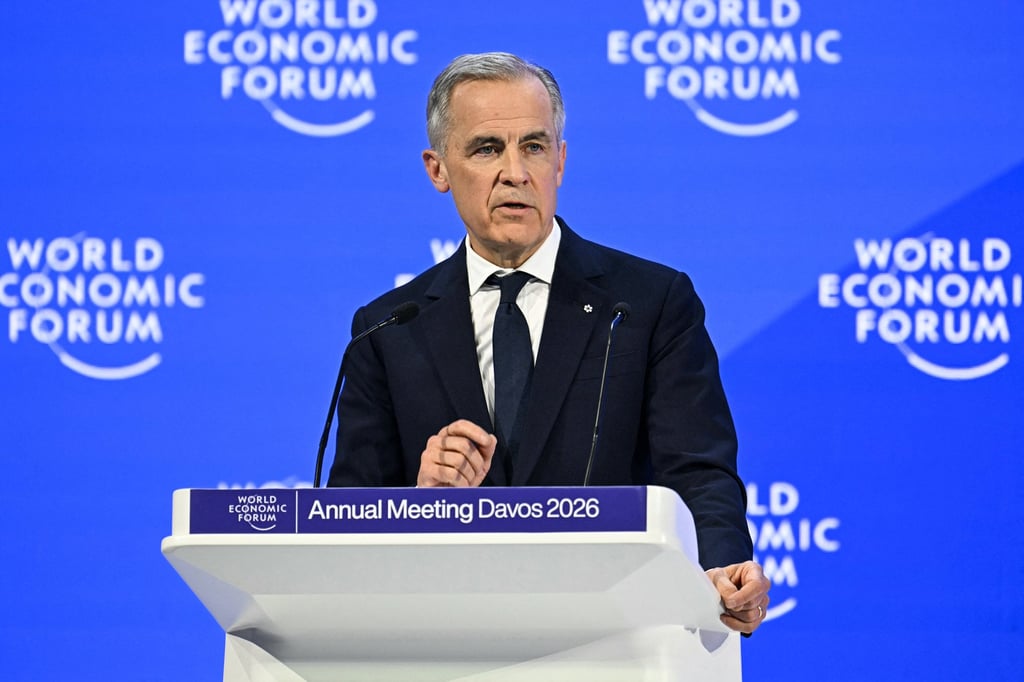
In the raw capitalist world of endless consumption, funded by borrowing from the future, a circular economy stands in stark contrast to the linear production and consumption model that wastes resources without accountability. As Canadian Prime Minister Mark Carney astutely said of the old world order at the World Economic Forum in Davos, “We shouldn’t mourn it. Nostalgia is not a strategy.” We are likely too late to achieve net zero carbon goals based on current national commitments. With split geopolitical camps, we have neither enough multilateral money nor political will to deal with systemic issues.
Canada’s Prime Minister Mark Carney delivers a speech during the World Economic Forum annual meeting in Davos, Switzerland, on January 20. Photo: AFP
The sustainable development report from this year’s Boao Forum for Asia was a breath of fresh air to me. Instead of wishing that governments or businesses would do something about climate change, the report recognises that no economy faces the same problems as others. Each economy, locality or culture must remember their unique circumstances mean that they have to address common problems in diverse ways.