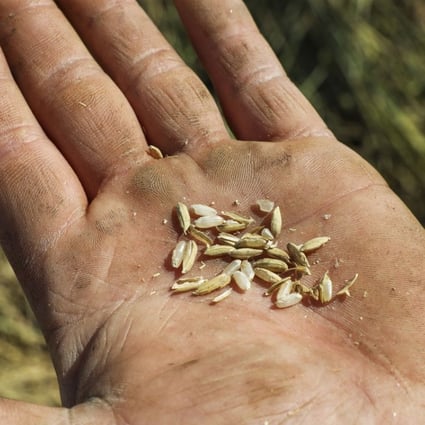
Xiangshui Rice, a special rice planted and grown in the black soil layer on top of stone slabs formed by volcano lava over 10, 000 years ago, in Ningan county, Mudanjiang city, northeast China's Heilongjiang province. Photo: Simon Song

Podcast: Rice entrepreneurs in China harness tech, crowdfunding to grow a safer, tastier grain- SCMP Long Reads

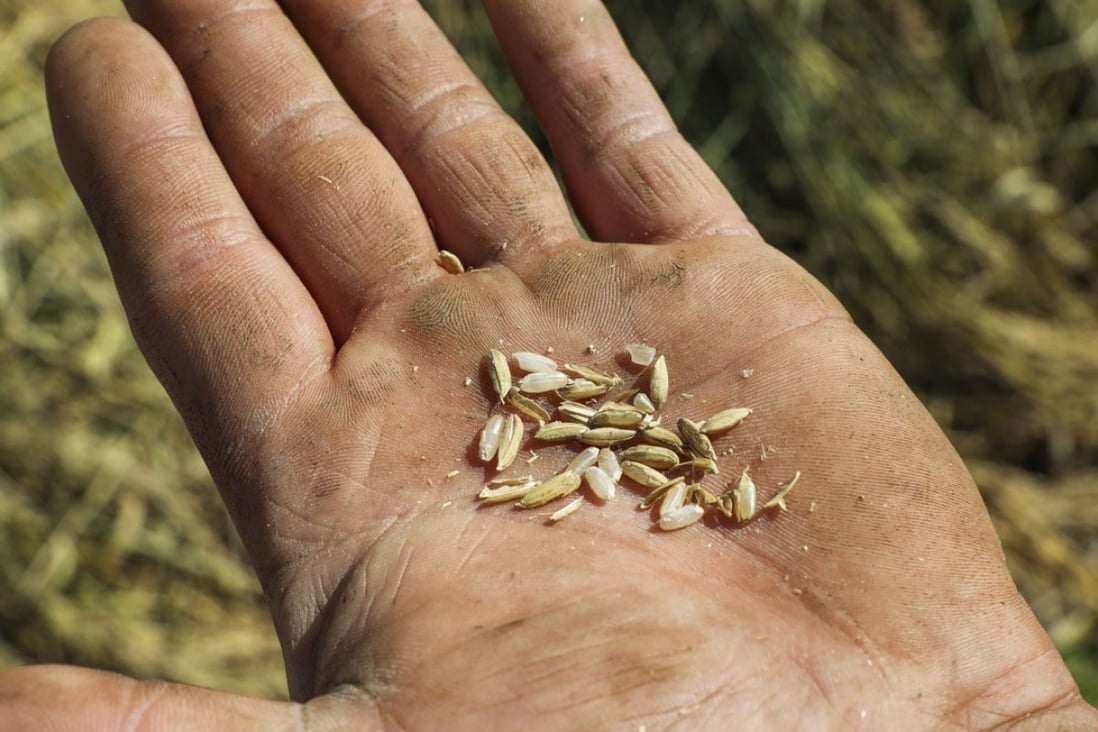
    Xiangshui Rice, a special rice planted and grown in the black soil layer on top of stone slabs formed by volcano lava over 10, 000 years ago, in Ningan county, Mudanjiang city, northeast China's Heilongjiang province. Photo: Simon Song
    Xiangshui Rice, a special rice planted and grown in the black soil layer on top of stone slabs formed by volcano lava over 10, 000 years ago, in Ningan county, Mudanjiang city, northeast China's Heilongjiang province. Photo: Simon Song

    Basmati in India, jasmine rice in Thailand, carnaroli in Italy – China, despite being the world’s biggest grower, has no rice to match these varieties. A new generation of investors aim to change that with boutique organic production and new technology. An audio version of a Post Magazine feature by Enid Tsui, read by Sofia Mitra-Thakur.

    READ FULL ARTICLE
    Enid Tsui

    Enid Tsui

    Enid Tsui is the Post's Arts Editor. Her previous positions include the Hong Kong correspondent and Asia companies and markets editor of the Financial Times, presenter on RTHK Radio 3 and editor-in-chief of CFO China, a finance magazine published by the Economist Group. She has an MA in art history. Her book "Art in Hong Kong: Portrait of a City in Flux" was published in January 2025.