Philip Chan: from singing inspector to Hong Kong cinema legend
The actor, director, composer and former police superintendent on the 1956 riots, grisly murders and working with Hong Kong cinema’s biggest stars

I WAS BORN in Hong Kong in January 1945, during the Japanese military occupation. My parents were from Hong Kong, but my (paternal) grandfather was a general serving in the military in Guangxi. He had three wives and six children. During the civil war, he lost his command, retired to Guangzhou and then came south as the Japanese invaded. It was very tough. In fact, I read in my mother’s diary that when I was a baby, they had no money and she went to her father’s house to ask for a loan. Her father was a well-to-do businessman. He and his partners owned the Tabaqueria Filipina, which was a famous tobacco and wine company. He refused the loan because he didn’t like my father, who was just a foreman in the then-Sanitary Department. He also disliked my father because he was Cantonese and they were all Shanghainese. And my mother wrote in her diary that she was very disappointed.
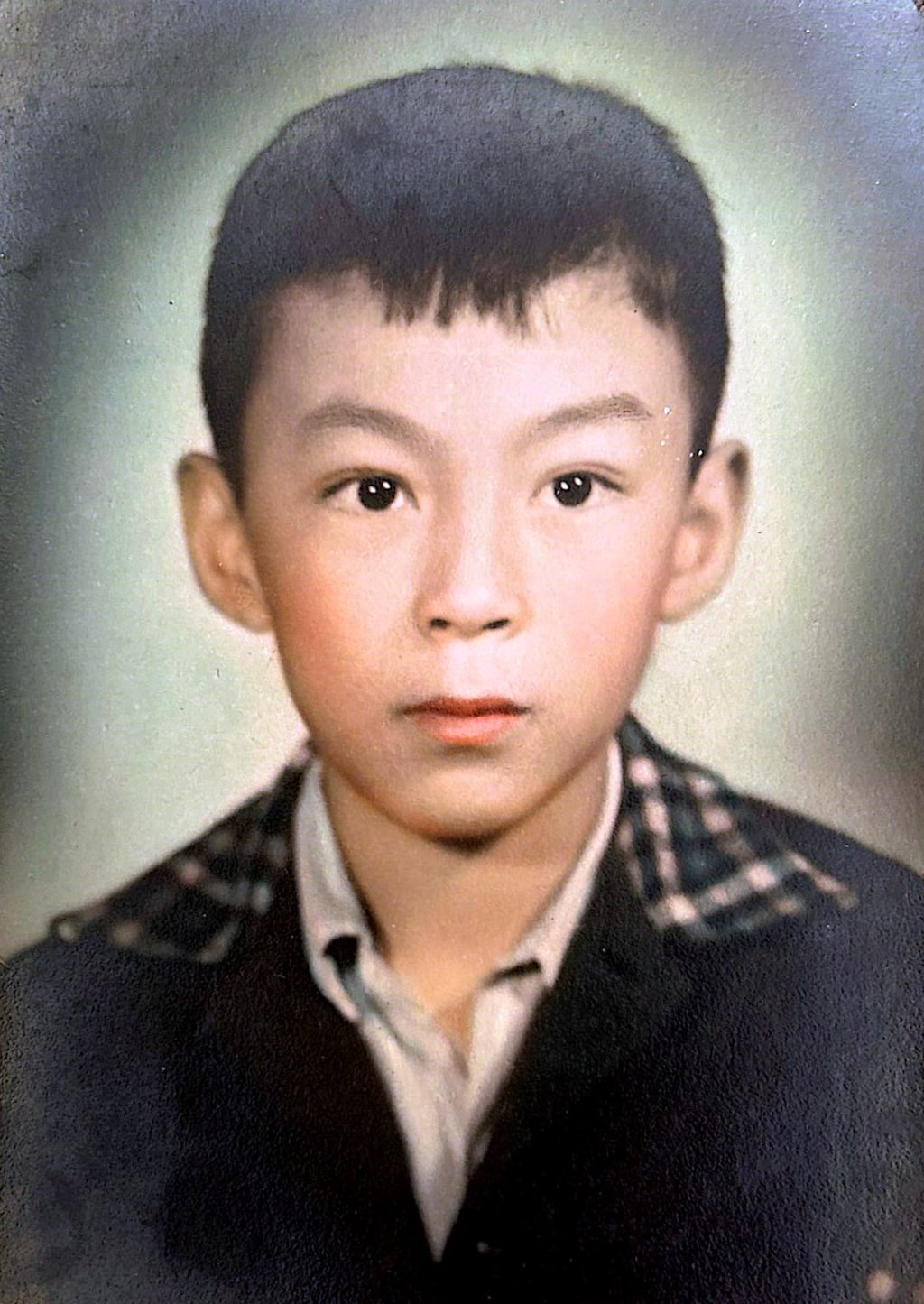
SHE THEN TOOK my father’s watch and sold it on the waterfront to buy milk powder for me. The most touching part was when she wrote, “It was heartbreaking, but when I looked at my baby Kin, lying in my arms, I said to myself, ‘It’s all worth it.’”
I WAS THE FIRSTBORN, I have one sister and three brothers and we’re very tight. My most vivid memory of growing up is the riots in 1956. We lived in Mong Kok, on the rooftop of an abandoned factory, where there was a big covered area. There were about 12 or 13 households, all living there in separate wooden compartments – cubicles. Our family had two or three cubicles. It was crowded with people of various occupations – bonesetters, photographers and merchant sailors. I remember that day in October 1956, when the government tore down the Nationalist flag in Lei Cheng Uk Estate and there was an all-out riot. I was playing on the rooftop and we heard the sound of sirens. I looked down from our fourth-floor roof and I saw two armoured cars driving into Shantung Street, where our building was. British soldiers were chasing after a bunch of people dressed in black who were throwing rocks, bottles and other stuff at the soldiers. Suddenly there was a burst of machine-gun fire, then there was a boom, and a metal can shot up onto our rooftop and landed behind me. I was suddenly hit by the smoke and smell and I was in tears.
I WENT TO Good Hope School in Ngau Chi Wan, but after two years changed to La Salle College, where I stayed until I graduated in 1965. When I was in Form One or Two, I was in the school choir, and James Wong, who would later become the famous lyricist, was my senior. He played the harmonica and I admired him very much. Another schoolmate was a rhythm guitarist and part of a band called the Astro-Notes and they invited me to become the lead singer. It was the same era as the Kontinentals and Teddy Robin. We would perform at afternoon tea dances, from 3pm to 6pm, including at the Bayside, in the basement of Chungking Mansions. We also did a record with Diamond Records.
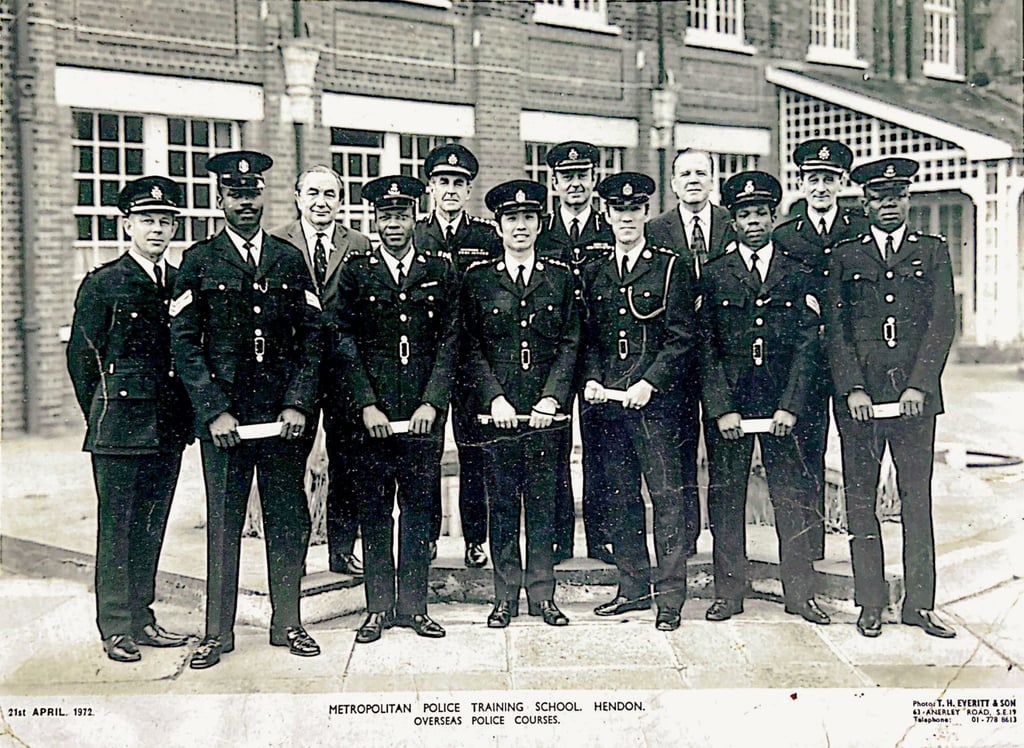
MY MOTHER’S BROTHER was a police inspector and I decided to try to enrol. I was a year younger than the minimum age requirement but Brother Casimir, my principal at La Salle, wrote a letter of recommendation, and they accepted me. I enjoyed my six months of training – firearms and combat, drills, discipline and all that. It was heaven for a young man of 19.
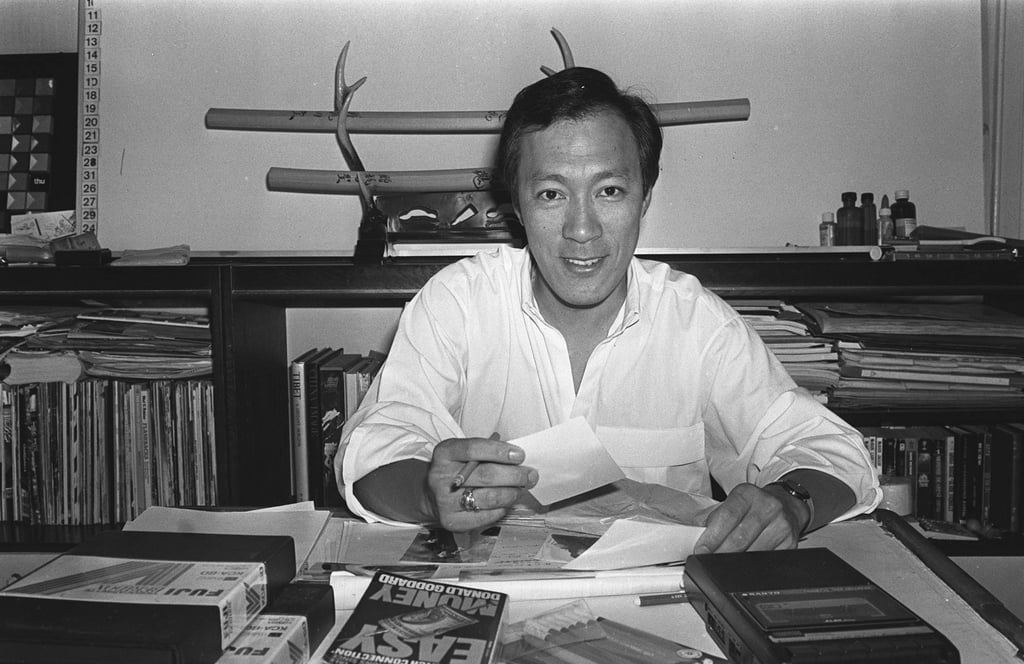
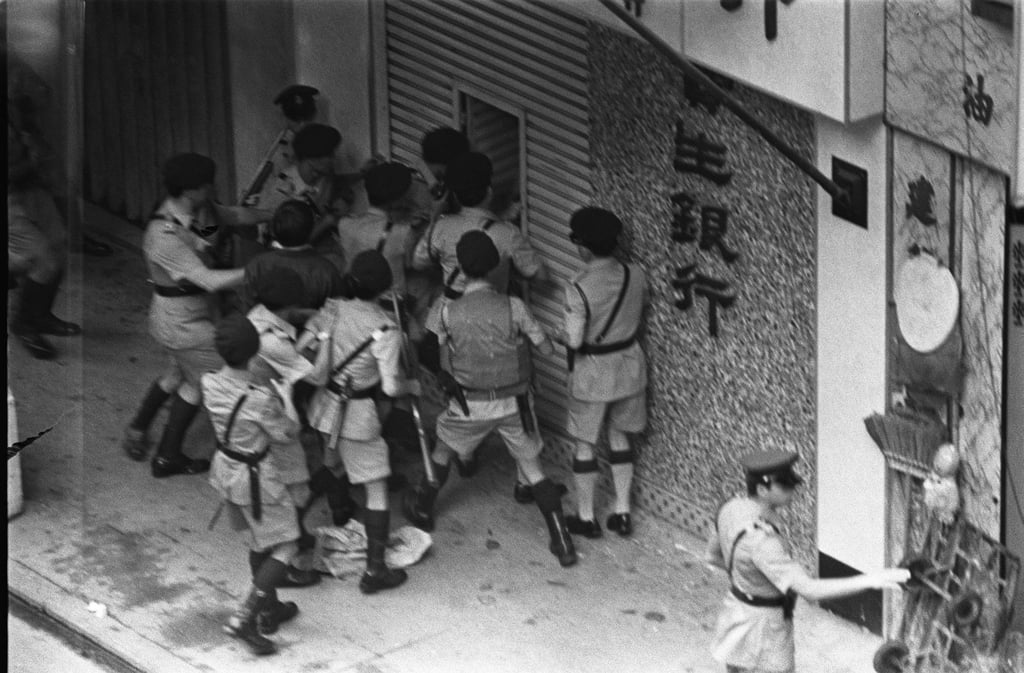
AT FIRST, I was sent to the Kowloon City Division as a police inspector, then I became a detective inspector very fast. In May 1974, when I was chief inspector in charge of CID (Criminal Investigation Department) in Mong Kok, there was a bank robbery. A gunman burst into the Po Sang Bank in Shanghai Street and demanded money. He fired a couple of shots inside as a warning to us, so it was quite intense. He got some money and then barricaded himself inside with 11 hostages. We had a lot of conversations with the gunman, asking him to give up. He asked for food. TVB sent a news team, and they put cameras on the rooftops. That’s when I was interviewed. Finally, the staff members jumped him, and that’s how the whole thing finished.
I HAD THREE MAJOR CASES in less than two years. The second one was the mutilation murder in August 1974 (of sex worker Lau Fu-man) in Mong Kok. When the woman’s body was found, sections of her face and other body parts had been cut off. These were found hidden between an air conditioner and a wall. We put those parts back onto her face and got an artist to draw a sketch of her to put in the newspapers. Her mother and her two children identified her from the sketch. We eventually found (the killer, Leung Siu-ping). He was a construction worker. He had strangled her. The third major case was a Taiwanese woman who, along with her lover, killed her husband, making it look like a robbery. I’ll save the details of that for my autobiography.