Hong Kong master carpenter Louis Ho on being the last of his line
Louis Ho Kwok-biu reflects on learning from an industrious father, his affinity with their shop’s Yau Ma Tei neighbourhood and his role in protecting its historical treasures

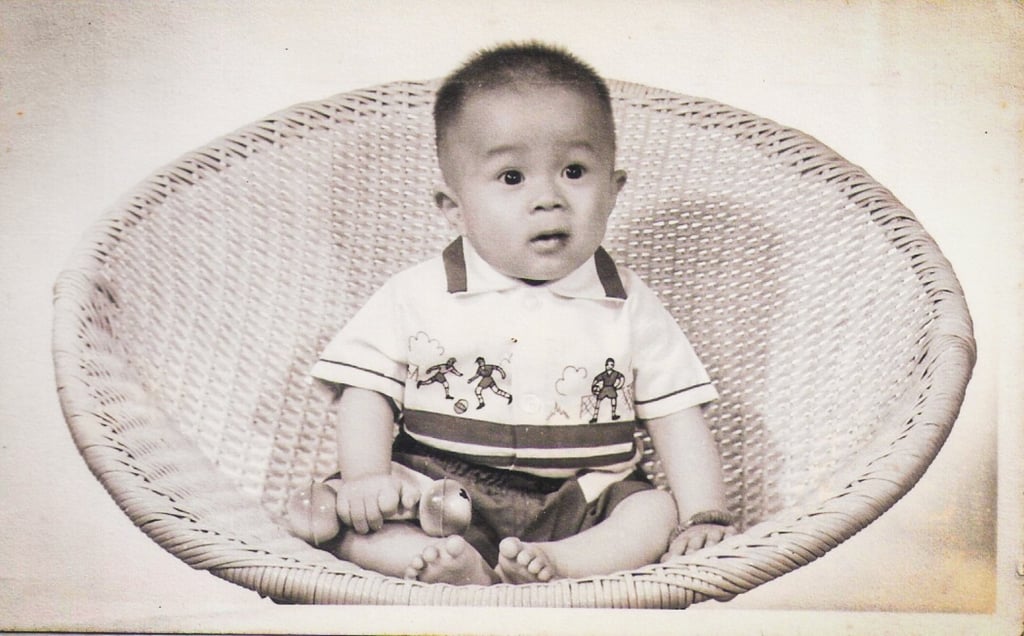
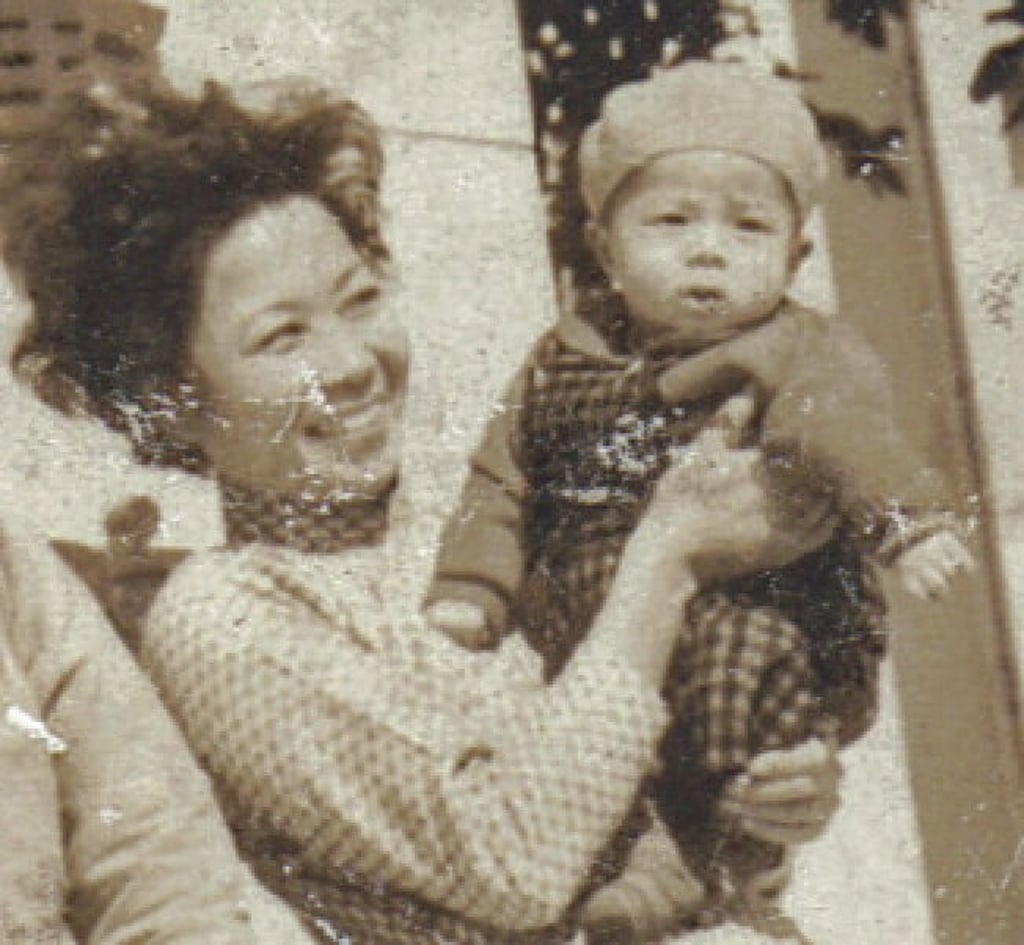
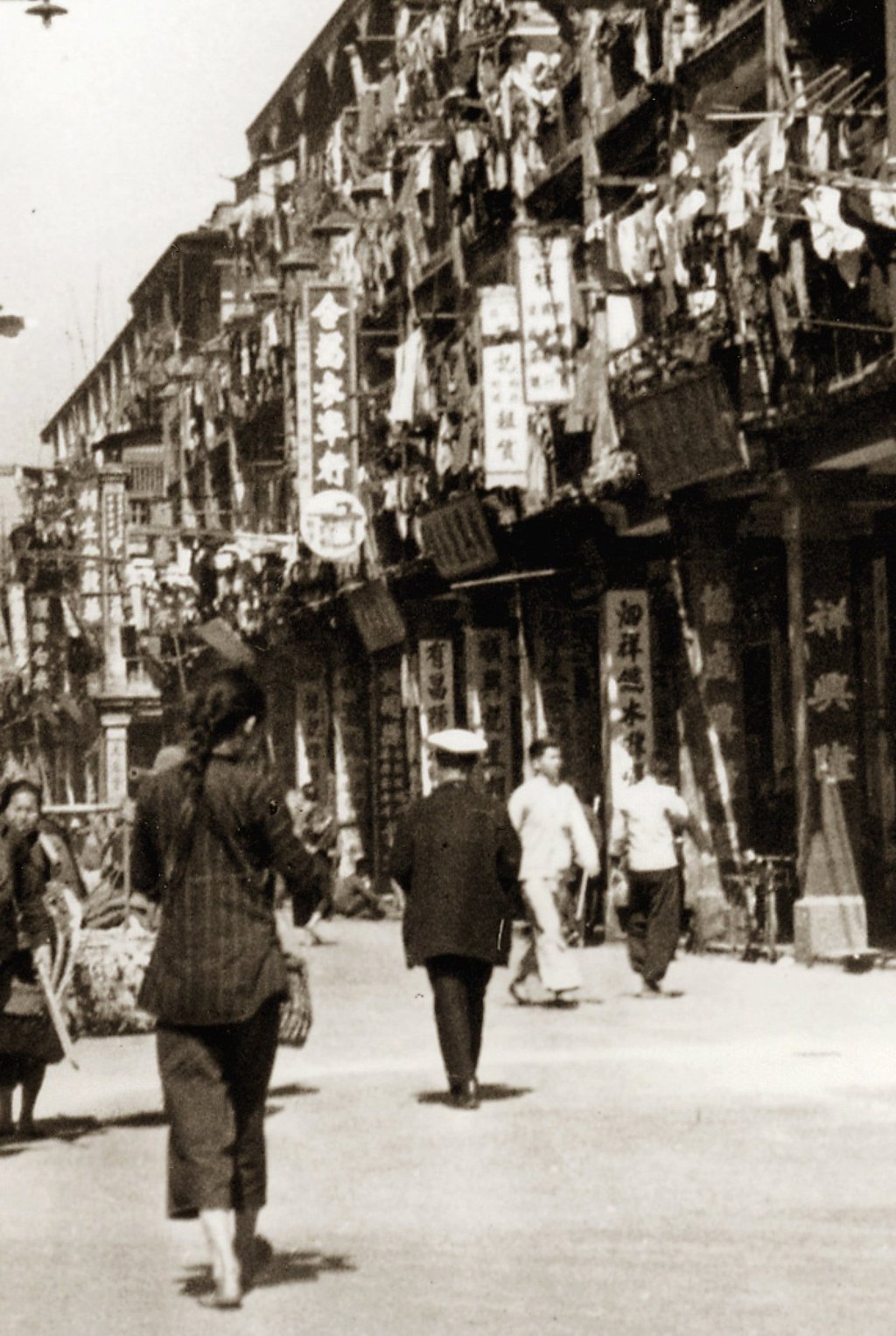
I WAS BORN in 1960 in Kwong Wah Hospital, where my late father, Gordon Ho, was also born. I have one younger brother and two younger sisters. My mother’s name was Leung Yuk-chun. She was a housewife. We grew up in Yau Ma Tei. We moved many times within the district. I am the last of four generations of master carpenters in Hong Kong. I will buy you dinner if you can find me another one! Our business, Sze Cheung, goes back more than 100 years. When I was born, we had the shop in Reclamation Street, but we moved many times. Then, due to an unsafe building, in 1969, the shop was moved to Portland Street and then to Yunnan Lane.
ONLY THE SHOP in Yunnan Lane was owned, the others we rented because there was no money to buy. On Reclamation Street and Portland Street, we lived in the same premises as the business. And in Yunnan Lane and this site (on Reclamation Street), we live in the vicinity. I went to St Francis of Assisi’s English Primary School on Shek Kip Mei Street in Sham Shui Po and then to Ng Wah College in San Po Kong. I liked English and geography. I would play football every Sunday at King’s Park; I liked being the goalkeeper. I left school in 1978, and my father asked me to help him in the shop, because his old employees had retired and it was impossible for him to work alone. Now, I work alone, but it can be quite difficult as you have to deal with large, heavy pieces of wood.
MY FATHER MADE and sold ship’s pulleys, among other items. He would sell the pulleys to ship chandlers who would then pass them on to the ships. My father would turn the wood on the lathe and he also made mallets and fids (rope-splicing utensils). My father also spent five years painstakingly learning English. The water and electricity bills were in English in the 1950s – there was no Chinese version. He was curious to know what the bills said. Very few Chinese people learned English at that time. After he finished work, he would cycle to an evening school and study for three hours. He loved dictionaries and novels such as Ivanhoe, A Tale of Two Cities and The Count of Monte Cristo.
I’M THE fourth-generation master carpenter. The shop was founded by the master carpenter who taught my grandfather when his own son didn’t want to join the business. I knew my grandfather, Ho Cheung. He would sit on a chair outside the shop. He had a belt with a small purse on it, and he would open it and ask his grandchildren to pick some coins – we’d be very happy. The master taught my grandfather wood-turning and how to make pulleys. There was no electricity so they used a foot pedal to turn the wood. When my father took over the business, he bought electric machinery and the drill bench. The pulleys were often used on junks and other wooden boats, but there is no demand for that today. Now, my pulleys have a different use – the Fire Services Department buys them for holding their hosepipes. After extinguishing a fire, the hoses are wet, so the pulley is used to hold them up to dry.
HOW DO I make a ship’s pulley? I make the wooden cover, like an ellipse. Then I cut it using the bandsaw and drill the five holes in, then we put it together. There are iron bars and a wheel. Sometimes one wheel, sometimes two wheels. It takes me at least a day using hardwood from Malaysia.
OCCASIONALLY, A FOREIGNER will come in to buy a ship’s pulley to use on their boats back home. The pulleys were used on ships to pull up cargo. If you go to a Cantonese opera at the Ko Shan Theatre, in Hung Hom, you’ll see my pulleys at work – very small ones, pulling up the stage curtain. But generally, there has been much less demand in recent years. We have changed to doing wooden collars to hold pipes used in air conditioning. I still make wooden mallets because, in oil tankers, you can’t use a metal mallet in case it causes sparks.
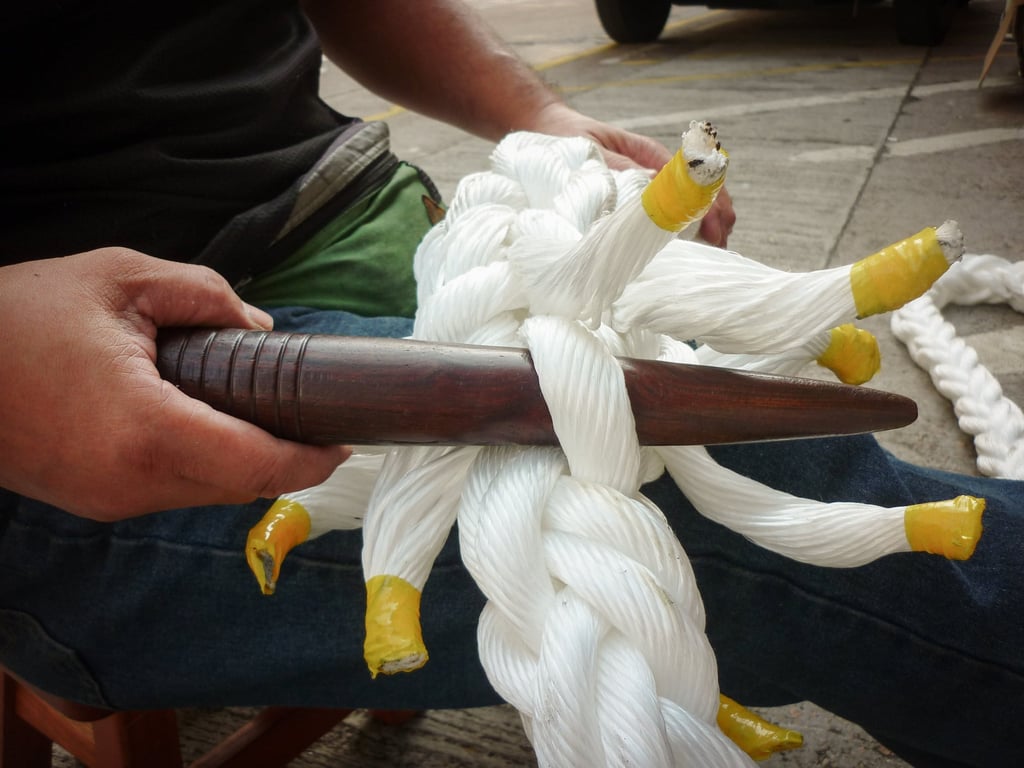
I GOT MARRIED in 1991. We have one daughter and two sons, all in their 30s, and they have good jobs, so they won’t want to take over the shop. They earn more money than me. One day, I will retire and my shop will close because no one will continue it. One of my sons lives in Toronto. Every Chinese New Year, we go to Canada to see him. It is very cold, minus 20 degrees Celsius.
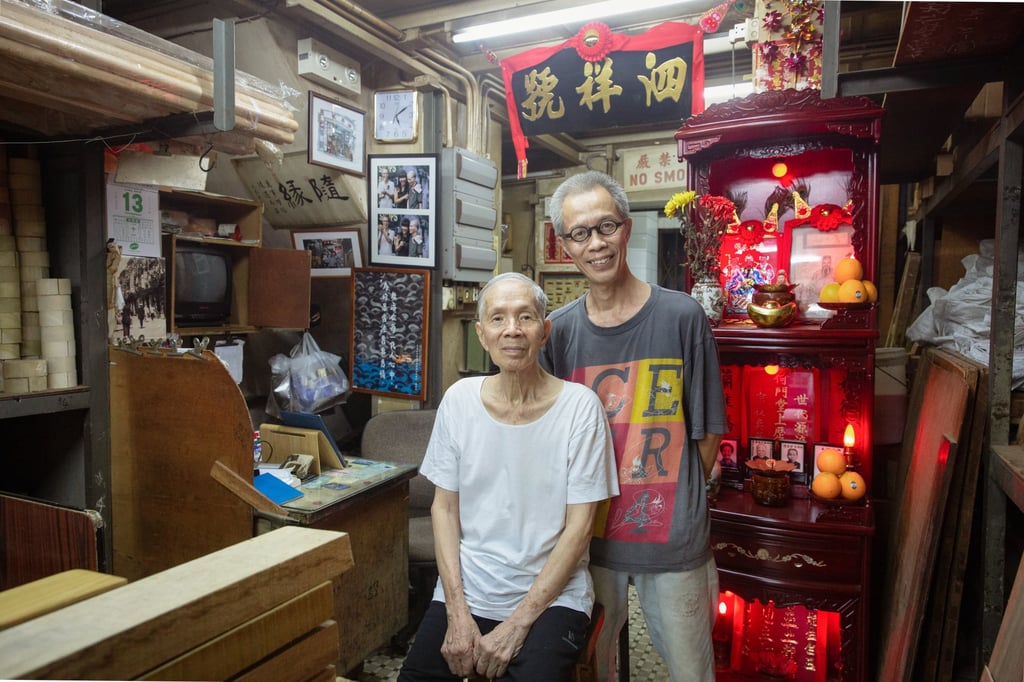
ON MY DESK, I have the old dictionaries my father loved, and his portrait. In the shrine at the back of the shop are Guanyin (the Buddhist goddess of mercy, more commonly known as Kwun Yum in Hong Kong) and Lu Ban, the god of carpentry. His birthday is in June. My grandma told me that in the early days, to celebrate Lu Ban’s birthday, we would deliver rice and other food to children in the neighbourhood. I also have photos of my grandparents, and my father and mother. And I wear a sifu hat, which I make out of the daily newspaper to keep the wood dust off my head.
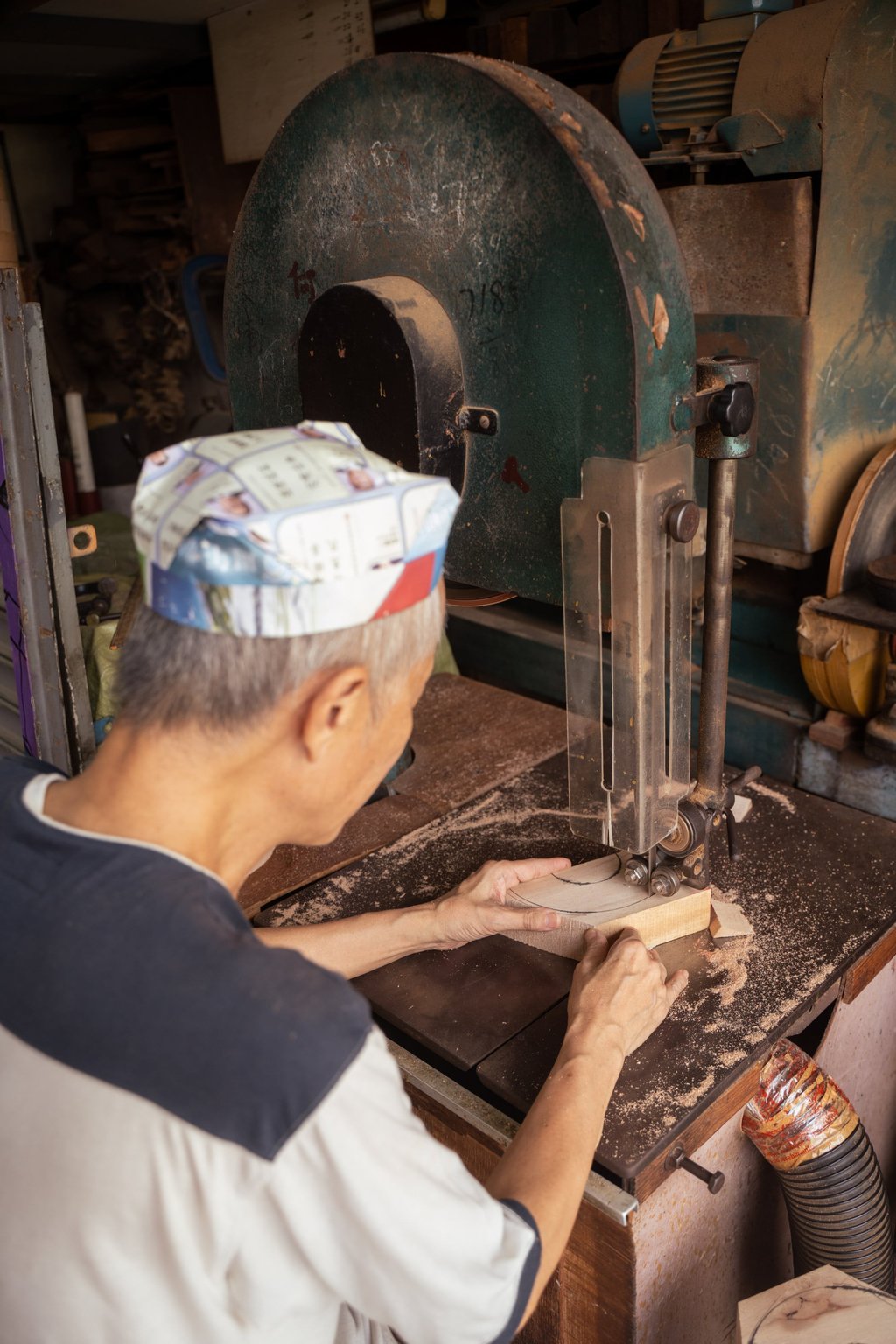
WHEN I’M NOT in the shop, I enjoy meteorology and I like karaoke, songs by Sam Hui. I also like researching Hong Kong history. In 2000, I went to the Public Records Office to check the archives for this business and I was pleased to find a Kowloon Commercial Directory from 1927 with our shop name in it. It was under: Dealers in Wooden Blocks – Sze Cheung, No 206 Reclamation Street, with my grandfather, Ho Cheung, as the proprietor.
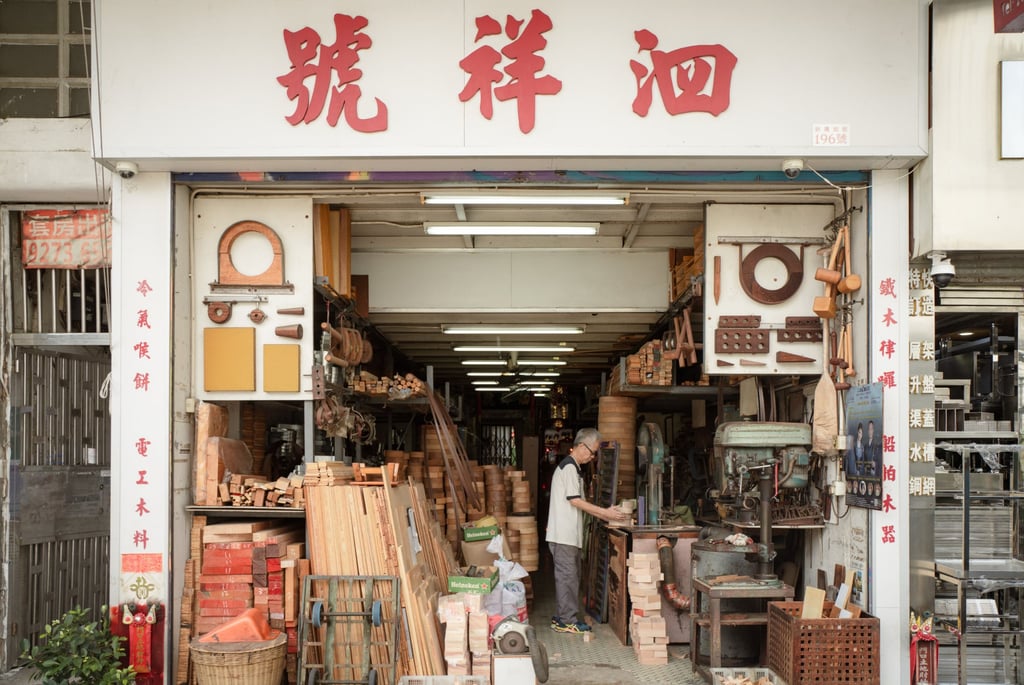
I’M VERY KEEN to preserve the history of this neighbourhood. Just down the street is the famous old Yau Ma Tei Fruit Market and also the renovated Yau Ma Tei Theatre. People come to the shop to learn about this old trade and I also give history tours along the streets around here. Opposite where the shop used to be in Yunnan Lane, there is a red-brick building. In 1990, the Land Development Corporation, now the Urban Renewal Authority, planned a redevelopment scheme there and that building was supposed to be demolished. I was curious about the history of the building, and wrote to the AMO (Antiquities and Monuments Office). The letter was passed eventually to the Water Supplies Department, who came to photograph the building and they realised it was part of the original Yau Ma Tei pumping station – the earliest in Kowloon, built in 1895. (It was the Engineer’s Office and now has grade-one historic building status.) I’m so proud to have been able to help preserve it. Without me, the Red Brick Building would have been demolished.