-
Advertisement
PostMag
Life.Culture.Discovery.
Architecture and design
PostMagDesign & Interiors

Is fungus the future of furniture across Asia?

Mycelium is revolutionising sustainable design and shaping the future of eco-friendly homeware, from lamps to sofas

Reading Time:5 minutes
Why you can trust SCMP
Ng Sze Kiat, founder of Bewilder, a Singapore-based design studio that works with fungi. Photo: courtesy Bewilder
Low Shi Ping
How could a mere cluster of mushrooms support a 2kg piece of glass? That was the question on everyone’s lips when they saw an unusual coffee table at Singapore Design Week in September. Beneath the transparent top were golden-brown caps seemingly sprouting from a solid trunk.

“There was a sense of disbelief that mushrooms, which are mostly made of water and very soft, could actually hold something of weight,” says Ng Sze Kiat, founder of Bewilder, a five-year-old Singapore-based design studio that works exclusively with fungi. “A few people even wanted to purchase it.”
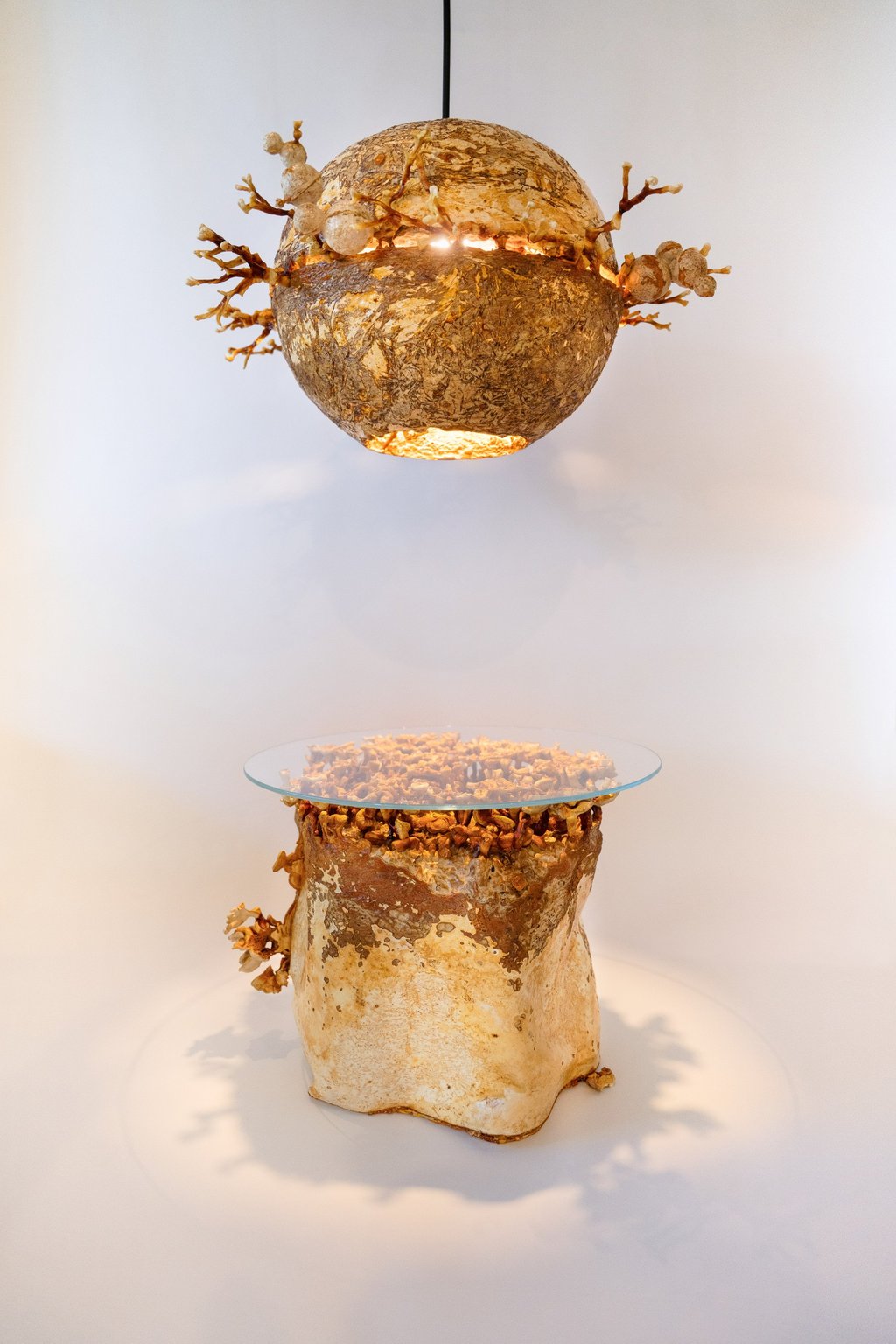
A pendant lamp and coffee table made of mushrooms, by Singapore design studio Bewilder. Photo: John Tay/Hyper Projects

Ng admits the coffee table is “weird”, and that is precisely the point. To his knowledge, it’s the first to incorporate a living canopy of mushrooms grown from a mycelium base, all supporting a glass top. “I wanted to push boundaries,” he says, “to see what mushrooms can actually do.”
Advertisement
He is not alone. Ng is among a growing cadre of designers using fungi to create homeware, transforming mycelium – the root network from which mushrooms fruit – from an agent of decay into an artisanal material of the future.
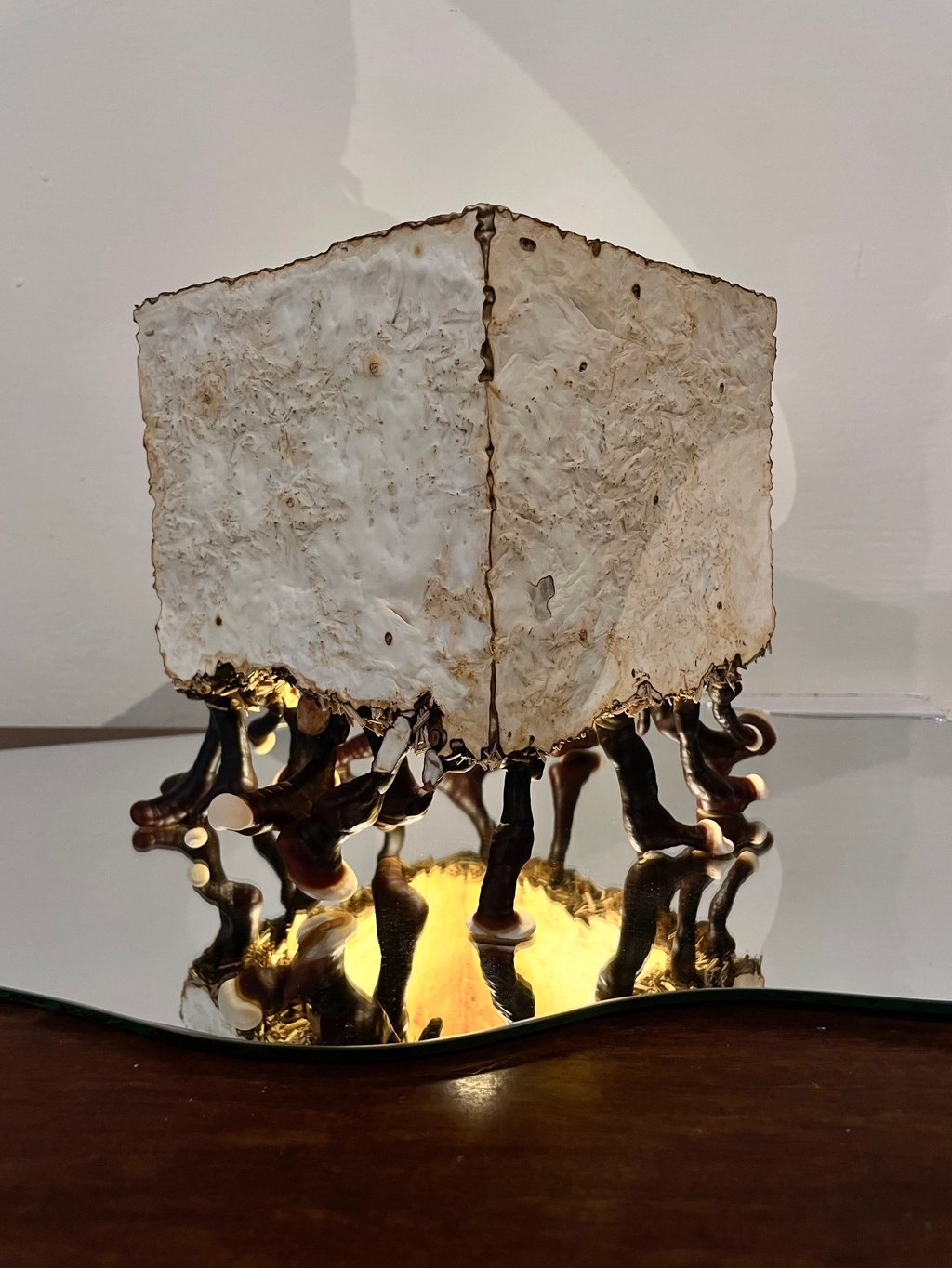
Bewilder’s mycelium table lamp, with its distinctive fungal “fingers”. Photo: courtesy Bewilder

From sofas and partition walls to acoustic panels and coasters, the range of mycelium products is, well, mushrooming. The most compelling reason is environmental: grown from agricultural waste, mycelium transforms discarded matter into valuable, non-toxic items that contribute to healthier indoor environments.

Advertisement
Advertisement
Select Voice
Choose your listening speed
Get through articles 2x faster
1.25x
250 WPM
Slow
Average
Fast
1.25x