How Chinese cuisine is inspiring chefs in Europe’s Michelin-starred restaurants
Japan has long been a major source of culinary inspiration in the West, but the gaze is shifting to other Asian cuisines

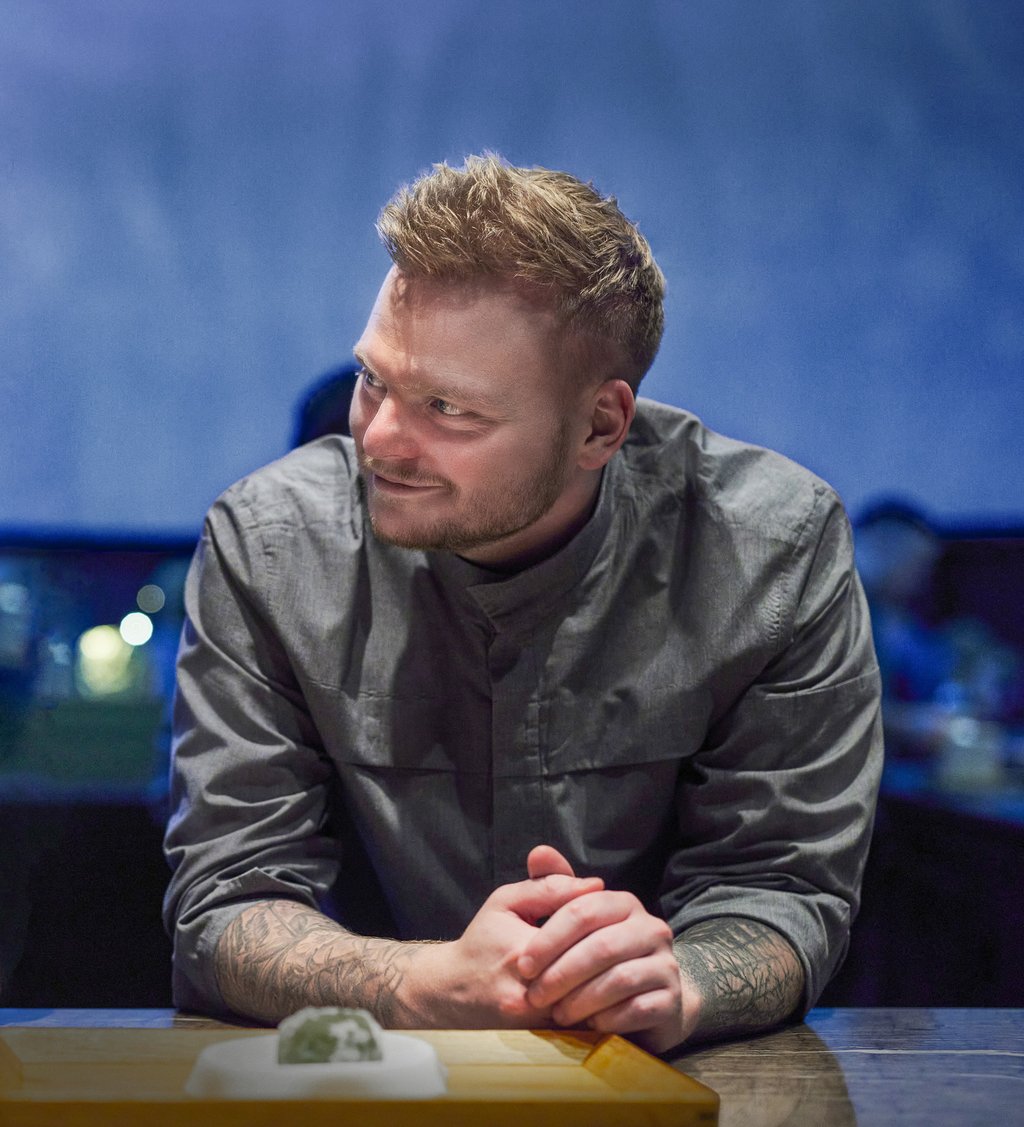
This is just one of many innovations in a dinner that lasts seven hours, runs from US$650 to US$2,400 per person with wine pairing, and has a waiting list of tens of thousands. Another course is a flattened chicken head, to be held by the beak and eaten in its entirety. To make the dish, the Alchemist team remove all the bones, dunk the head in a salt bath with enzymes developed at a Danish biosolutions company to break down the skin, then compress the head with a 5kg weight and glaze it with chicken fat before baking it until crispy. Munk, voted world’s No 1 in the Best Chef Awards held in Dubai last November, serves the head on smoked Danish cheese and beluga caviar, on a plate made by Alchemist’s in-house industrial designer from discarded eggshells. The dish took the team of 35 chefs nearly a year to perfect.
“We originally developed the dish as a way to use up the discarded bits that our chicken suppliers have to throw out, especially lots of heads,” says Munk. “We know that in some places in Asia people chew cooked chicken heads and spit out what can’t be broken down. We started out with a dish with a stuffed head, but it was too classic in a way, and also a bit macabre.”
Also on the menu is a puffed-up crispy chicken foot, painstakingly deboned, pan fried, glazed with sweet and sour sauce strong on lemongrass, and served with a side of tom yum consommé and jasmine flower. Then there’s the Voronoi Laksa, a miniature cup of fragrant broth with a surface 3D-printed in Voronoi fractal patterns in red cabbage juice. For dessert, a rendition of the sweet crushed-ice Thai dessert lod chong with tapioca noodles and Danish milk.
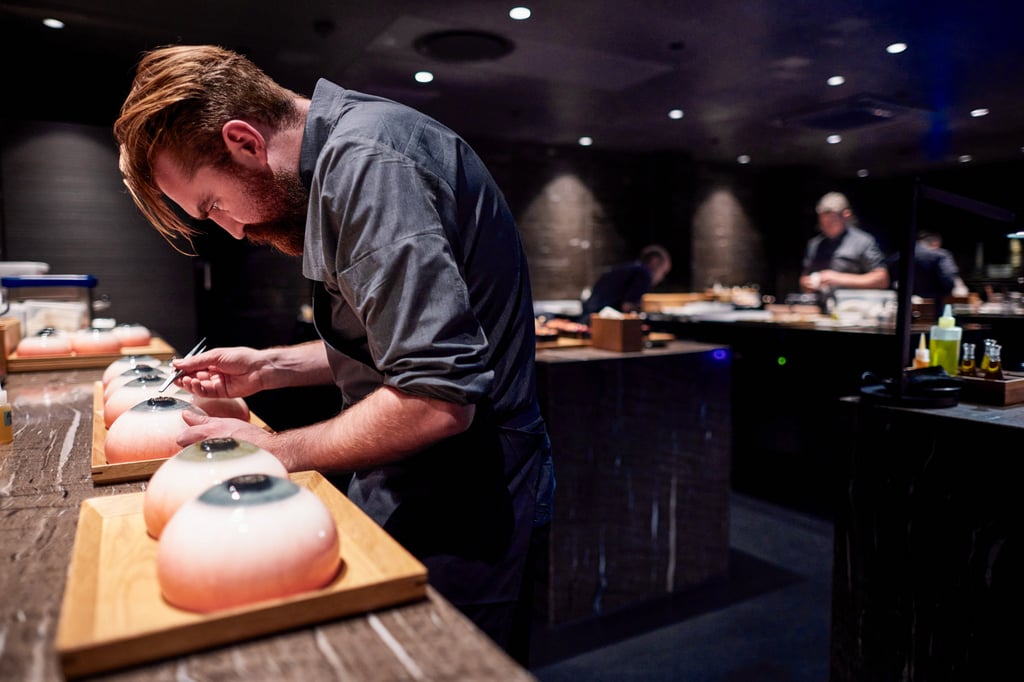
These new dishes are part of a menu of 40-or-so provocative “impressions” served as diners are led through a series of five rooms, including the main dining hall set under a planetarium-styled dome where audiovisual displays help set the tone of the evening. The menu includes Alchemist classics such as the omelette served in capsule form, an edible spherified cocktail, a cryogenically frozen butterfly, and “1984”, for which diners must gouge out a gelatinous, creamy, salty “iris” made from razor clams, pili nuts from the Philippines, white asparagus and caviar, at the centre of a dish modelled after Munk’s own eyeball.